
Bearman’s Shocking 50G Hit At Suzuka Raises Alarms Over 2026 Regulations

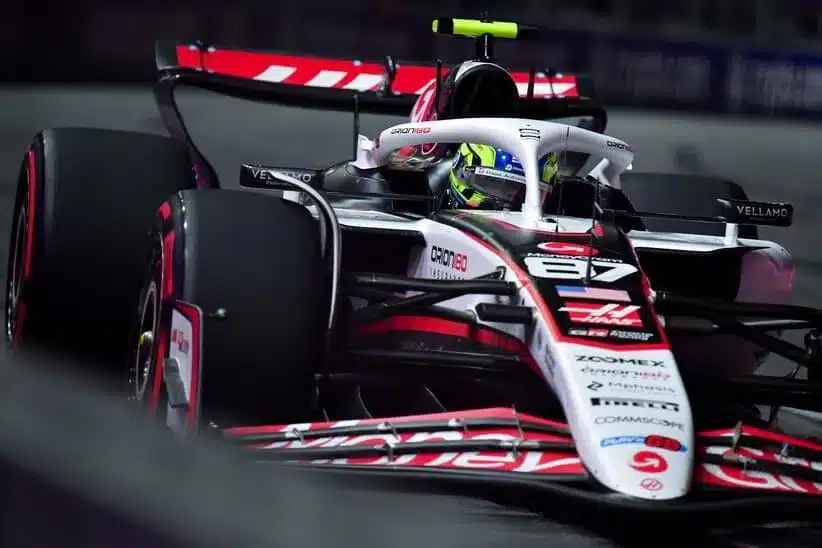
When a driver hits a barrier at 191 miles per hour, the silence that follows on team radio is the heaviest sound in motorsports. That tension swept through the Formula 1 paddock during Sunday’s Japanese Grand Prix after 20‑year‑old Haas rookie Ollie Bearman suffered one of the hardest impacts recorded in the early months of the 2026 season.
The crash at Suzuka’s Spoon Curve bent suspension arms, tore apart carbon fiber, and delivered a blunt reminder of the risks created by the new hybrid‑deployment rules. The force of the hit exposed how quickly these speed deltas can turn a routine overtake into a high‑risk scenario. Teams have been warning that the margins were shrinking with every race. Sunday proved those concerns weren’t theoretical anymore.
A Split‑Second Miscalculation At 191 MPH
Bearman’s accident unfolded on lap 22 as he chased Alpine driver Franco Colapinto through the high‑speed left‑hander. Suzuka’s Spoon Curve is taken at roughly 165 mph in clean air, but Bearman entered the corner with a significant overspeed after deploying his hybrid boost.
Telemetry later showed the Haas carrying a closing rate of approximately 31 mph, a 50 km/h delta compared to the Alpine ahead. In Formula 1 terms, that gap is enormous. At those speeds, a driver has less than half a second to judge distance, commit to a line, and avoid contact.
Realizing he was about to run directly into the back of Colapinto, Bearman made the only move available. He dropped his right‑side tires into the grass to avoid a rear‑end collision. But at nearly 200 mph, grass offers no grip, no stability, and no margin for correction. The Haas snapped sideways, destroyed a polystyrene distance board, and slammed nose‑first into the tire barrier.
The impact registered at 50Gs is one of the highest single‑event loads recorded at Suzuka since the FIA began using standardized crash sensors in 2018. For comparison, most heavy F1 crashes fall within the 20–35 G range. A 50G hit is the kind that makes engineers wince and medical teams sprint.
A Hard Landing And A Painful Walk Away
Rescue crews reached the wrecked VF‑26 within seconds. The front suspension was folded, the nose cone was gone, and the chassis showed visible deformation around the right‑front corner. Bearman climbed out under his own power but immediately shifted weight off his right leg, a sign that the impact had done more than just rattle him.
He was transported to the medical center for X‑rays and evaluation. In a stroke of luck, doctors found no fractures, only a severe contusion to his right knee. For a 50G crash, that outcome borders on miraculous. The Haas garage, however, faces a far more punishing reality.
Replacing a modern Formula 1 chassis can cost upward of $2.5 million, and the team now faces a compressed turnaround to rebuild before the next flyaway round. Despite the pain, Bearman sent an audio message to the team later in the afternoon.
Bearman apologized for the damage, took responsibility for the misjudgment, and expressed relief that teammate Esteban Ocon still salvaged points. It was a composed response from a driver who had just endured the hardest hit of his young career.
A Crash That Exposed A Rulebook Problem
Bearman’s Suzuka wreck did more than destroy a car. It exposed a flaw in the 2026 regulations. This year’s rulebook introduced expanded hybrid deployment zones intended to increase overtaking opportunities. The unintended consequence has been massive speed differentials between cars at various points on the circuit.
Haas team principal Ayao Komatsu didn’t sugarcoat the issue. He stated plainly that the closing speeds are unsafe and that the sport cannot ignore what happened. His concern is backed by data: several teams have reported deltas of 25–35 mph during practice sessions at tracks with long acceleration zones.
Veteran Ferrari driver Carlos Sainz echoed Komatsu’s warning. He noted that Suzuka, with its grass runoff and tire barriers, is one of the more forgiving circuits on the calendar. But the same 30‑mph delta at a street circuit like Baku, Singapore, or Las Vegas would leave a driver with nowhere to go. There is no grass. There is no polystyrene.
There are only concrete walls. A 50G hit between two concrete barriers is the kind of scenario the FIA has spent decades trying to eliminate. Within hours of the checkered flag, the FIA confirmed it will review the hybrid‑deployment rules and examine whether adjustments are needed before the next round.
A Month to Heal And A Month For The FIA To Act
The calendar offers Bearman a rare reprieve. Formula 1 does not return to competition until May 3 for the Miami Grand Prix, giving him nearly four weeks to recover. He will undergo physical therapy for the knee contusion, but the mental reset may prove just as important.
Drivers need absolute trust in their equipment and in the regulations that govern how they race. A crash of this magnitude tests both. The FIA now has the same four‑week window to analyze the data, consult with teams, and address the dangerous closing speeds created by the 2026 hybrid rules.
The sport has made enormous strides in safety over the past 25 years, from the HANS device to the halo to energy‑absorbing barriers, but no safety system is designed to absorb repeated 50G impacts caused by regulatory oversights.
What’s Next
When Bearman straps back into the Haas under the Miami sun, he deserves to know the rulebook won’t put him in the same position again. Sunday’s crash was a warning shot. The sport cannot afford to ignore it.
The data is too clear, the margin for error too small, and the consequences too severe to delay action. Drivers need confidence in the regulations as much as they need in the machinery beneath them. The next decision from the FIA will say everything about how seriously they take that responsibility.
