
NASCAR’s Power Surge In The Desert: How 750 HP Transformed Phoenix Overnight

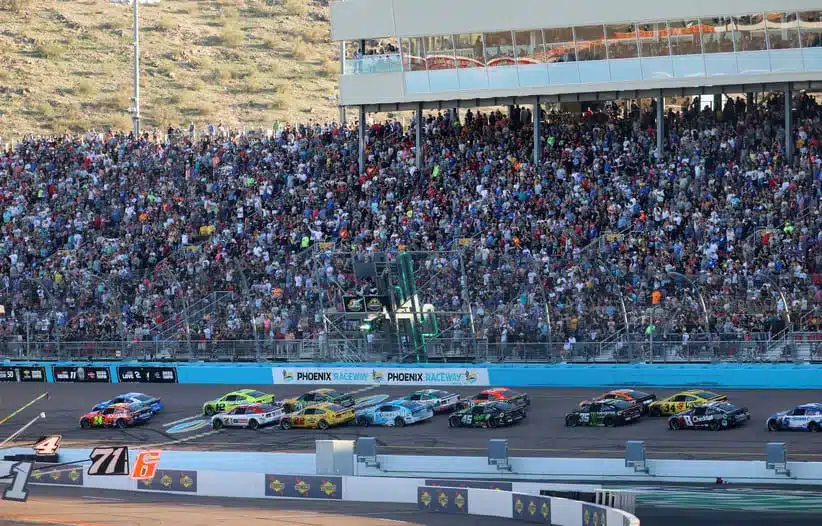
Phoenix Raceway has never been a place that hands out passes easily. For years, drivers rolled into the desert knowing they were in for a chess match more than a fistfight, a one‑mile oval where clean air dictated everything and track position was worth its weight in gold. You could have a rocket ship under you and still spend 150 laps staring at the same spoiler.
But on a warm March afternoon in 2026, the entire rhythm of the race changed. The field moved differently, the runs developed differently, and the energy inside the track felt noticeably sharper. NASCAR didn’t stumble into this shift. It was engineered. The debut of the 750‑horsepower package at Phoenix delivered the kind of racing the sport has been trying to unlock for years.
NASCAR vice president of racing communications Mike Forde didn’t bother dressing it up when he broke it down on the “Hauler Talk” podcast. He called the new package a “game‑changer,” and for once, that phrase didn’t feel like marketing. It felt like someone was finally acknowledging what fans saw with their own eyes.
How the Performance Numbers Played Out At Phoenix
The first thing people need to understand about the 750‑horsepower package is that it didn’t suddenly turn Phoenix into a speedway. The overall lap times weren’t dramatically faster, and the straightaway speeds didn’t spike in a way that would jump off a timing sheet. The stopwatch didn’t tell the story, but the corners did. That’s where the entire complexion of the race shifted.
The peak speeds through the turns climbed, and that single change set off a chain reaction that reshaped the race from the inside out. Higher corner speeds meant more load on the tires, and more load meant more heat.
Once the heat built up, the tires started wearing out faster than teams have seen here in years. Suddenly, Phoenix had something it’s been missing for far too long: real tire falloff, the kind that separates the patient from the reckless.
“This is the kind of racing we’ve been trying to unlock for a long time,” Forde said. “When the cars can push harder and the tires wear faster, the racing just opens up.”
That tire degradation became the heartbeat of the race. Drivers who managed their equipment found themselves climbing through the field late in a run, while those who pushed too hard early paid the price. Pit strategy mattered again, and the race developed a rhythm that Phoenix has been missing for years. It wasn’t just better racing. It was more authentic racing.
A Small Technical Change With Major Performance Impact
What makes this transformation even more fascinating is how small the mechanical change actually was. Teams ran sealed engines at Phoenix. Many of them are the exact same engines they used last season.
There was no sweeping overhaul, no dramatic redesign, no new power unit. The only real adjustment was a tapered spacer with holes just one‑eighth of an inch wider. That tiny increase in airflow bumped the engines up to 750 horsepower.
A quarter‑inch difference in diameter was all it took to wake up the racing product. It’s the kind of subtle engineering tweak that reminds you how delicate the balance of this sport really is. One small adjustment can ripple through the entire field and reshape the way a race unfolds.
More horsepower forced drivers to lift more, and lifting more increased tire wear. Increased tire wear opened passing lanes, and passing lanes created the kind of racing Phoenix has been starving for. It’s the kind of elegant solution engineers dream about: a small change that produces an outsized improvement without rewriting the entire rulebook.
The Tire Story At Phoenix Deserves Its Own Conversation
Goodyear brought the same tire compound used at Phoenix the previous November, a compound that had already raised eyebrows after several teams dealt with tire issues. With horsepower increasing, there was real concern about how the tires would respond.
Teams entered the weekend with a cautious approach, knowing the added power could expose any weakness in the rubber. Stage 1 eased those fears. No cautions. No failures. The tires held up, and teams began to settle into a rhythm. But Stage 2 told a different story.
Multiple teams suffered tire issues, and for a moment, it looked like the compound might be the culprit again. The garage buzzed with concern, and spotters immediately began warning their drivers to be careful. But NASCAR’s post‑race review revealed something surprising: the compound wasn’t the problem.
Brake rotor debris had scattered across the track, slicing into the rubber. Forde didn’t dance around it. NASCAR diagnosed the situation as “a debris problem, not a tire problem.” Once teams understood what was happening, the panic faded. The tire story settled down, and the horsepower story took over.
What This Means For NASCAR’s Performance Direction
The Phoenix race wasn’t just a one‑off success. It was a proof of concept, a sign that NASCAR may have finally found the right balance of horsepower and tire wear at short tracks and flat ovals. The 750‑horsepower package created exactly what the sport has been trying to engineer for years.
This includes concepts such as more tire degradation, more strategy variables, more passing, and more action. It’s a simple formula on paper, but incredibly difficult to execute in reality. Phoenix showed it can be done.
The race had movement, unpredictability, and genuine tension, and the kind of racing that rewards skill, patience, and adaptability. Ryan Blaney thrived in the chaos, using smart tire management and timely strategy calls to take the win. It was the kind of race that feels earned, not handed out by circumstance.
So, What Comes Next?
The story coming out of Phoenix isn’t about a number on a dyno sheet. It’s about what that number produced on the racetrack. Passing lanes opened. Strategy mattered again. Drivers had to think, adjust, and manage every lap.
The race felt alive in a way Phoenix hasn’t felt in years. If NASCAR can bottle what happened in the desert and carry it across the 2026 schedule, the sport is headed for one of its most compelling seasons in a long time.
