
NASCAR Wants Answers From Christian Eckes After Bristol Run‑In With Heim

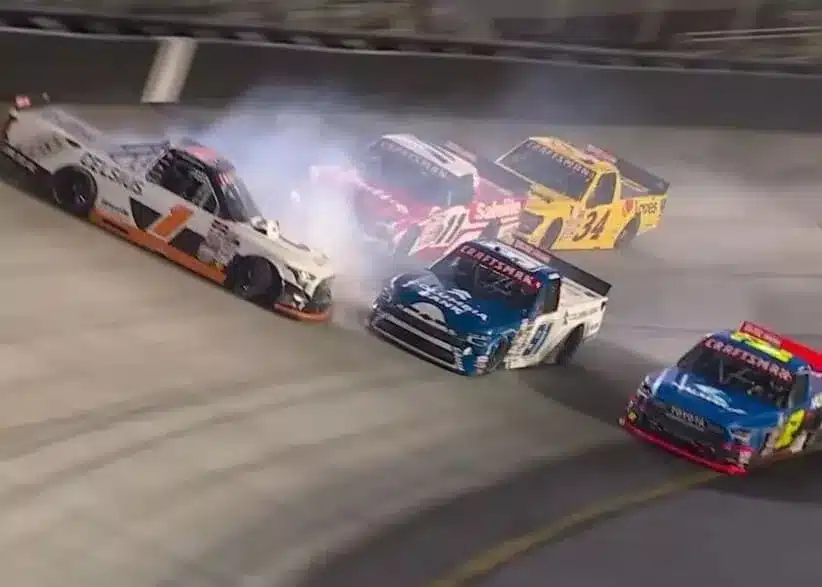
The NASCAR Craftsman Truck Series race at Bristol Motor Speedway delivered one of the most dramatic and costly incidents of the 2026 season. A late‑race collision between Christian Eckes and Corey Heim triggered a multi‑truck crash. The impact instantly changed the tone of the race and left both teams scrambling to assess the damage.
The crash signaled the end of Heim’s bid for a $500,000 Triple Truck Challenge bonus and sent NASCAR officials into an intensive review process that lasted through the following week. Despite the severity of the wreck, NASCAR ultimately chose not to penalize Eckes, but the governing body made clear the situation is far from over.
The Anatomy Of A Short‑Track Heartbreak
Bristol’s high‑banked half‑mile leaves no margin for error. When Heim and Eckes fought for the same lane entering Turn 1, the result was a violent crash that collected multiple trucks and ended Heim’s night on the spot. The stakes for Heim were enormous: he was racing for a $500,000 Triple Truck Challenge bonus, having already won the first two events in the program.
Once the wrecked trucks rolled to a stop, the debate began. Any contact resembling a right‑rear hook is treated with extreme seriousness due to the danger of sending a vehicle head‑on into the outside wall. Eckes immediately denied any intent, insisting the move was a mistake. Heim, after reviewing the replay, echoed that sentiment.
“I don’t think he did it on purpose… he just misjudged it,” Heim explained to reporters post-race.
Eckes later told reporters he misjudged the corner entry and took responsibility for triggering the crash, acknowledging the severity of the outcome and the financial hit to Heim’s team. He admitted the mistake weighed on him as soon as he saw the replay.
The moment clearly shook him, knowing how much was on the line for his competitor. He knew the mistake would follow him long after the checkered flag. It wasn’t the kind of contact any driver wants to be responsible for. The weight of it showed in the way he carried himself afterward.
Inside NASCAR’s Review Process

NASCAR launched a full investigation immediately after the race. On the “Hauler Talk” podcast, NASCAR vice president of race communications Mike Forde explained that officials held a “robust and healthy discussion” before reaching a decision.
Truck Series managing director Seth Kramlich led the review, assembling a multi‑angle video package that included broadcast footage and NASCAR’s proprietary camera feeds. One angle, with a fixed camera in Turn 1, made the contact appear significantly worse than the overhead and rear‑facing views.
From that vantage point, Eckes appeared to miss the corner by a wide margin and collect more of Heim’s truck than initially believed. Because NASCAR treats intentional right‑rear hooks as one of the most dangerous actions in the sport, the Turn 1 angle was a critical piece of evidence.
But after reviewing all footage and speaking with both drivers, officials concluded the move was an aggressive miscalculation, not a deliberate wreck. They felt the evidence showed a driver overstepping the limit rather than trying to take someone out. The ruling reflected the belief that intent simply wasn’t there.
Why Eckes Avoided A Penalty
NASCAR ultimately chose not to penalize Eckes because the evidence supported his explanation: he misjudged the corner while trying to fall in line behind Heim. Heim himself agreed with that assessment, telling officials he believed the contact was accidental.
However, NASCAR is not letting the matter end quietly. Forde confirmed that officials will meet with Christian Eckes before the next Truck Series race to deliver a clear warning and ensure he understands the scrutiny he will face moving forward.
Eckes now finds himself in a position where every move on track will be watched more closely than before. NASCAR wants to make sure the message is clear: aggressive racing is part of the sport, but there’s a line that cannot be crossed. The meeting is meant to reinforce that distinction and prevent a repeat of what happened at Bristol.
For the rest of the garage, the decision signals how seriously NASCAR is treating borderline incidents this season. Drivers know that intent matters, but so does judgment, and officials are willing to step in when they feel a pattern is forming. It sets the tone for how similar situations will be handled as the championship battle tightens.
Cup Series Officiating Also Under The Microscope
The Bristol weekend also raised questions about officiating in the Cup Series. During the final lap of Sunday’s race, Chase Elliott spun coming to the white flag. Many expected an immediate caution, but race director Tim Bermann held the yellow.
Forde explained that race control evaluates two factors: how close the spinning car is to the start‑finish line and whether it slides into the racing groove. Elliott stayed on the apron and out of the leaders’ path, allowing NASCAR to let the race finish under green.
That decision produced a clean, dramatic battle between Ryan Blaney and Ty Gibbs, a finish NASCAR believed was safe to allow. Fans were on their feet as the two drivers fought all the way to the line. It was the kind of ending Bristol is known for.
The moment captured everything people love about short‑track racing—raw speed, tight quarters, and nerves stretched thin. It was a reminder that sometimes the best call from the tower is simply letting the racers settle it themselves.
What It Means Moving Forward
For Christian Eckes, avoiding a penalty is a major relief. A points deduction or suspension could have derailed his championship hopes. But he now enters the next stretch of the season under a microscope, with NASCAR officials making clear that another incident of this nature will be judged harshly.
For Corey Heim, the outcome is a painful reminder of how quickly fortunes can change in NASCAR. Losing a shot at a $500,000 bonus because of another driver’s mistake is one of the sport’s cruelest realities.
Heim handled the situation with professionalism, but the financial and competitive consequences are undeniable. For the garage as a whole, NASCAR’s decision reinforces a key message: the sanctioning body will use every available camera angle and driver interview to determine intent.
Even so, the organization maintains it will not issue penalties unless the evidence is clear. The line between hard racing and dirty driving remains razor‑thin, and Bristol once again proved how costly that line can be.
What’s Next
The Bristol incident showed how quickly a single mistake can reshape a race and spark debate across the garage. One misjudged move changed the night for two contenders and reminded everyone how thin the margin is between hard racing and costly consequences.
As the season moves on, both Eckes and Heim will be watched closely. The stakes will only rise, and every decision behind the wheel will matter. Bristol may be over, but its impact will linger as the championship fight tightens.
For More Great Content
Stay plugged in with more race analyses, features, and behind‑the‑garage storytelling. Follow Sarah on Facebook, LinkedIn, and X at Sarah Talker, where the conversation keeps rolling long after the checkered flag drops.
