Anti-Trust Clash Ignites: NASCAR Trial Opens with Jordan Watching

The air in that Charlotte federal courtroom on December 1st wasn’t just filled with the usual stale legalese. It was thick with tension, celebrity, and the ghosts of NASCAR’s 75-year history. This wasn’t just another lawsuit.
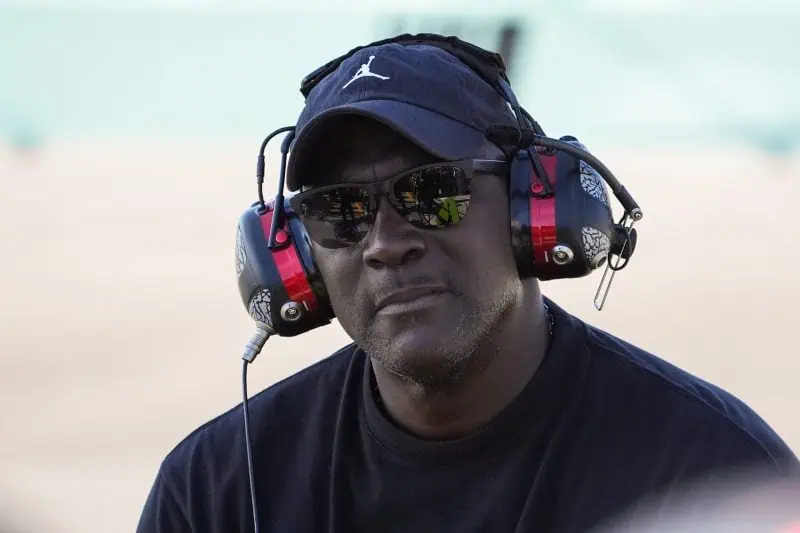
This was a trial for the very soul of stock car racing, and the opening day felt like the green flag dropping at Daytona, with all the raw emotion and high-stakes drama that comes with it. You had Michael Jordan, “His Airness” himself, sitting in the gallery, a silent, powerful presence co-owning one of the plaintiff teams, 23XI Racing.
Across the aisle, NASCAR’s top brass, including chairman Jim France, son of the man who built this empire from sand and grit, watched on. This was a family feud playing out on a federal stage, a high-speed collision between the old guard and a new, defiant generation of team owners.
Then There Was Denny Hamlin
When Hamlin, a three-time Daytona 500 champion and co-owner of 23XI, took the stand as the first witness, the courtroom’s professional veneer cracked. Asked about his beginnings in racing, the man known for his ice-cold demeanor on the track broke down in tears. It wasn’t just about lawsuits and charters.
It was about his dying father, about the sacrifices made, about a dream that now felt threatened. “If I can’t be successful with Michael as a partner,” Hamlin confessed, his voice thick with emotion, “I knew this was never going to work.”That single moment captured the heart of this fight. It’s a battle between the deep-seated love for the sport and the cold, hard reality of its business model.
What Is This NASCAR Trial Really About?
On paper, this is an antitrust lawsuit. 23XI Racing and Front Row Motorsports are suing NASCAR, claiming the sanctioning body operates as a monopoly. They argue the current charter system, which guarantees entry and a slice of the revenue for 36 teams, is rigged.
The teams believe it stifles their ability to make a profit and build long-term value, effectively making them tenants in a kingdom ruled by the France family. Attorney Jeffrey Kessler, representing the teams, painted a bleak picture. He claimed that even with the charter system, 75% of teams lost money in 2024.
He pointed to Front Row Motorsports owner Bob Jenkins, who, despite winning the Daytona 500 in 2021, has never turned a profit since starting his team in 2004. The question hung in the air:
“Why would these people do this if you are just going to lose money… Because you love stock car racing, and there’s nowhere else to do it.”NASCAR, however, fired back with both barrels. Their legal team argued that the charter system was created at the teams’ request to provide stability and equity.
They pointed out that charters, initially given away, are now selling for over $45 million. “If the system is unfair, anticompetitive, and below market,” NASCAR’s opening statement challenged, “why did 23XI Racing buy a charter not once, not twice, but three times?”
The Judge Lays Down the Law
The intensity wasn’t limited to the witness stand. Before the arguments even got into full swing, Judge Kenneth D. Bell had heard enough. He ripped into both legal teams for their opening statements, calling them “riddled with impermissible arguments” and promptly banned them from using any exhibits.
It was a clear message: this courtroom wasn’t going to be a media circus. The message was clear: “If we can be less confrontational about it next time, maybe you’ll get to do what you want to do.”
What’s at Stake in This High-Stakes Trial?
The outcome of this trial could send shockwaves through the entire sport. If the jury sides with NASCAR, 23XI and Front Row could be forced to operate as “open” teams, without the security of a charter, or worse, face closure. Their charters, currently held by NASCAR, would likely be sold off to the highest bidder.
But if the teams win, the consequences for NASCAR could be seismic. A jury could award financial damages, which the judge can triple. More profoundly, the judge could dismantle the entire business model. Nothing is off the table, from forcing the sale of tracks to eliminating the charter system.
Final Thoughts
This trial is more than just a legal battle. It’s a referendum on NASCAR’s future. Hamlin’s raw emotion on the stand wasn’t just about his personal journey. It was a cry from the heart of a sport grappling with its identity, its finances, and its very survival. As the trial continues, the entire NASCAR world holds its breath, waiting to see if the checkered flag will fall on an old era or wave in a completely new one.