
Cleetus McFarland: Talladega Dreams Deferred As NASCAR Pulls Back

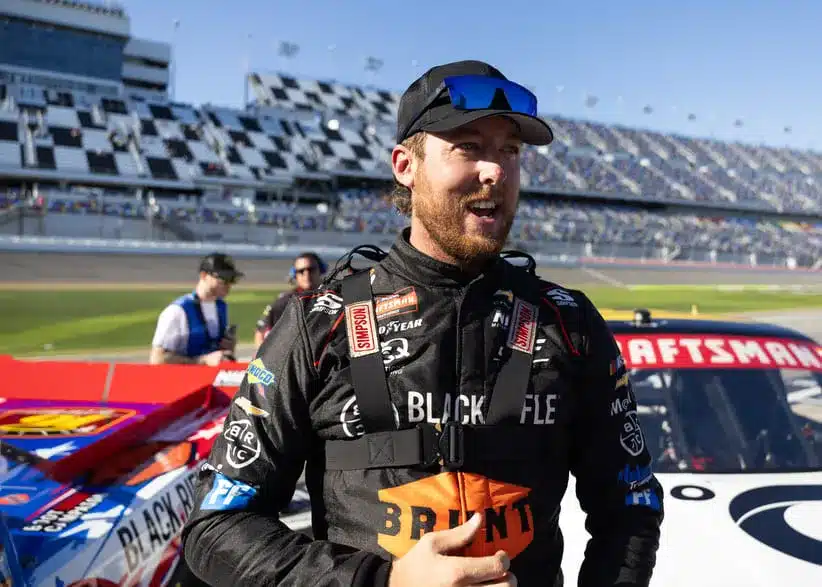
Cleetus McFarland’s rise into NASCAR didn’t come through the usual pipeline. McFarland built his reputation by turning the Freedom Factory into a packed‑house proving ground and by drawing an online audience that now tops three million subscribers.
That reach opened doors, including a chance to strap into a national‑touring‑series car with Richard Childress Racing. But once he stepped into the O’Reilly Auto Parts Series, the sport wasted no time showing him how different the professional ranks really are.
Rockingham delivered the first hard lesson. The track’s worn pavement, long green‑flag stretches, and relentless tire wear exposed every gap in his limited experience. His raw ability showed in moments, but the inconsistencies stood out just as clearly.
Those inconsistencies are exactly why NASCAR stepped in and shut down his Talladega plans before they ever reached the entry list. The sanctioning body saw too many unanswered questions to risk him in a 200‑mph draft. What happens next will determine how quickly he climbs back into their good graces.
The Rockingham Reality Check
His debut in the NASCAR O’Reilly Auto Parts Series at Rockingham Speedway was the clearest example yet. Rockingham’s surface is one of the most abrasive in the country, notorious for eating tires and punishing drivers who miss their marks.
Driving the No. 33 Chevrolet for Richard Childress Racing, McFarland qualified 35th and finished 32nd, ending the day six laps down. It wasn’t a disaster, but it wasn’t competitive either. He spun multiple times, including a slide on lap 206 that triggered a late caution when the car snapped loose off Turn 4.
Each time, he saved the car without destroying equipment, a testament to his natural car control. But the lack of experience in heavy stock cars showed. Rockingham quickly exposes weaknesses, and the garage noticed how much he still has to learn. There was a bright spot.
Two days earlier, he finished fourth in the ARCA Menards Series East race. That run proved he has the raw ability. But the gap between ARCA and the O’Reilly Series is massive, with deeper fields, longer races, and drivers with decades of experience. Rockingham made that gap impossible to ignore.
NASCAR Steps In: No Talladega
This is where Talladega enters the picture and why NASCAR shut the door. Talladega Superspeedway is a 2.66‑mile, 200‑mph drafting track where one mistake can wipe out 20–25 cars in a single crash. NASCAR’s approval process for superspeedways is strict, and officials evaluate every driver’s recent performance, especially in traffic, pit cycles, and car control under pressure.
Cleetus McFarland didn’t clear the bar. Earlier in the year, he made his Craftsman Truck Series debut at Daytona with Niece Motorsports. He qualified an impressive 12th, but on lap 6, he lost control off Turn 4 and slammed the inside wall.
That incident, combined with the Rockingham spins and lack of green‑flag pit‑stop reps, raised red flags for NASCAR’s competition department. John Probst, NASCAR’s Chief Racing Development Officer, made the call: McFarland would not be approved for Talladega.
Not because of his fame. Not because of his fanbase. Because superspeedway racing leaves zero margin for error, and NASCAR needs more proof that he can handle the environment safely. The message was clear: get more laps, get more reps, then come back.
Veteran Voices Weigh In
Mark Martin, one of the most respected voices in the sport, watched the Rockingham race closely. He noted that Rockingham is far tougher than Daytona and praised McFarland for keeping the car out of the wall during his spins, something many rookies fail to do.
But Martin didn’t sugarcoat the truth: McFarland needs more seat time before he’s ready for the upper levels. Danny Lawrence at Richard Childress Racing echoed that assessment. Both saw the same gaps in real‑time execution. Neither believes those gaps are permanent, just unpolished.
Because of the early incidents, the team shifted into survival mode, which meant McFarland never executed a full‑pressure green‑flag pit stop, a critical skill NASCAR requires before granting superspeedway approval. Without that data point, Talladega was off the table.
To his credit, McFarland owned it. He spoke directly to fans, admitted the weekend was chaotic, and even acknowledged trying a reckless three‑wide move on lap three. He called the Talladega denial a tough blow but said plainly that he needs more windshield time. He’s only been racing in NASCAR for a year, and he knows it.
What This Means
The rise of digital creators in motorsports is a balancing act. Cleetus brings a massive, young audience NASCAR desperately needs. His merchandise sells, his events draw crowds, and his presence injects energy into the garage. But NASCAR’s first responsibility is safety and competitive integrity.
This decision draws a firm line: Money and fame can buy a ride, but they cannot buy a superspeedway license.NASCAR is protecting the field while giving McFarland a clear development path. Expect him to run more ARCA races, more short tracks, and possibly intermediate O’Reilly events like Kansas or Charlotte.
He needs to show clean races, consistent pace, and complete pit cycles under green. Once he does, Talladega becomes a realistic next step. Each race between now and then becomes part of that audition. How quickly he checks those boxes will shape the rest of his season.
Every lap becomes a chance to prove he’s tightening the gaps that held him back at Rockingham. The margin for error is small, but the path is straightforward: stack clean weekends, show growth, and make the decision impossible for NASCAR to ignore.
What’s Next
Garrett Mitchell isn’t backing down. Cleetus McFarland may be a YouTube star, but underneath the persona is a racer who respects the sport and wants to earn his place the right way. His Rockingham debut was messy, unpredictable, and at times overwhelming, but it also showed flashes of genuine talent and composure.
NASCAR made the right call in slowing his superspeedway progression. Talladega will still be there next year. For now, the mission is simple: gain experience, clean up the mistakes, and earn the garage’s respect one race at a time. The journey is nowhere near over. In fact, this is where the real work begins.
