
The 2027 Hall Of Fame Case For Herb Nab: The Architect Behind NASCAR’s Golden Years

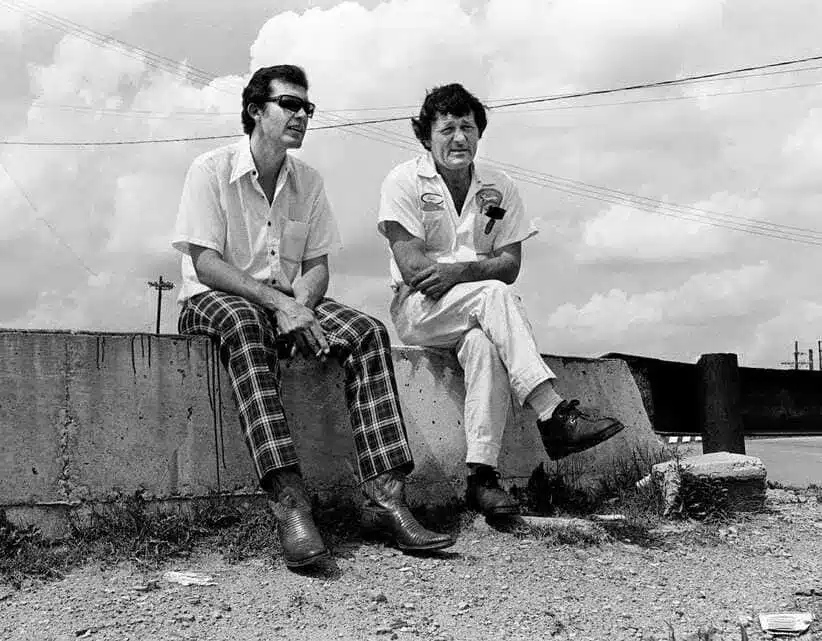
Herb Nab never needed much attention, and he never worked to create it. The people who mattered already understood what he could do, and that was enough. His reputation came from the cars he built, the results they produced, and the drivers who seemed to find another level when he was around.
The 2027 Hall of Fame nomination might bring his name back into public conversation, but inside the garage, it never really left. He came up in a time when speed wasn’t calculated by software or confirmed in a simulation room.
If a car was fast, it was because someone understood how it behaved. Nab had that understanding. He knew what a car needed over a long run, how balance shifted with heat and wear, and how small changes could carry through an entire race.
Learning the Trade
Herb Nab was born in Fruita, Colorado, in 1927, spent time in Idaho, and eventually settled in Portland. Like most mechanics of his era, he didn’t learn from manuals or formal training programs. He learned by doing the work, making mistakes, and figuring out why something failed before trying again.
Shops at that time didn’t offer much room for theory.If something broke, you fixed it. If it didn’t run right, you stayed with it until it did. That process gave him a kind of feel that couldn’t be taught later. He understood how weight transferred, how heat changed performance, and how different adjustments affected the car over time.
That knowledge followed him into racing, where those instincts became more valuable with every lap. Each decision he made came from that foundation. The more he learned, the more natural the work became. With time, those instincts turned into something he could trust without hesitation.
Building a Reputation Out West
On the West Coast, working with Bill Amick, Nab began to build a reputation that spread faster than he ever tried to. His cars were consistent, reliable, and often better than the equipment suggested they should be. That stood out.
In a sport where finishing races mattered as much as winning them, having a car that held together was a real advantage. People started to notice the pattern. When Nab was involved, the car usually ran clean, stayed balanced, and finished strong.
When he made the move east, he wasn’t walking into NASCAR as an unknown. Word had already made its way ahead of him. He didn’t introduce himself loudly. He just went to work, and people picked up on how deliberate everything was.
Holman-Moody and a Changing Standard
His time with Holman-Moody gave him a larger stage and placed him in one of the most competitive environments in the sport. Fred Lorenzen helped shape one of the earliest examples of sustained success at a high level.
Lorenzen’s $100,000 season in 1963 still gets brought up, and it should, because it reflected consistency more than anything else. That kind of performance didn’t come from luck or isolated speed. It came from preparation, from a car that behaved the same way at the end of a race as it did at the beginning.
Around that time, expectations inside the garage started to shift. Teams began to understand that success depended on repeatability, not just raw speed, and Nab was part of that change, whether he set out to be or not.
Junior Johnson And Championship Years
When Nab moved into Junior Johnson’s operation, the expectations became even sharper. Johnson wanted results, and there wasn’t much patience for anything less. Nab fit into that environment because he already worked with that level of precision.
With Cale Yarborough, they put together one of the strongest runs the sport has seen, winning back-to-back championships in 1976 and 1977. The Daytona 500 victory in 1977 stands out, but it was part of a much larger stretch of consistency that defined those seasons.
Nab had already proven he could win at Daytona years earlier with LeeRoy Yarbrough in 1969, showing that his approach worked across different teams and circumstances. That ability to adapt without losing effectiveness is what separates him from many others.
Consistency Over Time
The numbers tied to his career still stand out because they reflect more than just peak performance. Seventy-four wins in three hundred thirty-one starts point to a high level of success, but the consistency behind those wins is just as important.
Finishing in the top ten often means the cars were not only fast but dependable across a full schedule. That doesn’t happen by accident. It comes from preparation, from understanding how a car will change over time.
And from building something that doesn’t fall apart under pressure. Nab focused on that side of the work as much as outright speed. A car that could hold its balance deep into a race often outperformed one that was faster early but faded as conditions changed.
Respect Earned Through Hard Work And Kindness
He was also known for how he treated others, which carried weight in a competitive environment that could easily turn closed off. One of the better-known examples came in 1976, when Janet Guthrie was struggling to qualify for the World 600.
Her car wasn’t working, and she was fighting it every lap. Nab stepped in, made adjustments, and helped give her something she could actually manage. She came back and put together a strong qualifying run, earning her place in the field.
He didn’t have to get involved in that situation, and there was no direct benefit for him. That willingness to help, even in a competitive setting, is part of what people remembered. It reflected both confidence in his own work and a broader respect for the sport itself.
Lasting Influence On The Sport
As the sport moved into a more technical era, with data collection and engineering departments becoming standard, the fundamentals Nab worked from never really disappeared. Teams still chase balance, still focus on how a car behaves over long runs, and still rely on a combination of measurement and feel.
Nab operated before most of those tools existed, but his approach fits naturally into the modern framework. He helped bridge a gap between two versions of the sport, one based almost entirely on instinct and another built around analysis.
The tools changed, but the core ideas stayed in place. That is where his influence continues to show up, even if it is not always directly connected back to his name. Teams still lean on the habits he helped establish. His way of working became part of the sport’s muscle memory. Even now, the best operations echo the standards he set.
Why The Recognition Matters
The Hall of Fame nomination brings his career into focus again, but it does not redefine it. His impact was already established through the teams he worked with and the results they produced over time.
What the recognition does is place him alongside others whose contributions are easier to see from the outside. It also serves as a reminder of how much the role of a crew chief shapes the outcome of a race or a season.
Drivers receive most of the attention, but the preparation behind the scenes determines how much they have to work with once the race begins. Nab’s career shows this clearly, with little need for explanation beyond the results themselves.
The Legacy He Left Behind
Nab may have passed in 1988, but the imprint he left on the sport didn’t fade with him. The drivers he worked with went on to shape major chapters of NASCAR history, and his role in their success is still clear to anyone who studies how those teams operated. He never built a public image or spent time promoting himself.
He focused on the cars, the details, and the process that produced results. That approach carried through every stage of his career and influenced how others approached the same job. His legacy isn’t tied to a single moment but to the consistency of his work, which still shows up in the sport today.
