
Michael Bay Takes Cadillac to Court Over Stolen Super Bowl Ad Ideas

You’d expect a Michael Bay production to feature high-octane chases, massive explosions, and dramatic slow-motion shots. But this week, the drama isn’t happening on the big scree it’s unfolding in a Los Angeles courtroom.
Just days before the biggest advertising night of the year, the blockbuster director has filed a lawsuit against Cadillac, claiming the automaker lured him into a project, stole his creative concepts, and then ghosted him. This isn’t the press coverage Cadillac wanted.
As the historic car brand gears up to launch its Formula 1 team with a splashy Super Bowl commercial, the conversation has shifted from their racing ambitions to allegations of fraud, breach of contract, and theft of intellectual property. Here is the full breakdown of the $1.5 million legal battle that has Hollywood and the racing world talking.
The Pitch That Went Wrong
The story begins back in November 2025. According to the lawsuit, Cadillac F1 team owner and CEO Dan Towriss reached out to Michael Bay directly. The pitch was flattering: Towriss allegedly told Bay that Cadillac needed “the most American director” to introduce their new American F1 team to the world. They wanted a spectacle, and who better to deliver that than the man behind Transformers and Armageddon?
Bay says he was promised full creative control. Taking the executive at his word, Bay went to work immediately. He didn’t just storyboard; he started mobilizing. The lawsuit details how Bay began pre-production in December, going so far as to ship a Formula 1 car to the Mojave Airport to capture test footage.
Then came the pivot. On December 11, Bay received a text message that effectively pulled the plug. He was told the agency was “going in a different direction.” In the fast-paced world of advertising, this happens. But what happened next is what triggered the lawsuit.
The “Shimmering Gold” Controversy
Getting fired from a gig is one thing; seeing your ideas on screen without your name on them is another. When Cadillac began rolling out promotional materials for its Super Bowl spot in February 2026, Bay noticed something familiar.
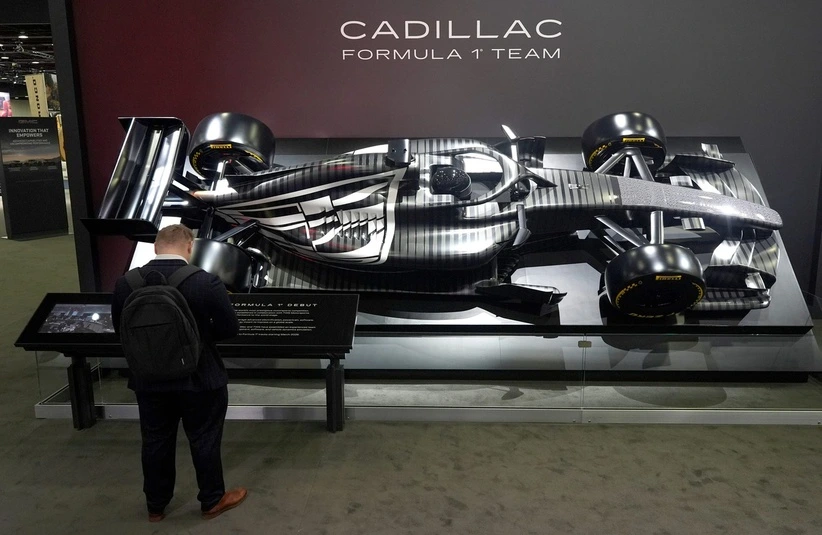
The lawsuit alleges that the Cadillac ad features specific visual elements that Bay had pitched and developed during his short time on the project. The most contentious point? A distinct “shimmering gold chrome” aesthetic on the vehicle. Bay claims this was his specific vision, designed to make the car pop on screen in a way only he could execute.
Bay is arguing that Cadillac and its third-party agency essentially used him for free consulting, taking his high-concept ideas and handing them off to cheaper talent to execute. He’s seeking $1.5 million in damages, plus punitive compensation.
Why This Timing is a Disaster for Cadillac
The timing of this legal battle couldn’t be worse. Cadillac is currently in the middle of a massive brand pivot. Their entry into Formula 1 is a strategic move to capture a younger, global audience, capitalizing on the massive surge in F1 popularity in the United States.
Americans are finally obsessed with F1, thanks largely to Netflix’s Drive to Survive and the upcoming Brad Pitt racing movie. Cadillac wants to position itself as the face of American racing innovation. This Super Bowl ad was supposed to be their victory lap.
Instead, the Cadillac launch is being overshadowed by a narrative of corporate exploitation. It raises an uncomfortable question for the brand: If they are willing to cut corners with a high-profile Hollywood director, what does that say about their business ethics?
Can You Really “Own” a Style?
Legal experts looking at the Cadillac case admit that Bay has an uphill battle. Proving ownership of a visual style or a concept like “gold chrome” is notoriously difficult in copyright law. Ideas are generally not protected—only the specific execution of those ideas.
However, Bay’s lawyers aren’t just arguing copyright; they are arguing fraud and breach of implied contract. The case hinges on the conversations between Bay and Towriss. If Bay can prove he was misled into working without a signed contract under the guise of a “gentleman’s agreement,” Cadillac might have a real problem on its hands.
FAQ Section
Q: What happened in the Cadillac F1 Super Bowl lawsuit?
A: Michael Bay alleges Cadillac used his creative ideas for its Super Bowl ad without paying him.
Q: Who is involved?
A: Michael Bay, Cadillac F1 CEO Dan Towriss, and a third-party ad agency.
Q: Why is this news important?
A: It highlights the stakes of Super Bowl advertising and Formula 1’s growing U.S. presence.
Q: What are the next steps?
A: The lawsuit will proceed in Los Angeles courts while Cadillac airs its ad during the Super Bowl.
What This Means For The Super Bowl
Despite the legal fireworks, the show will go on. Cadillac is expected to air the commercial as planned during the Super Bowl. The company hasn’t issued a detailed public rebuttal yet, likely hoping the ad itself is good enough to drown out the noise. For viewers watching the game, the ad now has an unintentional layer of intrigue. When that Cadillac races across the screen, millions of people won’t just be looking at the car.
They’ll be looking for the “Bayhem” the specific visual flair that Michael Bay claims was stolen right out from under him. Whether this ends in a settlement or a messy trial, one thing is clear: Cadillac has certainly managed to get everyone’s attention, just maybe not in the way they planned.
