
McLaren’s Power Play: How Lambiase’s Jump Puts Red Bull On The Ropes

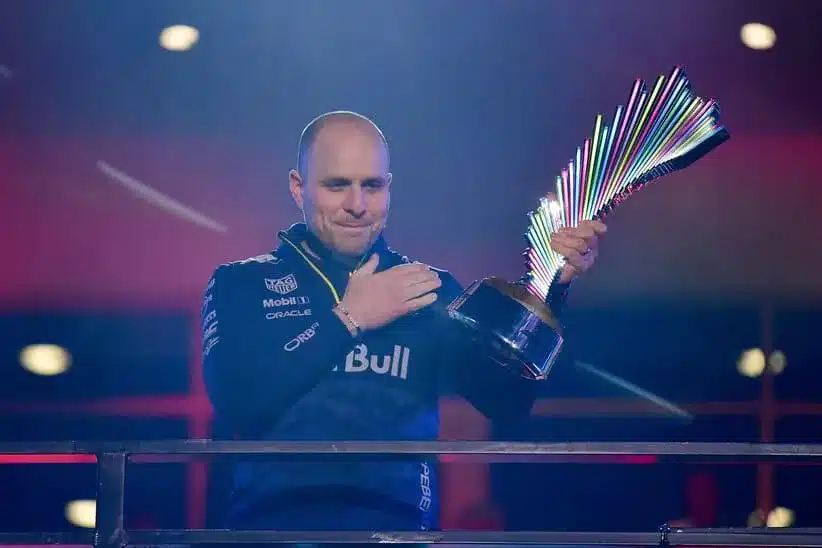
In Formula One, the relationship between a driver and his race engineer is the core of any long-term championship run. Max Verstappen and Gianpiero Lambiase built one of the most effective pairings the sport has seen in the modern era, stacking four world titles, more than 70 Grand Prix wins, and a win rate that sat above 60 percent during their peak from 2021 to 2025.
Those numbers come from years of shared data, thousands of laps spent chasing balance, and a level of trust that lets a driver push a car to the edge without hesitation. That’s why Lambiase leaving Red Bull for McLaren isn’t a routine offseason shuffle. It’s a major shift in the competitive order.
McLaren’s Power Move
Lambiase didn’t leave for a small bump in title or salary. McLaren handed him a role that changes his reach inside the sport. As Chief Racing Officer, he’ll run the entire trackside operation: strategy, engineering flow, performance direction, and race‑day execution.
It’s a massive jump from managing one car’s setup window. McLaren has been climbing since late 2023, cutting Red Bull’s advantage by tenths per lap and stacking podiums along the way. That kind of momentum makes a hire like Lambiase even more dangerous for the rest of the grid.
Aston Martin tried to pry him loose last season with a heavy financial offer, but McLaren gave him something more valuable: authority, long-term control, and the chance to help build a title-winning program from the ground up.
Red Bull’s Foundation Is Starting To Crack
Red Bull’s dominance was built on continuity, Adrian Newey’s design brilliance, Christian Horner’s leadership, and the Verstappen-Lambiase connection that turned raw pace into consistent execution. The last 18 months have torn at that foundation.
Newey, the most decorated designer in F1 history, is gone. Several senior technical figures have left the Milton Keynes operation. Now Lambiase, the one voice Verstappen trusted above all others, has walked out the door.
You can replace job titles, but you can’t replace a decade of chemistry and instinctive communication. Red Bull still has resources, but the erosion of its core is real, and history shows that once a dominant team starts losing its pillars, the slide is hard to stop.
What This Means For Verstappen’s Future
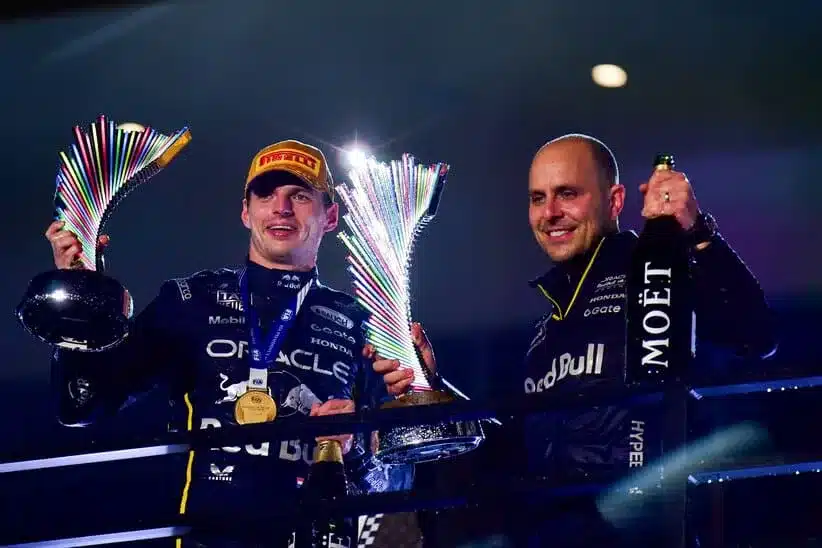
For Verstappen, this loss hits deeper than any regulation tweak or aero update. Lambiase wasn’t just a strategist. He was the steady hand behind Verstappen’s most dominant seasons. He was the one who calmed him when the balance went sideways.
And also the one who pushed him when he needed more pace, the one who translated Verstappen’s aggressive driving style into setup decisions that unlocked tenths. Their partnership belongs in the same breath as Schumacher–Byrne, Hamilton–Bono, and Vettel–Rocky, the duos that defined eras.
Now Verstappen faces a future without the engineer who shaped his rise. He’s already frustrated with Red Bull’s shrinking performance window, and Mercedes is circling. Drivers at his level don’t wait for a rebuild. They chase wins now. Losing Lambiase forces him to question whether Red Bull can still deliver a title‑capable car.
What’s Next
The grid is shifting fast. Lambiase’s move to McLaren isn’t a footnote — it’s a redistribution of power. McLaren gains one of the sharpest minds in the paddock, a man who engineered more than 70 wins and guided a generational talent to four world titles.
Red Bull loses a cornerstone of its dynasty at a moment when stability is already slipping. And Verstappen, the most dominant driver of his era, suddenly finds himself without the voice that shaped his success.
For More Great Content
Stay plugged in with more race analyses, features, and behind‑the‑garage storytelling. Follow Sarah on Facebook, LinkedIn, and X at Sarah Talker, where the conversation keeps rolling long after the checkered flag drops.
