
The Lab Report: Logano And Gordon Dissect Bristol’s 500‑Lap Gauntlet

Bristol Motor Speedway never forgives, and Sunday proved it again. The 0.533‑mile concrete bowl, with 28–30 degrees of banking and 15‑second lap times, demands perfection from drivers and crew chiefs every single lap. Five hundred circuits around this place equal more than 266 miles of nonstop contact.
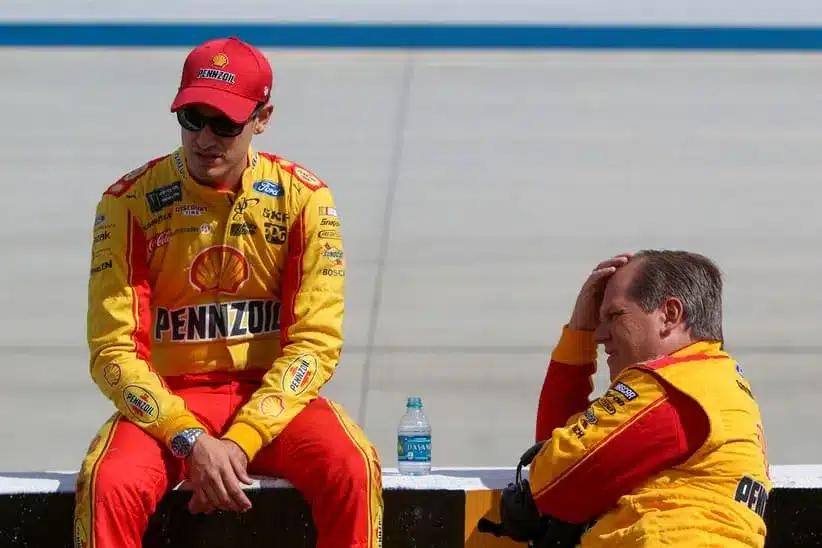
The checkered flag didn’t calm anything. It left a trail of torn bodywork, short fuses, and a garage full of teams trying to figure out what just hit them. To make sense of the chaos, NASCAR brought Joey Logano and his former crew chief, Todd Gordon, back together inside The Lab.
Thus, reuniting a duo that once delivered a 2018 Cup Series championship, 25 wins, and one of the most efficient driver‑crew chief pairings of the past decade. Their on‑camera breakdown feels like stepping straight back into their old Penske war room.
Logano supplied the instinct, and Gordon turned it into race‑winning adjustments. Their rhythm was built on trust: Logano feeling the car, Gordon converting it into setup changes. Now they’re shoulder‑to‑shoulder again, dissecting Thunder Valley with the same edge that once made them a threat every Sunday.
Decoding The Concrete Jungle
Sunday’s race was a physical and mental gauntlet. Logano didn’t sugarcoat the toll of muscling a 3,400‑pound Next Gen car around Bristol’s high banks for 500 laps, calling it one of the most demanding races on the schedule. The resin laid down in the lower groove created a razor‑thin line between grip and disaster.
And drivers spent the first 150 laps atBristol searching for forward drive while trying not to slap the outside wall. Gordon highlighted how the track took rubber early, then flipped character late, going from hooked‑up to slick in 20–30 laps, forcing teams to chase balance on the fly. Their breakdown of lapped traffic was a masterclass.
This track compresses decisions into milliseconds, and Logano explained how passes must be set up two to three corners in advance. He described manipulating the air on a rival’s rear bumper to force a slip, while Gordon pulled up telemetry showing the exact throttle traces and steering inputs that backed up Logano’s instincts.
When Logano talked about the right‑rear tire giving up after 60–70 laps, Gordon immediately tied it to heat cycles, camber load, and shock travel. Fans rarely get this level of access to what Monday debriefs actually sound like.
Analyzing the Triumphs And The Heartbreaks
The race wasn’t just about mechanics. It was about emotion. Ty Gibbs finally broke through for his first career Cup win, leading 71 laps and showing a level of patience that Bristol usually beats out of young drivers by lap 50. Logano praised Gibbs for managing traffic with veteran poise.
Gordon pointed out the flawless 10.8‑second pit stop from the No. 54 crew during the final stage break. That stop gave Gibbs the track position he needed, and he never gave it back. But the Team Penske reunion also meant addressing the struggles inside their own orbit.
Ryan Blaney endured a nightmare afternoon on pit road, losing a combined 18 seconds across three stops due to a loose lug and a slow jack. Gordon, who spent years calling stops for Penske, broke down the choreography of a perfect service and explained how even a half‑second mistake can bury a driver at Bristol.
Logano’s Take On The Scuffle Between Busch And Herbst
Logano also didn’t hold back when it came to discussing the contact between Kyle Busch and Riley Herbst. Busch, who spent most of the day mired between 18th and 25th, showed visible frustration after fighting a tight race car for more than 300 laps. Logano understood it. Bristol magnifies every weakness.
Gordon pulled up Busch’s steering traces to show how aero wash and tight quarters created the perfect recipe for bent fenders. They also spotlighted the underdogs. AJ Allmendinger and Todd Gilliland both delivered standout runs, finishing far above their season averages.
Gordon praised Gilliland’s crew chief for nailing strategy during the long green‑flag stretch, while Logano applauded Allmendinger for surviving the late‑race restarts without tearing the nose off the car. This is no small feat at Bristol.
What This Means
Logano and Gordon’s reunion in The Lab is more than nostalgia. It’s a masterclass in how races are won and lost. Bristol proved again that raw speed isn’t enough. Teams must adapt to a track that changes character every 50 to 75 laps, execute flawlessly on pit road, and manage emotions when the bumpers start flying.
For Team Penske, Gordon’s breakdown of Blaney’s pit issues is a blunt warning. Championships are often decided by pit crews, not horsepower. Penske has the speed, but the execution must tighten before the summer stretch.
For the rest of the garage, Logano’s analysis shows he’s studying every driver Gibbs’ rise, Busch’s struggles, Gilliland’s progress. He’s building his notebook for the fall Bristol race, where every detail matters.
What’s Next
Bristol Motor Speedway always leaves a mark: on cars, on drivers, and on the season. Having minds like Joey Logano and Todd Gordon break down the action strips away the PR gloss and reveals the gritty reality of short‑track racing.
Their insight reminds us why Bristol remains one of NASCAR’s crown jewels and leaves fans counting the days until the engines fire again. It’s the kind of anticipation that keeps NASCAR’s heartbeat strong.
For More Great Content
Stay plugged in with more race analyses, features, and behind‑the‑garage storytelling. Follow Sarah on Facebook, LinkedIn, and X at Sarah Talker, where the conversation keeps rolling long after the checkered flag drops.
