
AdventHealth 400 At Kansas Speedway: Cup Series, Entry List

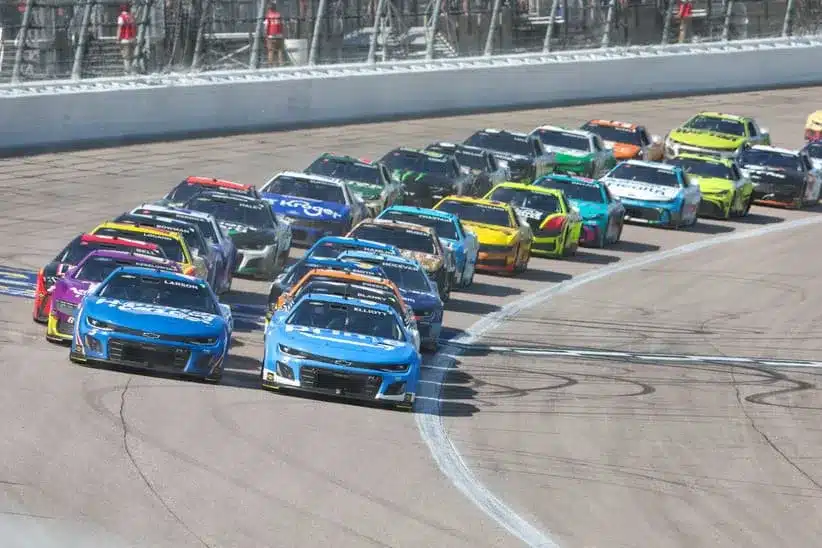
The NASCAR Cup Series heads to the Midwest for the AdventHealth 400, and Kansas Speedway brings the first true intermediate‑track test of the 2026 season. This 1.5‑mile oval exposes which teams have real balance and which ones are still searching for stability.
Kansas has delivered some of the closest finishes and highest green‑flag pass totals in the Next Gen era, a sign of how much multi‑groove racing and tire wear shape the product. With the official 37‑car entry list confirmed, teams know they’re entering one of the most revealing weekends of the year.
After the unpredictability of Daytona, the drafting chaos of Atlanta, and the rhythm‑based demands of Las Vegas, Kansas resets the field. It strips away superspeedway luck and forces drivers to manage aero balance, throttle control, and lane choice over long green‑flag stretches.
The track’s average green‑flag run length sits around 30–35 laps, long enough for handling to shift dramatically. The entry list reflects a field built for a race where execution, balance, and adaptability matter more than raw horsepower.
A Field Built For A Kansas Reality Check
Kansas Speedway demands precision. The wide surface encourages drivers to search for grip, the progressive banking rewards commitment, and the aging asphalt punishes teams that miss the setup window.
The high line against the wall becomes the preferred lane late in runs, but the middle and bottom grooves remain viable depending on tire wear and traffic. Tire falloff typically ranges between 1.2 and 1.8 seconds over a 25‑lap run, enough to separate disciplined drivers from those who overcharge the corner.
Kansas has produced five different winners in the last six spring races, and late‑race restarts often shuffle the field dramatically. Hendrick Motorsports, Joe Gibbs Racing, Team Penske, and 23XI Racing arrive with cars capable of controlling the race.
Trackhouse, RFK, and Front Row Motorsports bring enough speed to disrupt the running order if the race becomes strategy‑heavy. With tire sets limited, crew chiefs will be forced into uncomfortable decisions all afternoon.
Drivers Shaping This Weekend’s Field

This group of 37 drivers brings a wide range of experience and expectations to Kansas. Some have mastered the high line over the years, while others are still learning how to manage aero wake and tire wear at 180 mph.
The field includes former Kansas winners, rising stars, and multiple drivers entering with top‑tier momentum. Kansas rewards those who understand how to maintain corner exit speed, manage dirty air, and stay patient in traffic, skills that separate contenders from pretenders early in the season.
The average green‑flag speed differential between the fastest and slowest cars can exceed one second, making discipline more important than outright pace. The mix of youth, experience, and organizational strength gives this event a competitive edge that will help define the early championship picture.
Momentum also plays a major role. Drivers entering with strong intermediate‑track speed often translate that success to Kansas, where aerodynamic balance and throttle control matter more than raw horsepower.
Drivers To Watch
Kyle Larson: No. 5, Hendrick Motorsports
Kyle Larson enters Kansas as the defending spring winner and the only driver with two Kansas victories in the Next Gen era. His average finish of 6.3 at the track is the best in the field, and his ability to run the high line with precision makes him the early favorite.
Denny Hamlin: No. 11, Joe Gibbs Racing
Denny Hamlin has seven top‑ten finishes in his last eight Kansas starts and remains one of the most consistent threats here. His understanding of aero balance, tire management, and timing race‑winning moves makes him a major contender.
Ty Gibbs: No. 54, Joe Gibbs Racing
Ty Gibbs arrives with momentum after earning his first career Cup win at Bristol. He has six straight finishes of sixth or better and is driving with a confidence that should concern the rest of the field.
Austin Cindric: No. 2, Team Penske
Austin Cindric needs a turnaround. He has zero top‑ten finishes in eight Kansas starts and has struggled to find balance at this track. Penske needs a strong weekend to regain its footing.
Carson Hocevar: No. 77, Spire Motorsports
Carson Hocevar faces an uphill battle. Despite his raw talent, he has struggled at Kansas, averaging a 26.2 finish. His ability to adapt during practice will determine whether he can avoid another difficult weekend.
Corey Heim: No. 67, 23XI Racing
Corey Heim makes his second Cup start of 2026, piloting the No. 67 Toyota. After finishing 28th in the Daytona 500, he now faces a true intermediate‑track test. Toyota views him as a top developmental prospect.
What This Entry List Means
Kansas is the first race that truly tests a team’s intermediate‑track program. Superspeedways and drafting tracks reward specific skill sets. Kansas rewards completeness, the ability to qualify well, the ability to maintain pace over long runs, and staying composed when the groove widens.
Teams that perform well here often carry that momentum into the summer stretch and into the playoffs, where multiple tracks share similar characteristics. A strong Kansas run signals a team has its aerodynamic notebook dialed in.
The field is deep, balanced, and capable of producing a race defined by execution rather than attrition. Kansas has produced some of the closest finishes in the Next Gen era, emphasizing how tight the competition is.
It reveals which organizations built complete programs over the offseason and which still have work to do. A poor showing here often signals deeper issues that linger into June and July, something no playoff hopeful can afford.
Cup Series At Kansas Speedway
AdventHealth 400: Full Entry List
- 1. Ross Chastain — No. 1 — Trackhouse Racing
- 2. Austin Cindric — No. 2 — Team Penske
- 3. Austin Dillon — No. 3 — Richard Childress Racing
- 4. Noah Gragson — No. 4 — Front Row Motorsports
- 5. Kyle Larson — No. 5 — Hendrick Motorsports
- 6. Brad Keselowski — No. 6 — RFK Racing
- 7. Daniel Suárez — No. 7 — Spire Motorsports
- 8. Kyle Busch — No. 8 — Richard Childress Racing
- 9. Chase Elliott — No. 9 — Hendrick Motorsports
- 10. Ty Dillon — No. 10 — Kaulig Racing
- 11. Denny Hamlin — No. 11 — Joe Gibbs Racing
- 12. Ryan Blaney — No. 12 — Team Penske
- 13. A.J. Allmendinger — No. 16 — Kaulig Racing
- 14. Chris Buescher — No. 17 — RFK Racing
- 15. Chase Briscoe — No. 19 — Joe Gibbs Racing
- 16. Christopher Bell — No. 20 — Joe Gibbs Racing
- 17. Josh Berry — No. 21 — Wood Brothers Racing
- 18. Joey Logano — No. 22 — Team Penske
- 19. Bubba Wallace — No. 23 — 23XI Racing
- 20. William Byron — No. 24 — Hendrick Motorsports
- 21. Todd Gilliland — No. 34 — Front Row Motorsports
- 22. Riley Herbst — No. 35 — 23XI Racing
- 23. Zane Smith — No. 38 — Front Row Motorsports
- 24. Cole Custer — No. 41 — Haas Factory Team
- 25. John Hunter Nemechek — No. 42 — Legacy Motor Club
- 26. Erik Jones — No. 43 — Legacy Motor Club
- 27. Tyler Reddick — No. 45 — 23 XI Racing
- 28. Ricky Stenhouse Jr. — No. 47 — HYAK Motorsports
- 29. Alex Bowman — No. 48 — Hendrick Motorsports
- 30. Cody Ware — No. 51 — Rick Ware Racing
- 31. Ty Gibbs — No. 54 — Joe Gibbs Racing
- 32. Ryan Preece — No. 60 — RFK Racing
- 33. Corey Heim (i) — No. 67 — 23XI Racing
- 34. Michael McDowell — No. 71 — Spire Motorsports
- 35. Carson Hocevar — No. 77 — Spire Motorsports
- 36. Connor Zilisch — No. 88 — Trackhouse Racing
- 37. Shane van Gisbergen — No. 97 — Trackhouse Racing
Analyzing the Entry List
The Kansas entry list features a deep, competitive field where proven contenders and emerging talents collide on a track that quickly exposes weaknesses. With 37 cars entered, the balance between powerhouse teams like Hendrick, Gibbs, Penske, and 23XI and improving groups such as Trackhouse, RFK, and Front Row is striking.
It creates a grid where nearly every driver has a realistic chance to matter if their setup is right. Veterans like Larson, Hamlin, Blaney, and Byron bring strong Kansas résumés, while younger drivers such as Gibbs and Heim add unpredictability to the middle of the pack.
Kansas’s aging surface and multi‑groove layout will quickly reveal which organizations built strong intermediate packages over the offseason. Teams that unload poorly often spend the entire race fighting to stay on the lead lap.
The mix of experience, momentum, and developing talent makes this one of the most telling early‑season lineups. It’s the kind of field that exposes who’s truly prepared and who’s still searching for answers. Every lap will reveal something meaningful about the teams trying to shape their season.
Kansas On The Radar
The 2026 AdventHealth 400 entry list is one of the strongest intermediate‑track fields of the season. Thirty‑seven cars. A 1.5‑mile oval that rewards precision. And a race that will reveal more about the championship picture than anything we’ve seen so far.
Kansas doesn’t care about hype, but about who can manage their tires, control their pace, and stay disciplined when the groove widens out. The average race length here pushes three hours, making it a mental and physical test.
With tire falloff approaching two seconds, the fastest car early in a run is rarely the fastest late in the run. Sunday’s race will show which teams have the patience, balance, and long‑run execution needed to contend for a title.
Kansas also has a way of tightening the field as the race wears on. The teams that unload with balance and keep up with the track’s evolution usually rise to the front, while those who miss the window spend the afternoon clawing just to stay in contention.
What’s Next
Kansas has a way of clarifying the truth about every team in the garage, and this year’s AdventHealth 400 will be no exception. With 37 cars entered and tire wear shaping every decision, the teams that stay disciplined and adapt quickly will rise. Others will fade under the pressure.
By the time the checkered flag waves, the field will have a much clearer sense of who’s built for the long haul and who still has work to do. Kansas exposes weaknesses faster than almost any track on the schedule, and teams can’t hide from what Sunday reveals.
For More Great Content
Stay plugged in with more race analyses, features, and behind‑the‑garage storytelling. Follow Sarah on Facebook, LinkedIn, and X at Sarah Talker, where the conversation keeps rolling long after the checkered flag drops.
