
The Stops That Stung: Las Vegas Exposes Joe Gibbs Racing’s Costliest Weakness

In today’s NASCAR, raw speed isn’t enough. Races are won and lost in the pits, where ten seconds can feel like a lifetime, and one misstep can undo everything a team has built. During the latest Cup Series race in Las Vegas, that reality hit Joe Gibbs Racing harder than anyone else. The moment the field fired their engines at Las Vegas Motor Speedway.
The sound rolled across the desert like a shockwave, rattling the grandstands and humming through the concrete beneath pit road. The mile‑and‑a‑half oval has always demanded precision, but under the Nevada sun, it becomes something harsher and a place where the smallest mistake can ruin an entire afternoon.
What should have been a routine round of pit stops after the opening stage instead spiraled into a disaster. Three of the organization’s cars ran into trouble in the same sequence, turning a promising day into one filled with frustration and recovery. In a sport where a tenth of a second can swing a race, these errors were crushing.
The Brutal Reality Of The Modern Pit Stop
To understand how quickly things can fall apart, you have to understand the modern pit stop. Five crew members jump over a concrete wall carrying heavy tires, fuel cans, and air guns. They have less than 10 seconds to service a car that had been running at nearly 200 miles per hour moments earlier.
Every movement is rehearsed, every step timed. A single slip, a lug nut that doesn’t catch, a jack that doesn’t lift cleanly, a tire that doesn’t seat perfectly, can derail the entire stop. These athletes train like linebackers and sprinters, studying film and running drills all week to shave fractions of a second off their times.
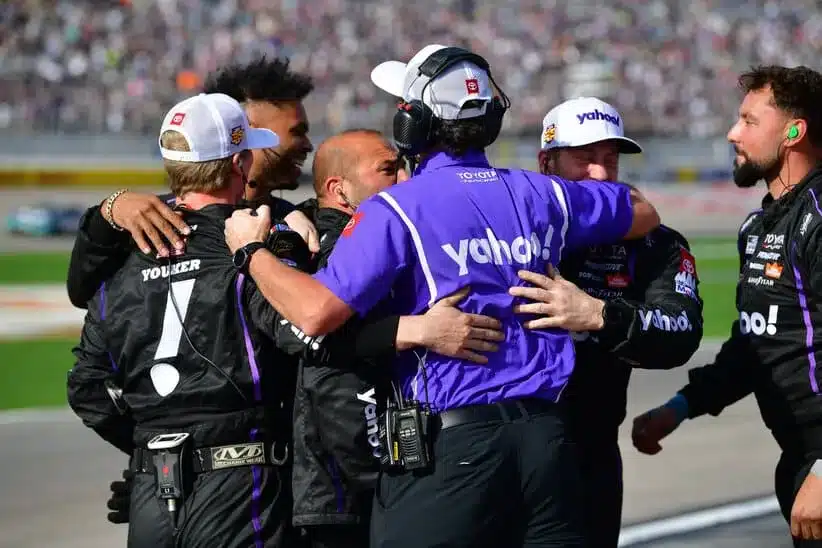
When something goes wrong, the disappointment is immediate. They know exactly how much their mistake costs, and they carry that weight. You can see it in the way they stare at the asphalt afterward, replaying the moment in their heads while their driver drops into dirty air with no clean lane forward.
Simultaneous Heartbreak For Joe Gibbs Racing
When the green‑and‑white checkered flag ended Stage 1, the field poured onto pit road for fresh tires and fuel. For top teams, this is usually the moment to gain ground. Instead, it became the moment Joe Gibbs Racing lost it. Three cars from the same organization suffering issues in the same round of stops is rare and demoralizing.
The radio chatter told the story: drivers frustrated, crew chiefs scrambling, spotters trying to settle nerves. Inside a 130‑degree cockpit, losing track position feels like the bottom dropping out. For the crew chiefs perched atop their pit boxes, the shift from strategy to damage control happens instantly. A bad stop at Las Vegas is more than a time loss.
It drops a driver into the thick of the pack, where the air is dirty and unpredictable. The middle of the field at Las Vegas is a dangerous place, a swirling pocket of turbulence where momentum dies, and tempers rise. For the Gibbs drivers, the mistakes meant fighting uphill for the rest of the afternoon, burning tires and patience just to claw back positions they should never have lost.
The Human Element Of Motorsports
Fans often focus on the cars and the numbers, lap times, horsepower, downforce, but NASCAR is a human sport at its core. Pit crews are made up of men and women who travel constantly, who spend more time in shops and airports than at home, who shoulder the responsibility of their driver’s success.
When a mistake happens on national television, there’s no hiding from it. Cameras catch every misstep, every tangled hose, every moment of heartbreak. The emotional toll is real. Crew members know the hours they’ve put in, the sacrifices they’ve made, and the trust their drivers place in them.
When something goes wrong, it stings in a way statistics can’t measure. Resetting after a mistake takes mental toughness. A crew member has to wipe the slate clean, refocus, and be ready for the next stop because another chance is coming, and hesitation isn’t an option.
What This Means
For Joe Gibbs Racing, the pit-road chaos forced an immediate shift in the race dynamics. Losing track position early meant abandoning the original plan. Crew chiefs had to gamble two‑tire stops, staying out on worn rubber, stretching fuel window, anything to regain the ground lost in those few disastrous seconds.
For the drivers, it meant pushing harder than they wanted to, taking risks they normally wouldn’t, and flirting with the wall in hopes of finding clean air. Passing at Las Vegas requires commitment and nerve, especially when you’re trying to recover from someone else’s mistake. One wrong move can end a season, yet the situation left them no choice but to push.
From a championship standpoint, days like this are costly. Stage points matter. Track position matters. Clean execution matters. The competition is too deep, too talented, and too prone to unforced errors. A single bad sequence on pit road can be the difference between contending for a title and watching the Championship Four from home.
What’s Next
Las Vegas Motor Speedway once again showed how quickly fortunes can turn. For Joe Gibbs Racing, the heartbreak on pit road was a harsh reminder that speed alone doesn’t win races. Execution does. The desert heat is unforgiving, and the asphalt remembers every mistake. As the haulers roll out and the series heads to the next stop, the crews in Huntersville will be back to work, running drills, studying film, and making sure a moment like this never slips through their fingers again.
