
Why Goodyear’s Joliet Data Run Is Drawing Strong Reviews From Blaney And Larson

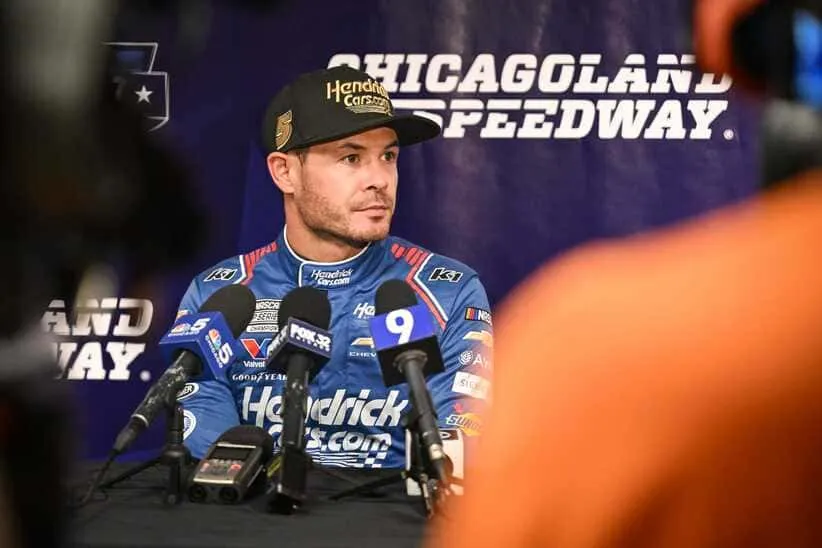
For the first time in nearly five years, Joliet finally heard its summer soundtrack again. Stock cars hammered around Chicagoland Speedway’s 1.5‑mile oval for a two‑day Goodyear Tire Test, the track’s first Cup Series activity since June 30, 2019, a gap of 2,120 days.
The track has sat quiet since the post‑pandemic schedule shuffle, but it’s aged well: rougher surface, sharper bumps, same identity. The test mattered. NASCAR’s Independence Day weekend return will be one of 2024’s headline events, and Goodyear needed data to lock in the tire.
Transporters rolled in at sunrise, and even with empty stands, the garage had a pulse. Ryan Blaney, Kyle Larson, and Denny Hamlin represented the three manufacturers, while Justin Allgaier and Brandon Jones logged laps for the O’Reilly Auto Parts Series. Seven years is a lifetime in motorsports.
The last Cup race here ran with the Gen‑6 car, different horsepower rules, and a different aero philosophy. But the track, the bumps in 1 and 2, the patched‑up asphalt in 3 and 4, the curved backstretch, is exactly as drivers left it.
The Next Gen Car Meets A Worn‑In Oval

The Joliet test had one purpose: to see how the Next Gen car handles a surface untouched by Cup since 2019. Chicagoland’s 2001 asphalt has 23 seasons on it, and the years without major events only sharpened its wear. Drivers felt the added abrasiveness immediately — exactly what teams want.
High wear creates falloff, and falloff creates racing. Kyle Larson, twice a runner‑up here in 2018 and 2019, was quick to note the shift. He rewatched those races before the test, but the Next Gen car forced him to reset everything.
“You’ve raced so much between then and now that I didn’t really remember a whole lot of the track other than just the big bump in one and some bumps in Turns 3 and 4. Those are all still there,” Larson said. “It’s really fast. It’s a lot faster pace than what I remember the old car being here. We’re on the throttle quite a bit,” Larson added of Chicagoland.
Larson’s comments matched the data. Early runs showed corner‑entry speeds 6–8 mph faster than the 2019 Gen‑6 baseline, but the old Chicagoland bumps were still waiting. He bottomed out the moment he moved up a lane in Turn 3, a reminder that in July, the fastest line will be the one that keeps the car planted, not the one with the most banking.
Blaney’s Midwestern Homecoming
For Ryan Blaney, the return to Joliet meant something. The defending Cup champion has deep Midwestern roots, and Chicagoland was a track he circled every year. When it fell off the schedule after 2019, he was among the drivers who voiced frustration. The Chicago Street Race filled the market, but it never replaced what this oval offered.
Blaney immediately noticed the surface’s condition. The asphalt is now coarse enough to produce a significant falloff. Early estimates suggested 1.2 to 1.5 seconds of drop‑off over a 25‑lap run. That’s the kind of degradation that forces teams to make strategic decisions and rewards drivers who manage their equipment.
“One of the neatest things about this place is the surface. It is at a really good point of being very well aged,” Blaney said. “Tire falloff is going to be pretty big, especially when we come back in the summer. I just remember it puts on really good races,” he added.
Blaney also pointed out the curved backstretch, a feature that subtly changes how drivers set up passes. It forces a constant steering input, which increases tire load and accelerates wear. Another reason Goodyear’s compound choice will matter.
What The Test Means For July
Goodyear’s engineers collected thousands of data points over the two‑day session: tire temperatures, wear patterns, camber sensitivity, and falloff curves. The information will determine whether the July race uses a softer compound to enhance degradation or a slightly firmer option to prevent excessive wear in the summer heat.
The July event will likely see track temperatures above 120 degrees, which will amplify every characteristic the drivers felt this week. For fans, the test confirmed one thing: the race will not be a single‑groove parade.
The bumps are aggressive. The surface chews through rubber. The Next Gen car’s independent rear suspension reacts sharply to the transitions. All of that creates opportunities for multiple lanes, heavy braking zones, and real passing.
The bumps are aggressive, the surface chews through rubber, and the Next Gen car’s independent rear suspension snaps over every transition. All of it opens lanes, builds braking zones, and creates real passing opportunities.
A Track Ready For Its Second Act
Chicagoland Speedway looks better than anyone expected. The facility has been maintained, the racing surface has matured, and the drivers have left with genuine optimism. Larson summed it up before heading out of the garage: the track is in a better place than it was in 2019.
The weeds are gone. The asphalt is ready. And when the green flag waves on Independence Day weekend, Chicagoland’s long‑awaited revival will finally be complete. Fans who waited five years will feel that moment hit instantly. The place will sound alive again the second the field roars past the start‑finish line.
For More Great Content
Stay plugged in with more race analyses, features, and behind‑the‑garage storytelling. Follow Sarah on Facebook, LinkedIn, and X at Sarah Talker, where the conversation keeps rolling long after the checkered flag drops.
