
Ferrari’s Miami Reset: Inside The “Package And A Half” Aimed At Rewriting The 2026 Season

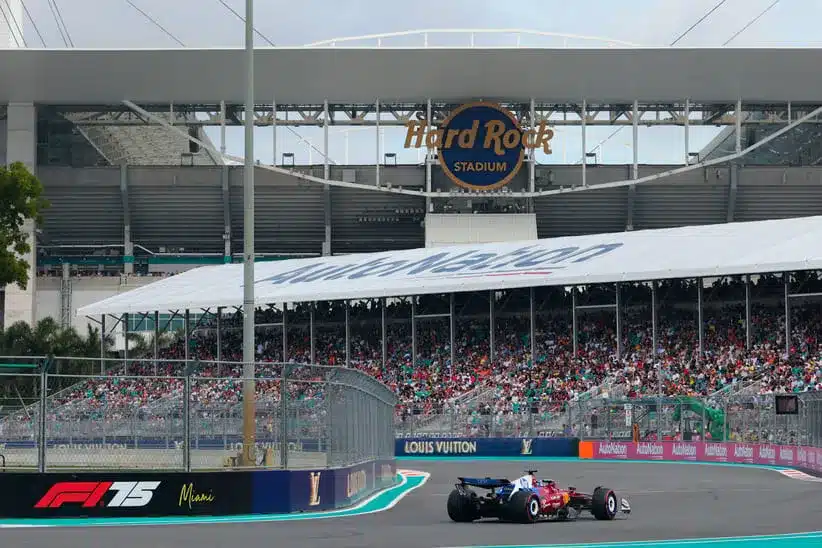
Ferrari is heading into Miami with more on the line than a typical early‑season race. The cancellations of Bahrain and Saudi Arabia created an unusual gap in the schedule, and instead of treating it as downtime, the team used it as a full development block.
With four weeks to analyze data, revise concepts, and accelerate upgrades, Ferrari arrives in South Florida with one of the largest mid‑season technical pushes they’ve attempted in years. The team knows this window won’t come again once the calendar compresses.
Team principal Fred Vasseur confirmed that the SF‑26 will debut what he called a “package and a half,” a blend of originally scheduled updates and future developments that have been pulled forward. It’s one of the most aggressive early‑season steps Ferrari has taken in years.
For a team sitting second in the Constructors’ standings with 90 points, trailing Mercedes by 45, this is a pivotal moment. Ferrari has been competitive but not consistently fast enough to pressure Mercedes over a full race distance. Miami now becomes the first true checkpoint of the season, and Ferrari is treating it as a reset.
A Development Window Ferrari Couldn’t Waste
The break in the calendar gave Ferrari something they rarely get during the season: uninterrupted development time. Engineers at Maranello used the gap to combine multiple upgrade phases into one comprehensive package.
Instead of rolling out incremental improvements across several rounds, Ferrari chose to consolidate everything into a single, aggressive step. The team had originally planned to introduce part of this package earlier, but the shifting schedule forced a change in strategy.
Rather than delay progress, Ferrari merged the Bahrain‑spec upgrades with elements that were initially targeted for later in the year. The result is a broader, more ambitious overhaul that touches nearly every aerodynamic surface on the car.This approach carries risk.
A large upgrade package means fewer opportunities to isolate variables, and if something doesn’t correlate with wind‑tunnel or CFD data, the team has less time to adjust. But Ferrari believes the potential reward outweighs the uncertainty. With Mercedes showing a strong early‑season pace, incremental gains weren’t going to be enough.
What Ferrari Is Bringing To Miami
While Ferrari hasn’t released a full technical breakdown, the scope of the upgrade is clear. The team hasn’t detailed every component, but the scale is significant. Several core aerodynamic surfaces have been reworked for this round. The SF‑26 will feature:
- A revised front wing with updated mainplane geometry.
- New endplate shaping to improve airflow consistency.
- Adjusted sidepod inlets and internal ducting.
- A refined floor edge concept.
- A modified rear‑wing assembly aimed at improving efficiency on long straights.
The front wing changes are particularly important. Ferrari has been seeking greater stability in medium‑speed corners, and the updated design is intended to improve front‑end predictability while maintaining downforce levels. The floor and sidepod adjustments are aimed at improving airflow management an area where Mercedes has excelled so far.
Ferrari’s chassis has been one of the strengths of the SF‑26, but the team needs more aerodynamic load and better balance to consistently challenge for wins. Miami’s layout, with its mix of long straights and technical sections, will provide a clear read on whether these upgrades deliver the expected gains.
The FIA’s New Development Rules Could Shift The Competitive Order
Ferrari’s timing may also benefit from the FIA’s Additional Development and Upgrade Opportunities program. The rule is meant to prevent any power‑unit manufacturer from pulling too far ahead. Every five to six races, the FIA reviews average engine performance, and any manufacturer falling below the threshold receives extra development allowances.
Because Bahrain and Saudi Arabia were canceled, Miami could be considered the first race under these rules. If the FIA treats Miami as Round 6 in its original position on the calendar, Ferrari may immediately gain access to additional development opportunities.
This matters because Mercedes currently holds a measurable horsepower advantage. Ferrari’s power unit is competitive but still trails in peak output. If the ADUO program is activated, Ferrari could reduce that gap in the next development cycle.
The FIA is still finalizing the classification, but the possibility alone adds another layer of significance to Miami. A rules‑driven performance adjustment combined with Ferrari’s upgrade package could tighten the front of the field.
Vasseur’s Approach: Treat Miami As A New Beginning
Ferrari’s leadership used the unexpected break to reset expectations inside the team. Fred Vasseur has been clear that the early points gap can’t dictate the rest of the season, and he wants Miami treated as the moment where the real work begins.
“From Miami onwards, a new championship begins.”
That message has been in the garage for weeks. Vasseur wants the team locked on execution, not standings, and he knows the development race is only now taking shape. With enough data to understand the car, Ferrari used the break to study cornering speeds, tire behavior, and aero efficiency to close the gap.
The objective is simple: improve faster than Mercedes and Red Bull. The budget cap limits how much they can add later, which makes Miami a key checkpoint. If the upgrades work, Ferrari gains momentum; if they miss, the team spends the summer trying to recover ground it can’t give away.
Why Miami Is The Right Track For A Major Upgrade
Miami’s circuit layout makes it a strong test for a comprehensive upgrade package. The track features two long straights that expose power‑unit performance and a technical middle sector that punishes any imbalance. It also forces teams to manage tire temperatures carefully, especially during long green‑flag runs. The track features:
- A long back straight that exposes power‑unit performance.
- Heavy braking zones that test stability.
- A technical middle sector that rewards aerodynamic balance.
- High track temperatures stress tire management.
If a car has weaknesses, Miami will reveal them quickly. That’s why Ferrari chose this race for the debut. The team will get clear, actionable data, and the competitive environment will show whether the SF‑26 can match Mercedes over a full race distance.
Miami also marks the beginning of a demanding stretch of the calendar. With races coming in quicker succession, teams will have less time to introduce major upgrades. Ferrari’s decision to front‑load development could give them an advantage if the package performs as expected.
What This Means For The Championship
For Ferrari, Miami is more than a race. It’s a pivot point. If the upgrades deliver, the team can close the gap to Mercedes and reestablish themselves as a consistent threat. If the FIA’s development rules activate, the power‑unit deficit could shrink as well.
For Charles Leclerc, the stakes are equally high. He has been competitive in the opening rounds, but he needs a car capable of challenging for wins to stay in the Drivers’ Championship fight. Miami will show whether Ferrari has given him that platform.
For the rest of the grid, Ferrari’s aggressive approach forces a response. A successful upgrade package from Maranello will push Mercedes, Red Bull, and McLaren to accelerate their own development plans.
What’s Next
Ferrari enters Miami with a clear objective: change the trajectory of the season. The team used the unexpected break to build one of the largest upgrade packages of the year, and the combination of aerodynamic revisions, structural updates, and potential FIA development allowances gives them a real opportunity to close the gap.
Miami will provide the first true measurement of whether the SF‑26 can evolve into a championship‑caliber car. The team has committed to an aggressive strategy, and the next phase of the season will be shaped by what happens in South Florida.
