
F1 2026 Power Unit Homologation: What The March 1 Deadline Really Meant

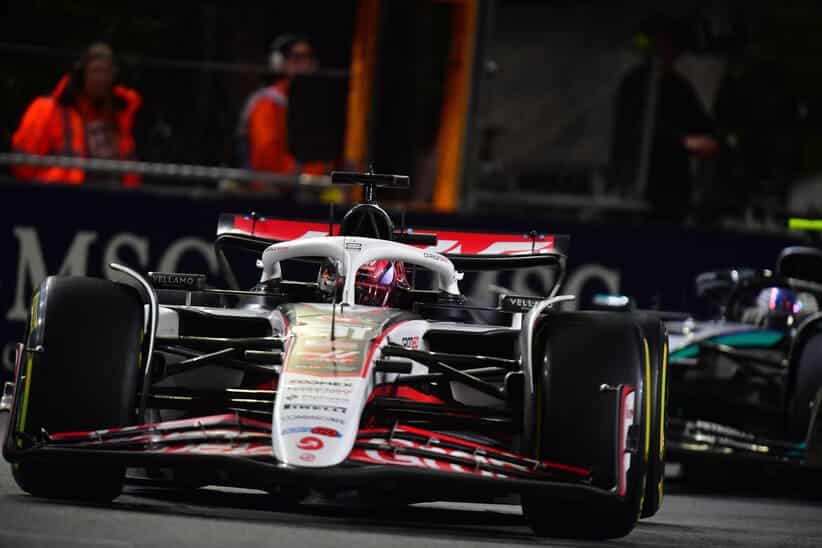
March 1, 2026, was not just another day on the calendar. For five of the most powerful engineering organizations on the planet, it was a hard stop a deadline with no wiggle room. Either a manufacturer submitted its power‑unit homologation dossier to the FIA, or it did not race. That was the kind of pressure that kept engineers awake at night.
The five power‑unit manufacturers competing in F1 2026, Ferrari, Mercedes-High-Performance Powertrains, Audi, Red Bull Powertrains, and Honda, each delivered a comprehensive technical filing to the FIA by this date.
It covered everything inside the engine package: the internal combustion engine, turbocharger, energy store, control electronics, exhaust system, and the MGU‑K. Every nut, bolt, and circuit had to be documented, declared, and defended. Once the FIA received those documents, it had 14 days to sign off. After that, the units were sealed.
Why Homologation Matters So Much in F1
Homologation acts as a contract between the manufacturers and the sport. A team declared what its engine was. The FIA verified it, and then it was locked in for the duration of the regulation cycle: 2026 through 2030. This is not a formality. It’s the foundation of competitive fairness in F1.
Without it, manufacturers could quietly upgrade their units mid‑season without anyone knowing. The seal existed so that every time an engine was inspected, it could be measured against what was originally filed. If something did not match, there were consequences.
Pre‑season testing in Bahrain gave manufacturers one last real‑world opportunity to gather data and make final adjustments before the deadline closed. That was intentional. The FIA wanted these engines to experience actual track conditions before the paperwork was finalized. It was a smart move, and it meant manufacturers worked flat‑out until the last possible moment.
How The Dossier Worked And What It Had To Include
The homologation dossier was not a short document. It had to comprehensively detail every critical component of the power unit. That meant technical specifications for all PU elements listed under Appendix C4 of the technical regulations. It meant supporting documentation. It meant no gaps.
Once approved, each manufacturer also had to deliver a complete physical reference power unit to the FIA by April 1 of its first competition year. That unit sat in storage as a tangible benchmark and a sealed reference point that the FIA could pull out and compare against anything that came off the production line later. Performance‑related upgrades during the five‑year cycle were heavily restricted.
Reliability‑based changes could be submitted for review. Minor adjustments to wiring, wastegate positioning, hose routing, and valve placement were permitted with approval, provided the fundamental architecture of each system remained unchanged. Any modification required a fresh submission to the FIA at least 14 days before it appeared on track.
What This Means For Customer Teams
Several manufacturers supplied engines to multiple teams. Mercedes-powered McLaren, Williams, and Alpine. Ferrari supplied Haas and Cadillac. The rules were clear: every team running that engine received the exact same unit, operated in the exact same way. That included control software, technical specifications, and even the type of fuel and oil used.
Customer teams could apply to run with a different supplier, but doing so required an explicit declaration in the homologation dossier, and it carried a performance risk. Third‑party suppliers simply did not have the same depth of knowledge about the engine as the factory outfit.
As updates were introduced during the regulation cycle, customer teams had to receive the updated specification at the same event where the factory team debuted it. For manufacturers supplying more than two teams, a single exception per season was granted if genuine supply constraints arose.
Relevance For The 2026 Season
The homologation deadline was more than a procedural checkbox. It set the competitive hierarchy for years to come. The engine locked in on March 1, 2026, was largely the engine each team raced with through 2030. There was limited room to recover from a fundamental design error. If one manufacturer found an efficiency advantage that the others missed, the gap could linger for the entire regulation cycle.
History in F1 had shown that once set, engine regulations tended to produce dominant forces. The 2026 rules represented a brand‑new chapter, and nobody knew yet who had written the best opening line. The March 1 deadline passed. The dossiers were in. Now the sport waits to find out who did their homework.
What This Means For F1 Going Forward
1. It Locks in the Balance of Power Until 2030
The freeze meant that whatever strengths or weaknesses were baked into the 2026 engines continued to shape the competitive order for years. A strong concept became a long‑term advantage; a flawed one became a multi‑season burden. This single deadline effectively defined the competitive ceiling for every manufacturer.
2. It Cements F1’s Hybrid‑Heavy Identity
The 2026 rules shifted F1 toward electric deployment, and the homologated designs determined who adapted best. Teams that mastered battery efficiency, thermal management, and energy deployment set the tone for the sport’s technological direction.
3. It Determines Which Teams Rose or Fell
Customer teams lived with the consequences of their engine choice. A midfield team with a strong 2026 power unit could suddenly fight for podiums, while a top team with a weaker engine risked sliding backward. The freeze locked these dynamics in place.
4. It Influences Driver Markets and Long‑Term Strategy
Drivers made career decisions based on the competitiveness of the homologated engines. Teams with strong power units became magnets for elite talent, while others struggled to attract or retain top drivers. Development strategies also shifted toward aerodynamics, chassis efficiency, and software: the areas where gains were still possible.
5. It Shapes the Next Technological Arms Race
With engines frozen, innovation moved into software, cooling, packaging, and hybrid‑system integration. The battle became less about raw horsepower and more about intelligence, efficiency, and system collaboration. This defined the character of the 2026–2030 era.
What’s Next
The 2026 power‑unit homologation deadline was far more than a bureaucratic milestone. It was the moment the competitive future of Formula 1 was locked into place. The decisions made, the designs submitted, and the concepts sealed on March 1 continued to shape the sport for years. Some teams built foundations for dominance
Others unknowingly locked in limitations they would spend seasons trying to overcome.In a sport where every millisecond mattered, the 2026 homologation freeze became one of the most consequential turning points of the modern era and a deadline that didn’t just define a season, but an entire generation of Formula 1.
