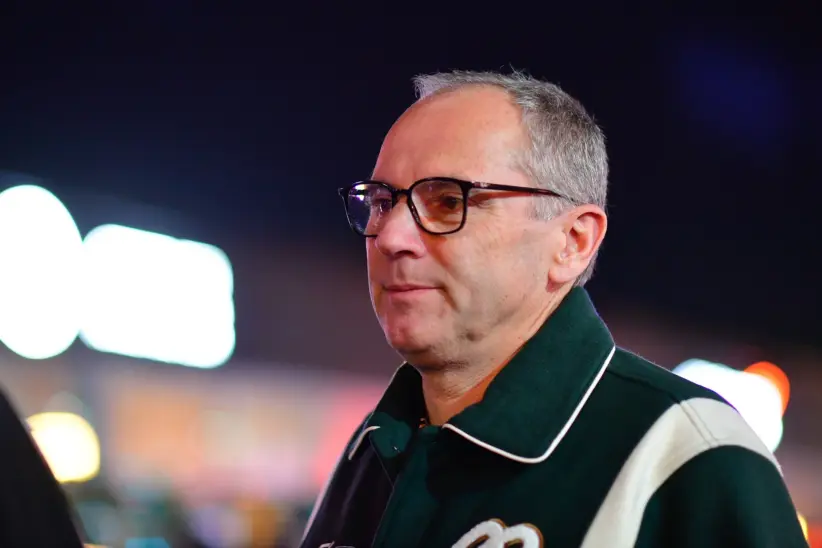
Stefano Domenicali Predicts F1 2026 Regulations Will Reset Competitive Order

If you think you know who’s going to be sitting on the pole position when the lights go out in 2026, think again. The world of Formula 1 is bracing for a massive shake-up, and according to the man at the helm, F1 President Stefano Domenicali, the current pecking order is about to be thrown entirely out the window.We aren’t just talking about a few tweaks to the wings or a minor adjustment to fuel flow.
The 2026 regulations represent a wholesale reinvention of the sport’s machinery. We are looking at entirely new chassis rules, a complete overhaul of the power units, and a shift in philosophy that will force every single team back to the drawing board. For the fans, it’s exciting. For the engineers back at the factories? It’s going to be sleepless nights and brutal deadlines.
Domenicali Predicts A Chaotic Development War
The “ground effect” era, which has defined the cars since 2022, is bowing out. In its place, Domenicali envisions a grid where past success guarantees absolutely nothing. The dominance we’ve seen from certain teams over the last few years? That could vanish in the blink of an eye. Writing for the official F1 site, Domenicali didn’t mince words about the volatility coming down the pipe.
“The form book will be ripped up,” he stated plainly. “The pecking order will be up in the air.”This is the kind of talk that gets race fans out of their seats. The idea is that when the cars line up for that first Grand Prix of 2026, it’s truly anyone’s game. Domenicali emphasized that where a team starts the season likely won’t be where they finish it.
He is predicting a “fast and intense development race.” In racing terms, that means the teams that can adapt the quickest, diagnose their issues, and bolt on effective upgrades week after week are the ones who will survive. It’s going to be a relentless sprint from the first green flag to the final checkered.
Smaller, Lighter, and Smarter Machinery
So, what exactly is changing? For starters, the cars are going on a diet. After years of F1 cars getting heavier and bulkier, the 2026 specs call for machines that are smaller and roughly 30 kilograms lighter. Any racer will tell you that shedding weight is free lap time, but achieving that while meeting new safety and hybrid standards is a massive engineering headache.
Perhaps the biggest curveball is the introduction of active aerodynamics on both the front and rear wings. The days of the simple Drag Reduction System (DRS) as we know it are numbered. Instead, we are entering an era where the car’s profile changes dynamically to reduce drag on the straights and pile on downforce in the corners. It’s active, it’s complex, and it’s going to separate the good drivers from the great ones.
The Power Unit Revolution
Under the engine cover, the changes are just as drastic. The sport is moving to a 50/50 split between internal combustion and electric power. That is a massive jump in electrification compared to what the drivers can achieve with their right foot today
.Managing that energy deployment will be critical. Drivers won’t just be managing tire wear; they’ll be taking a gamble with their battery levels, deciding exactly when to deploy that electrical grunt for an overtake or save it for defense.
To top it off, the internal combustion engine will be sipping on fully sustainable biofuel. It’s a brave new world for the engine manufacturers, and with Audi and Cadillac entering the fray, the competition in the engine shop is going to be just as fierce as the battle on the track.
Less rubber on the road
Even the contact patch is changing. Pirelli is bringing in tires that are 25 millimeters narrower at the front and 30 millimeters narrower at the rear. Less rubber on the road usually means less mechanical grip. Combine that with the massive torque from the increased electric motors, and you have a recipe for cars that are a handful to drive.
Drivers will have to be smoother than ever on the throttle to keep the rear end planted.Domenicali sees all these changes not as a risk, but as a massive opportunity to reshuffle the deck. “We will see brand-new cars with revised power units,” he noted. It’s a chance for the midfield teams to find a magic bullet and leapfrog the giants.
New Venues And A Sustainable Future
Beyond the nuts and bolts of the cars, the calendar is evolving too. Domenicali highlighted the addition of the new street track in Madrid, which will take over the Spanish Grand Prix duties, and hinted at discussions with other nations clamoring to host a race. “Many want to be part of our show,” he said, proving that the global appetite for F1 is only growing.
Final Thoughts
The 2026 season is shaping up to be a landmark year in motorsport history. It’s a reset button clean slate. And if Domenicali is right, it’s going to be the most unpredictable season we have seen in decades.