
Dillon And Rader’s Fort Bragg Experience Bridges The Gap Between Racing And Service

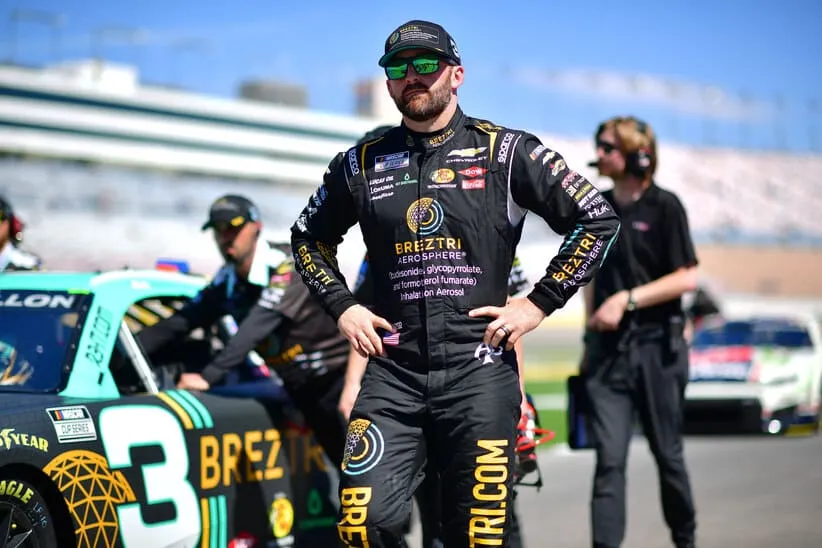
Stock car racing and military life rarely intersect, but Thursday at Fort Bragg created a meaningful connection between the two worlds. Austin Dillon and Tyler Rader spent the day on the North Carolina installation home to more than 47,000 active‑duty soldiers as part of Mission 600, the annual program that leads into the 600‑mile Coca‑Cola 600 at Charlotte Motor Speedway.
For Dillon, it was an opportunity to understand the daily demands placed on America’s service members. For Rader, a former Army Ranger who once served on this very base, it was a return to the place that shaped the foundation of his life long before he fueled the No. 3 Chevrolet.
A Deeply Personal Return To Fort Bragg
Seven years ago, Tyler Rader made a choice that completely reshaped his life. He left the grind of professional stock car racing and enlisted in the United States Army, serving at Fort Bragg in the 75th Ranger Regiment, a unit defined by extreme physical standards, high‑risk missions, and a training pipeline where only a small percentage make it through.
During his time in uniform, Rader completed more than a dozen airborne jumps and operated in an environment built on discipline, precision, and trust. Returning to the base brought back memories that had been dormant for years.
Walking the grounds where he once trained let him reconnect with a period that shaped him long before he fueled the No. 3 Chevrolet. He spent roughly seven hours moving through exercises and demonstrations he never expected to revisit.
The experience created a bridge between the soldier he once was and the crew member he is today, grounding him in the values that carried him through both worlds. It reminded him how much of his discipline was built long before he ever stepped onto pit road.
Firing On All Cylinders At The Range
The day began at the shooting range, where military officials guided Austin Dillon and Rader through a series of weapons familiar to active‑duty soldiers. They fired the M4 carbine, the Army’s standard rifle capable of semi‑automatic and burst fire.
The Beretta M9 pistol, which served as the Army’s primary sidearm for more than 30 years, and the M249 Squad Automatic Weapon, a light machine gun capable of firing up to 850 rounds per minute. The visit escalated with a live demonstration of a howitzer.
Seven soldiers worked in tight coordination to set up and fire the artillery piece in just four minutes, a level of synchronization that mirrors the timing of a NASCAR pit stop, where a competitive stop lasts between 10 and 12 seconds. Dillon and Rader were both invited to fire a round from the howitzer, a rare opportunity for visitors.
Competition showed up fast at the range. Dillon and Rader compared accuracy, and the former Ranger quickly pulled ahead. Even after years away from the weapons, Rader’s fundamentals returned immediately. They spent about ninety minutes there, settling into an easy rhythm built on shared experience under pressure.
Airborne Exercises And Aviation Simulations
After the range, the group ate at the Devil’s Den Warrior Restaurant before heading to airborne training. Dillon and Rader stepped into a retired C‑130 fuselage, where soldiers rehearse jump sequences from more than 1,000 feet, walking through the same steps Rader once performed on real missions.
Rader then moved to the 34‑foot jump tower, strapping into a harness and completing a controlled drop along a zip line. The motion was familiar to him; during his service, he completed at least 14 real jumps, each requiring absolute focus and trust in the equipment.
The day concluded inside a high‑fidelity flight simulator, where Dillon and Rader attempted to pilot virtual Apache and Black Hawk helicopters. The simulator highlighted the level of coordination and multitasking required to operate military aircraft, giving both men a deeper appreciation for the soldiers who do it daily.
Throughout the afternoon, Dillon absorbed every detail. He asked questions constantly and made it clear how much respect he gained for the soldiers’ training regimen. He noted that their approach, repeating tasks until mistakes are no longer possible, mirrors the mindset required to compete at the highest level of NASCAR.
What This Means
The visit underscored the parallels between a top‑tier NASCAR pit crew and an elite military unit. Both rely on trust, communication, and the ability to execute under pressure without hesitation. When Rader first arrived at his Ranger regiment, he was taught leadership, discipline, and selfless service from the moment he stepped through the door.
Those principles follow him over the pit wall every weekend. When he connects the 90‑pound fuel can to the No. 3 Chevrolet, he leans on the same focus and composure that carried him through airborne operations and Ranger training. For Dillon, watching his fueler operate in this environment added another layer of trust.
Seeing Rader move through familiar military routines made it clear why he performs so well under the intensity of a live pit stop. The driver knows the person fueling his car has already proven himself in situations far more demanding than anything that happens on pit road.
Rader’s background also gives Dillon a clearer understanding of the steadiness he brings to the team. The same focus that carried him through airborne operations and Ranger training now shows up in the way he handles pressure on pit road.
What’s Next
The Coca‑Cola 600 is one of the toughest races in motorsports, and Dillon knows it well. He earned his first Cup win in the event nine years ago by stretching his fuel over the final 67 laps. But the race’s meaning on Memorial Day weekend goes beyond strategy. It’s a moment to honor those who have sacrificed for the country.
Many of the soldiers Dillon and Rader met will be at Charlotte Motor Speedway. When the field takes the green, the moment will carry added weight, serving as a tribute to service members like Rader and those standing watch around the world.
For More Great Content
Stay plugged in with more race analyses, features, and behind‑the‑garage storytelling. Follow Sarah on Facebook, LinkedIn, and X at Sarah Talker, where the conversation keeps rolling long after the checkered flag drops.
