
Cup Series Las Vegas Finishing Order: Pennzoil 400 Results And Takeaways

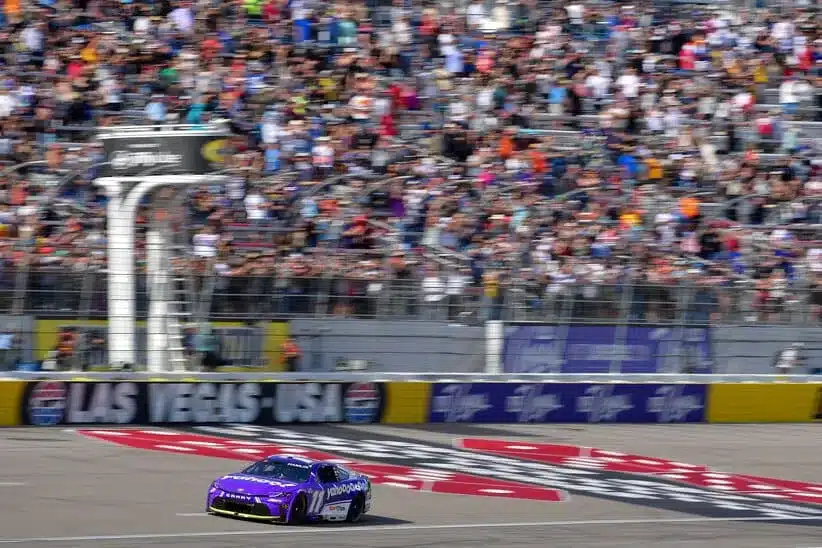
The 2026 Pennzoil 400 at Las Vegas Motor Speedway delivered the kind of layered, high‑pressure afternoon that defines NASCAR’s toughest intermediate‑track races. Tire falloff punished aggression, long‑run balance separated contenders from pretenders, and pit cycles split the field into competing strategies.
Through all of it, Denny Hamlin delivered a performance that not only won the race but reshaped the early‑season narrative. The race felt like a championship preview, with the sport’s biggest names trading pace and execution in a way that kept the outcome uncertain until the final laps.
Mistakes, Consequences, And A Statement Win
Even the smallest mistakes carried massive consequences at Las Vegas, creating a tension that never eased from the opening green to the final sprint. This wasn’t a runaway. Chase Elliott surged late with the kind of controlled aggression that once made him a perennial title contender.
William Byron and Christopher Bell executed disciplined, mistake‑free races that kept them in the fight. But the defining story in the Nevada desert was Hamlin’s historic milestone when the checkered flag fell. His 61st career win broke his tie with Kevin Harvick and moved him into sole possession of 10th on the all‑time wins list.
This moment carried emotional weight for a driver whose career has been defined by both brilliance and heartbreak. The celebration on pit road reflected the magnitude of the moment, with Hamlin’s crew recognizing they had witnessed a career‑defining afternoon.
Pennzoil 400 At Las Vegas Motor Speedway
Cup Series: Full Finishing Order
- 1. Denny Hamlin — No. 11 — Joe Gibbs Racing
- 2. Chase Elliott — No. 9 — Hendrick Motorsports
- 3. William Byron — No. 24 — Hendrick Motorsports
- 4. Christopher Bell — No. 20 — Joe Gibbs Racing
- 5. Ty GIbbs — No. 54 — Joe Gibbs Racing
- 6. Chris Buescher — No. 17 — RFK Racing
- 7. Kyle Larson — No. 5 — Hendrick Motorsports
- 8. Chase Briscoe — No. 19 — Joe Gibbs Racing
- 9. Bubba Wallace — No. 23 — 23XI Racing
- 10. Brad Keselowski — No. 6 — RFK Racing
- 11. Ryan Preece — No. 60 — RFK Racing
- 12. Austin Dillon — No. 3 — Richard Childress Racing
- 13. Tyler Reddick — No. 45 — 23XI Racing
- 14. Zane Smith — No. 38 — Front Row Motorsports
- 15. Joey Logano — No. 22 — Team Penske
- 16. Ryan Blaney — No. 12 — Team Penske
- 17. Ross Chastain — No. 1— Trackhouse Racing
- 18. Daniel Suarez — No. 7 — Spire Motorsports
- 19. Austin Cindric — No. 2 — Team Penske
- 20. Erik Jones — No. 43 — Legacy Motor Club
- 21. John Hunter Nemechek — No. 42 — Legacy Motor Club
- 22. Carson Hocevar — No. 77 — Spire Motorsports
- 23. Riley Herbst — No. 35 — 23XI Racing
- 24. A.J. Allmendinger — No. 16 — Kaulig Racing
- 25. Justin Allgaier — No. 48 — Hendrick Motorsports
- 26. Michael McDowell — No. 71— Spire Motorsports
- 27. Cole Custer— No. 41 — Haas Factory Team
- 28. Kyle Busch — No. 8 — Richard Childress Racing
- 29. Rick Stenhouse Jr. — No. 47 — HYAK Motorsports
- 30. Noah Gragson — No. 4 — Front Row Motorsports
- 31. Josh Berry — No. 21 — Wood Brothers Racing
- 32. Connor Zilisch — No. 88 — Trackhouse Racing
- 33. Ty Dillon — No. 10 — Kaulig Racing
- 34. Todd Gilliland — No. 34 — Front Row Motorsports
- 35. Cody Ware — No. 51— Rick Ware Racing
- 36. Shane van Gisbergen — No. 97— Trackhouse Racing
These finishing positions tell only part of the story and reveal gaps between teams, execution under pressure, and late‑race adjustments, displaying the true competitive landscape. The top five were separated by less than two seconds at one point, underscoring how tight the field was at the front. Meanwhile, the bottom third of the order showed just how quickly a promising weekend can unravel at Las Vegas.
What The Full Finishing Order Reveals
The full 36‑car Las Vegas finishing order paints a clear picture of which teams have found early‑season speed and which ones are still searching for answers. Joe Gibbs Racing placed three cars inside the top five, the strongest organizational showing of the weekend. Hendrick Motorsports countered with two cars on the podium.
This momentum reinforces their intermediate‑track strength and signals that the championship fight is tightening between the sport’s two powerhouse teams. These results highlight a growing divide between elite programs and the mid‑pack teams still trying to find consistency.
Only six drivers at Las Vegas gained more than 10 positions, highlighting how difficult passing became on long green‑flag runs. Meanwhile, nine drivers finished outside the top 25 despite starting inside the top 15, a sign of how punishing the track became as tire wear increased.
The numbers reflect a race where execution mattered as much as raw speed. Teams that missed the setup early never recovered, and those who nailed long‑run balance were rewarded. At the bottom of the order, Shane van Gisbergen’s last‑place finish marked his first major setback of the season.
However, Kyle Busch’s 28th‑place run was his worst Las Vegas result in more than a decade. These numbers aren’t just statistics. They’re indicators of momentum shifts that will matter as the season progresses. For several organizations, Las Vegas exposed weaknesses that must be addressed immediately.
How the Race Shaped The Day’s Defining Performances
Las Vegas didn’t just produce a historic winner. It produced a slate of performances that reshaped the early‑season conversation. Chase Elliott’s late charge reminded the garage that Hendrick Motorsports still has the firepower to challenge for wins.
William Byron’s Las Vegas podium reinforced his consistency and ability to capitalize on long‑run speed. Ty Gibbs continued his rise with another poised, top‑five run that showcased maturity beyond his years. These performances collectively signaled that the championship picture is tightening.
Christopher Bell delivered the kind of clean, disciplined race his season desperately needed. Meanwhile, drivers like Chase Briscoe and Ryan Blaney executed steady, methodical afternoons that kept them relevant even without race‑winning pace.
Their ability to salvage strong finishes despite adversity showed the importance of resilience on abrasive intermediate tracks. The midfield may not have produced a winner, but it produced some of the most compelling battles of the afternoon.
Chase Elliott Nearly Steals It In The Final Laps
Chase Elliott entered Las Vegas needing a stabilizing run, and he delivered one of the most intense closing charges of the season. His No. 9 Chevrolet came alive in the final stage, carving into Hamlin’s lead lap after lap.
For nearly ten laps, the race felt like it was building toward a dramatic, last‑lap showdown, with Elliott gaining nearly two‑tenths per lap at one point. The crowd sensed the momentum shift and responded with every corner. His ability to maintain corner speed on worn tires was one of the most impressive elements of the afternoon.
Elliott’s long‑run pace was reminiscent of his peak form from 2020–2021, when he routinely closed races with late surges. The laps simply ran out. But the run carried weight and a reminder that when Hendrick hits the setup, Elliott can still go toe‑to‑toe with the sport’s best. It also gives the No. 9 team a much‑needed confidence boost heading into Darlington.
Denny Hamlin’s Historic Win Rewrites The Record Books
Denny Hamlin didn’t just win the Pennzoil 400. He controlled it when it mattered most. His Toyota showed elite long‑run pace, and his ability to defend clean air in the final 20 laps showcased the racecraft that has defined his late‑career resurgence.
Hamlin led 62 laps at Las Vegas Motor Speedway including the final 18, and never cracked under Elliott’s pressure. It was a performance built on discipline, not dominance. With his 61st career victory, Hamlin now stands alone in 10th on the all‑time wins list. It’s a milestone that reflects both longevity and sustained excellence.
For Joe Gibbs Racing, it also signals that the No. 11 team is a championship‑caliber operation. Hamlin’s win also marks his third straight top‑five finish, reinforcing that this is more than a hot streak. It’s a statement. His crew left Las Vegas knowing they had a car capable of winning anywhere.
Ty Gibbs Delivers Under Pressure
Ty Gibbs entered Las Vegas under a cloud of off‑track scrutiny, but his on‑track performance cut through the noise. His fifth‑place finish was one of the most complete intermediate‑track runs of his young career. Gibbs showed patience early, aggression when needed, and composure in the closing laps, which are the exact traits JGR has been waiting to see consistently.
His ability to adapt to changing track conditions at Las Vegas Motor Speedway was a major factor in his strong finish. This result marks his third straight top‑10, and his average finish over the last three races is an impressive 6.3.
Gibbs is quickly becoming a weekly threat, and his ability to deliver under pressure is one of the most important developments of the early season. If he continues trending upward, he could emerge as a dark‑horse contender by mid‑summer.
His growth is becoming one of the most compelling storylines of 2026. It goes without saying that he is definitely one of the drivers to keep an eye on this season. Ty Gibbs performs well under pressure. There is no disputing that, and that’s what makes him dangerous on the race track.
Christopher Bell Rebounds With A Critical Top‑Five
Christopher Bell needed a clean, competitive run after a shaky start to 2026, and Las Vegas delivered it. The No. 20 car wasn’t the fastest on the track, but Bell executed with precision, avoided mistakes, and maximized every pit cycle. His fourth‑place finish resets the trajectory of his season and gives JGR its strongest collective performance of the year so far.
Bell’s ability to maintain pace on worn tires at a track like Las Vegas Motor Speedway was a key factor in his late‑race surge. Bell also posted the second‑best average lap time among non‑Hendrick drivers in the final stage, a sign that the No. 20 team is trending in the right direction.
This run gives Bell and crew chief Adam Stevens something solid to build on heading into Darlington. If they can maintain this level of execution, Bell could quickly climb back into the top tier of contenders. The momentum shift was noticeable throughout the garage.
The Midfield Battle Defined The Race Behind The Leaders
The fight from the fifth through the twelfth was one of the most intense stretches of the afternoon. Chase Briscoe’s eighth‑place finish was a gritty rebound after consecutive last‑place results and an early speeding penalty. Kyle Larson battled handling issues but still found his way into the top ten.
Ryan Blaney executed a clean, steady race that kept him in the mix throughout the afternoon. Their collective Las Vegas performances added depth to the race’s competitive landscape. Michael McDowell and Chris Buescher also delivered strong mid‑pack performances, each gaining more than seven positions from their starting spots.
These drivers didn’t have the pace to challenge Hamlin or Elliott, but they shaped the rhythm of the race behind the leaders and kept pressure high across the field. The midfield was defined by long‑run discipline and strategic pit execution. Every position gained felt earned, not given.
The Disappointments Shifted The Tone Of The Afternoon
Not every contender left Las Vegas with momentum. Shane van Gisbergen’s day unraveled on the opening lap, and although he saved the car from the wall, the damage to the handling was irreversible. He finished last in a race where he expected to contend.
It was his first finish outside the top 20 this season. The setback was a stark reminder of how quickly fortunes can change in NASCAR. Connor Zilisch and Trackhouse Racing struggled from the moment they unloaded, never finding the balance needed to compete.
Kyle Busch, racing in front of his hometown crowd at Las Vegas was a non‑factor all afternoon and rolled home a disappointing 28th. For a two‑time champion, the slump is becoming a concern. His average finish this season is now 22.4, well below expectations. The frustration was evident in post‑race comments from both Busch and his crew chief.
What’s Next
The series heads to Darlington Raceway next, a track that demands discipline, finesse, and a willingness to flirt with disaster inches from the wall. After that comes Martinsville, where patience and precision matter more than horsepower. Both tracks will challenge teams in completely different ways.
If Las Vegas was any indication, the 2026 season is shaping up to be a relentless fight for every inch of asphalt. Darlington will be another proving ground and another chance for the field to respond to Hamlin’s historic win. The early‑season hierarchy is taking shape, and the pressure is mounting as the schedule tightens.
