
Cunningham And Laris Offer A Full‑Spectrum Look At The Teams, Trends, And Demands Of NHRA 2026

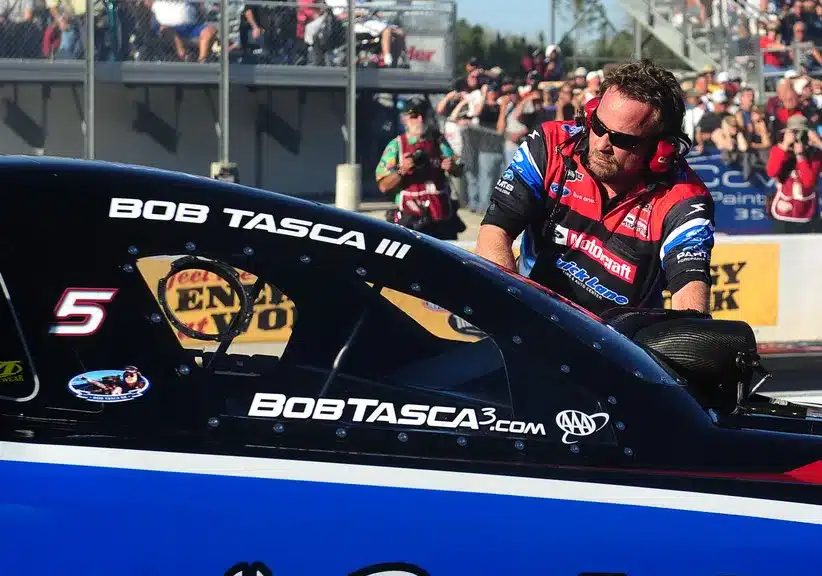
NHRA teams have spent the winter rebuilding engines, machining parts, and reviewing last year’s run data. The work is steady and detailed. A Funny Car run can fall apart over a few thousandths of a second, so every choice matters. With the 2026 NHRA Mission Foods Drag Racing Series approaching, the pace inside the shops has only increased.
A recent episode of WFO Radio, hosted by Joe Castello, offered a clear look at how teams and sportsman racers are approaching the new season. The show featured Chris Cunningham, one of the most experienced crew chiefs in the nitro ranks, and Holden Laris, a sportsman racer who also runs Laris Motorsports Insurance. Their perspectives came from different ends of the sport, yet both pointed toward a demanding year ahead.
Cunningham’s View From The Nitro Side
Chris Cunningham has been part of NHRA nitro racing for more than 30 years. His early career included time with Darrell Gwynn Racing, a Top Fuel powerhouse in the late 1980s and early 1990s. Gwynn’s team earned 18 national event wins and the 1989 Top Fuel championship, and Cunningham learned the craft in an environment built on precision.
His current role at John Force Racing carries the same expectations. JFR has collected 22 NHRA championships, and the standard inside the shop reflects that history. Cunningham and co‑crew chief Jason Bunker are preparing the Cornwell Tools Chevrolet Camaro Funny Car for Jordan Vandergriff, who moves into the class after earlier success in Top Fuel.
Vandergriff reached a final round in his rookie season in 2019 and now steps into one of the most competitive categories in the sport. Modern Funny Cars demand a level of detail that didn’t exist when Cunningham started. A nitro engine is torn down after every run, and most internal parts are replaced. The rebuild takes roughly 45 minutes.
Data systems track clutch wear, fuel delivery, ignition timing, and driveshaft speed. Crew chiefs spend hours comparing those numbers to track conditions.Cunningham explained that the winter months are used to refine these systems and build enough inventory to survive the early stretch of the season. The team has also adjusted its internal structure to keep pace with rival operations that have expanded their engineering resources.
A Significant Moment At Pomona
The Lucas Oil NHRA Winternationals at In‑N‑Out Burger Pomona Dragstrip will open the 2026 season with a milestone. The event marks the 1,000th Funny Car race since the class debuted in 1966. The event marks the 1,000th Funny Car race since the class debuted in 1966.
The significance of that number isn’t lost on the teams preparing for it. Pomona has hosted NHRA events since the sport’s earliest years, and the Winternationals remain one of the most important stops on the schedule. Early‑season conditions at Pomona often create challenges for crew chiefs.
Cool mornings, warm afternoons, and a track surface that changes quickly can force teams to adjust their tune‑ups run-by-run. Cunningham noted that a strong start at Pomona often sets the tone for the first several races, especially under the current points structure that rewards consistency.
Crowds are expected to be strong for the milestone, and teams know the spotlight will be heavier than usual. The Winternationals already carry weight as a season opener, and the 1,000‑race mark adds another layer of attention. Crews will arrive with fresh parts, fresh combinations, and very little margin for error.
Laris On The Strength Of The Sportsman Ranks
Nitro racing draws national television coverage, yet the majority of NHRA competitors race in the sportsman categories. These racers fill the staging lanes at every national event and form the backbone of the sport. Holden Laris joined the WFO episode to recap the NHRA SPORTSnationals at No Problem Raceway in Belle Rose, Louisiana.
The event regularly draws several hundred entries and remains one of the most competitive standalone sportsman races on the calendar. Laris highlighted the precision required in classes like Super Comp (8.90 index) and Super Gas (9.90 index). Races in these categories are often decided by thousandths of a second.
Many of the drivers have decades of experience, and several former SPORTSnationals winners have moved into the professional ranks. Laris also addressed a topic that rarely receives attention until something goes wrong: insurance. The financial hit from a single incident can sideline a team for an entire season.
A competitive sportsman operation can involve $100,000 to $250,000 in equipment, including the race car, trailer, tools, and tow vehicle. Standard insurance policies typically exclude racing‑related incidents. Specialized motorsports coverage has become essential as speeds rise and equipment becomes more complex.
Two Parts Of The Same Sport
The WFO Radio episode underscored how different the two ends of the NHRA spectrum can look. Nitro teams operate with engineering departments, machine shops, and data systems capable of analyzing every inch of a run.
Sportsman racers often work full‑time jobs during the week and race on weekends, towing thousands of miles each season to chase points and trophies. Preparation drives both groups. Precision keeps both groups competitive. The sport depends on both.
Many racers move between these two worlds over the course of their careers. Crew members who start in sportsman pits often end up on nitro teams, and former pros frequently return to bracket racing once their touring days end. The flow of people, knowledge, and experience keeps the sport connected from top to bottom.
The contrast between the two sides of the sport creates a balance that has helped the NHRA stay stable through rule changes, economic swings, and shifting sponsorship landscapes. Each group pushes the other forward in its own way, and the sport is stronger when both ends of the ladder are healthy.
What This Means For Pomona
Teams are finishing their winter work, loading haulers, and preparing for the trip to Pomona. The 2026 season opens with a milestone event, a deep Funny Car field, and strong sportsman categories. Qualifying at Pomona will reveal how well the winter months were used.
The pressure will be obvious the moment the first pair rolls out. Cunningham’s group has spent the off‑season refining its approach, and Laris’s world continues to grow as more racers recognize the need for proper coverage. The early part of the season will test every decision made since November.
The 2026 NHRA campaign is positioned to deliver tight racing, strong participation, and a landmark moment for one of drag racing’s most iconic classes. Teams know the window for mistakes will be small. Every run in the early races will carry weight as the season begins to take shape.
Teams will settle into their routines quickly once the season begins, and the early races often reveal which programs came out of the winter with momentum. Small gains made in January and February tend to show up on the time slip long before the first trophy of the year is handed out.
What’s Next
The final stretch before Pomona is underway, and every team is trying to squeeze the most out of the remaining days. The Winternationals will set the tone for the year, especially with the 1,000th Funny Car race adding extra weight to the opener. Everyone in the pits understands how quickly the season can swing based on the first weekend.
The work done through the winter will show quickly once qualifying begins. The 2026 season is positioned to deliver strong fields, tight racing, and a meaningful milestone for one of drag racing’s signature classes. Every team understands that early execution can shape the entire year.
