
Cindric Sets The Early Benchmark In Opening Daytona 500 Practice

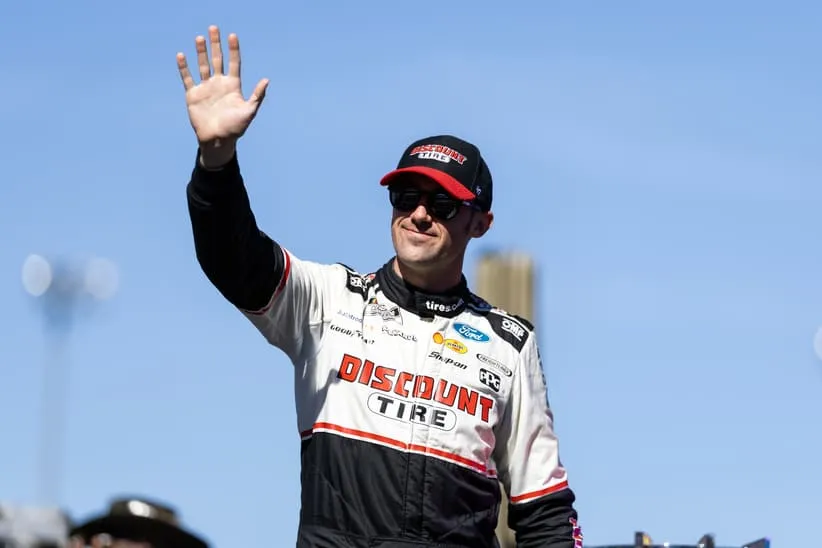
The opening practice session for the 68th running of the Daytona 500 provided the first meaningful indication of where teams stand as Speedweeks begins. Wednesday’s session at Daytona International Speedway marked the return of on‑track activity after the offseason.
Austin Cindric set the pace with a lap of 187.402 mph in the No. 2 Team Penske Ford. While early‑week speeds at Daytona rarely predict race‑day outcomes, Cindric’s performance established him as one of the early drivers to watch.
Speedweeks Begins With Familiar Intensity
The first laps of the season carry a distinct atmosphere. Teams use the session to confirm their offseason work, drivers reacclimate to superspeedway speeds, and engineers begin comparing real‑world data to months of simulation.
The opening practice is less about chasing the fastest lap and more about ensuring the car behaves predictably in clean air.Cindric’s Ford showed both speed and composure, two qualities that matter significantly at Daytona.
Superspeedway racing demands a car that remains stable in traffic and responds consistently when the field compresses late in the race. As a former Daytona 500 winner, Cindric understands the subtleties of the event, and his early pace suggests that Team Penske has unloaded with a competitive package.
A Competitive Mix Behind the Leader
The remainder of the top five reflected a balanced mix of teams and manufacturers. Ross Chastain recorded the second‑fastest lap at 186.931 mph, continuing his trend of strong superspeedway performances.
Chastain has been a consistent presence at the front of the pack in recent years, and Trackhouse Racing’s early speed indicates that the organization has maintained its momentum.Corey LaJoie’s third‑place effort at 186.517 mph was another notable result.
LaJoie has built a reputation for maximizing opportunities at Daytona and Talladega, and Spire Motorsports appears to have brought a car capable of running with the lead group. Bubba Wallace and Daniel Suárez rounded out the top five, reinforcing that both 23XI Racing and Trackhouse Racing have made meaningful gains during the offseason.
Early Indicators for Race Trim
Single‑car speeds offer only part of the picture. The Daytona 500 requires a car that drafts efficiently, maintains stability in multi‑lane traffic, and responds predictably during long green‑flag stretches. Teams will learn far more once drafting packs form later in the week.Alex Bowman and Erik Jones both posted top‑ten speeds, which is encouraging for their respective teams.
Bowman has historically excelled in qualifying at Daytona, but showing competitive pace in practice suggests the No. 48 team may have a more complete package this year. Jones, a former Daytona winner, continues to demonstrate a strong understanding of airflow and positioning on superspeedways.
Kyle Larson and Jimmie Johnson also appeared inside the top ten. Larson continues to pursue his first Daytona 500 victory, while Johnson’s return adds experience and depth to the field. Their early speed indicates that Hendrick Motorsports has unloaded with competitive equipment across multiple entries.
Monitoring Hendrick Motorsports’ Approach
William Byron’s position on the speed chart was one of the more notable results from the session. The two‑time defending Daytona 500 winner ranked 34th, but the number is not necessarily indicative of the team’s true pace. Hendrick Motorsports often uses early practice sessions to focus on handling balance, drafting behavior, and long‑run stability rather than outright speed.
Byron is attempting to become the first driver to win three consecutive Daytona 500s, and the No. 24 team is likely prioritizing race‑trim performance over practice‑session optics. Their approach in previous years suggests that the team will reveal more of its speed as qualifying and the Duels approach.
Why Opening Practice Matters
For teams, the first practice session is a critical evaluation period. Engineers compare real‑world data to simulation models, crew chiefs assess aerodynamic efficiency, and drivers provide feedback on balance and responsiveness. Most teams avoid drafting packs in the opening session to reduce the risk of damaging primary cars before qualifying.
The goal is straightforward: confirm that the car behaves as expected. If the numbers align with offseason projections, teams can proceed with confidence. If not, adjustments must be made quickly, as the schedule leaves little room for major changes.
What This Means for the Duels and the Daytona 500
Wednesday’s session establishes the baseline for the remainder of Speedweeks. Teams now have tangible data to refine their setups for qualifying and the Duel races. Cindric’s early speed places him at the top of the conversation, but the competitive mix behind him suggests that multiple organizations have arrived prepared.
Ford and Chevrolet both showed strength in the opening session, while Toyota’s performance remains less clear. Whether the manufacturer is holding back or still searching for speed will become more apparent as the week progresses.
What’s Next
Opening practice rarely determines the outcome of the Daytona 500, but it does reveal which teams have unloaded with a solid foundation. Austin Cindric’s early pace signals that Team Penske has come prepared, and the variety of teams near the top of the charts suggests a competitive field heading into qualifying and the Duels.
As Speedweeks continues, the focus will shift from single‑car speed to drafting performance and race‑trim balance. For now, the first session has provided a clear starting point and the early indication is that several teams are positioned to contend when the green flag waves on Sunday.
