
Ryan Blaney Breaks Down Texas Challenges After Practice and Qualifying, Responds To Strategy Question

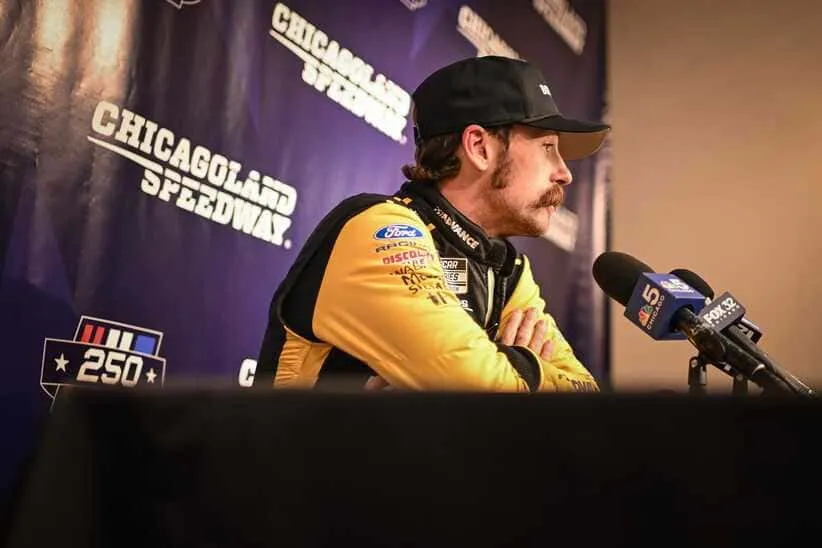
FORT WORTH, Texas — After practice and qualifying at Texas Motor Speedway, Ryan Blaney didn’t try to dress up what drivers have been saying about the track for years. The surface, the groove, and the way the lanes develop have settled into something predictable, even if it’s not ideal.
Blaney described a track that has stopped evolving. The second lane exists, but only to a point, especially in Turns 3 and 4, where the bump continues to disrupt balance. Drivers can flirt with it, but rarely commit to it.
There’s a sense that Texas has plateaued. Unlike other intermediate tracks that have opened over time, this one has remained locked in place, forcing teams to work within limits rather than chase new options. It puts more pressure on execution than experimentation once the race begins.
Limited Groove Keeps Drivers Searching for Grip
Blaney pointed out that the second lane at Texas Motor Speedway has never fully come to life. It shows flashes, but the lack of grip keeps it from becoming a real option over the long run. That forces most of the field to stay committed to the bottom or risk losing momentum.
The issue becomes more noticeable in Turns 3 and 4. The bump off Turn 4 unsettles the car, especially when drivers try to carry speed higher up the track. It creates a moment where the rear steps out, and that hesitation costs time.
He suggested that if drivers could consistently get above that bump, it might open the track up. The problem is that no one has found enough grip to make that move sustainable. Without that, the racing line remains narrow. That lack of width limits passing opportunities and makes it harder to recover track position once lost.
Strategy and Pit Cycles Still Define the Race
When asked by Sarah Talker about how pit cycles and strategy play into a race at Texas, Blaney leaned into how much decisions still matter here. The track may be limited in lanes, but it opens the door for crew chiefs to take chances.
Tire falloff and track position drive everything. Teams have to decide whether to take two tires, stay out, or follow the field. Those calls often depend on where a driver is running and whether clean air is within reach.
Blaney made it clear that those decisions happen in real time. If a car is stuck mid-pack, a gamble might be worth it. If it’s already near the front, protecting track position becomes the priority. The balance between those choices can shape the entire race. One well-timed call can flip a driver from buried in traffic to controlling the pace.
Texas Demands Compromise Between Two Different Ends
One of the biggest challenges in Texas remains the way different corners feel. Turns 1 and 2 are flatter and reward momentum, while Turns 3 and 4 require more throttle control and patience.
Blaney described it as a constant compromise. A car that works well in one end often struggles in the other. Teams have to decide where they want to be strong and where they are willing to give up speed.
That decision carries through the entire weekend. From practice adjustments to race trim, everything is built around finding a balance that a driver can manage over a long run. Missing that balance even slightly can turn a competitive car into one that fades over a run.
Confidence Built Through Consistency, Not Flash
Blaney also opened up about confidence, offering a perspective that reflects his approach to the season. He doesn’t rely on momentum alone. Instead, he focuses on staying level, especially after difficult weekends.
He explained that moving on quickly has been key. A bad result doesn’t linger if the team can reset and focus on the next race. That mindset has helped him stay steady through the ups and downs of a long schedule.Support from the team and stability away from the track also play a role.
For Blaney, confidence comes from knowing the foundation is there, even when results don’t immediately show it. It’s a quieter approach, but one that holds up over the course of a long season. That mindset keeps the focus on execution rather than on chasing short-term results.
What This Means
Texas remains one of the more technical intermediate tracks on the schedule. It doesn’t offer many surprises in terms of layout, but it forces teams to execute at a high level. With limited grooves and heavy reliance on strategy, races here often come down to timing and communication.
Drivers and crew chiefs have to stay aligned, especially when making split-second calls on pit road. Blaney’s assessment reflects a broader reality. Texas may not be changing much, but the way teams approach it still determines who runs up front.
Teams that stay disciplined tend to gain ground as the race unfolds. They avoid the small mistakes that stack up over the long run. They keep their focus tight when the field starts to spread out. That steadiness becomes an advantage when others begin to fade.
What’s Next
After practice and qualifying, Ryan Blaney’s outlook on Texas Motor Speedway was straightforward. The track has its limits, and those limits shape how races unfold.From managing the tricky second lane to navigating pit strategy, success here comes more from discipline than from risk.
It’s a place where small decisions carry weight over long runs. As the field prepares for race day, the challenge is clear. Adapt to what Texas gives you, or spend the afternoon trying to recover from what it takes away. Those who manage the details best usually find themselves in contention late.
