
Alpine’s Next Gamble: Mercedes Power, New Money, And A Race Against Time

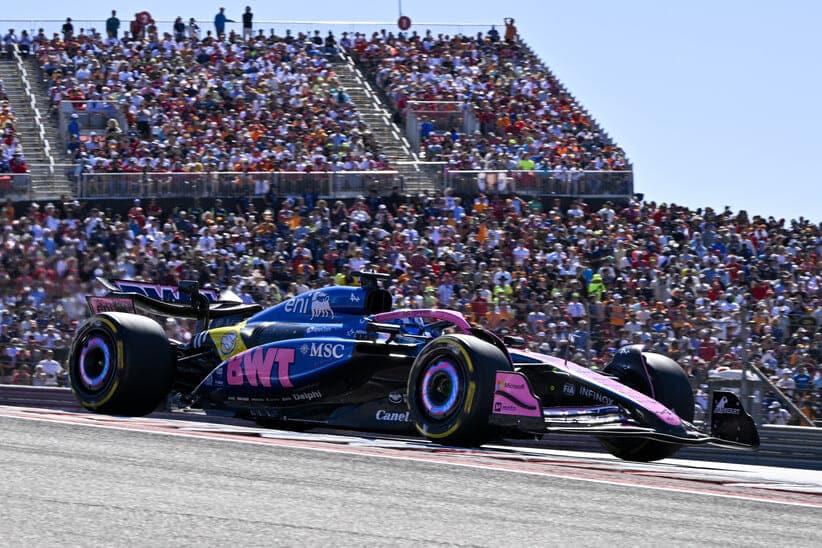
Formula 1 has never been a gentle business. Teams survive by spending aggressively, engineering relentlessly, and making decisions that would terrify most corporate boards. Speed has a price, and the bill always comes due. Alpine now finds itself staring at one of those moments where every choice carries consequences.
The organization is weighing its future as a factory team, evaluating its engine program, and searching for the kind of financial backing that can change the trajectory of a decade. Running a works team is supposed to be the ultimate badge of honor.
You design the chassis, build the power unit, and take full responsibility for the results. Glory belongs entirely to you when the car wins. Accountability lands squarely on your shoulders when it doesn’t. Alpine currently sits on the wrong side of that equation.
The Renault‑branded power unit has lagged behind the front‑running engines for several seasons, and the gap has become impossible to ignore. Conversations within the team have shifted from pride to practicality, and the possibility of abandoning their in‑house engine program is no longer taboo.
The Engine Question Alpine Can’t Avoid
Every Formula 1 team knows the power unit defines the ceiling of its performance. Aerodynamics, suspension geometry, and tire management matter, but none of those elements can compensate for a horsepower deficit. Alpine has lived that reality for years.
The Renault engine has consistently trailed the Mercedes, Ferrari, and Honda units in both peak power and efficiency. Straight‑line speed has been a recurring weakness, and the team has paid for it in qualifying sessions and race strategy. Developing a new engine for the next regulation cycle requires staggering resources.
The 2026 power unit rules demand major changes in energy recovery systems, electrical output, and fuel efficiency. Manufacturers have already poured hundreds of millions into development. Alpine must decide whether it can realistically keep pace with that level of investment. The engineering challenge alone is enormous.
The financial commitment is even larger. Mercedes remains the most logical alternative. Their engines have powered multiple championship‑winning cars, and customer teams have benefited from that reliability and performance. A switch to Mercedes power would immediately eliminate Alpine’s horsepower deficit.
The trade‑off comes in the form of reduced control over packaging and integration, but the performance gain could outweigh the compromises. Teams in other series make similar decisions all the time. NASCAR organizations often buy engines from Hendrick or Roush‑Yates when their own programs fall behind. Pride rarely wins races; horsepower does.
The Search For Capital
Formula 1 budgets have ballooned far beyond what most manufacturers can comfortably support. Even with the cost cap, teams spend aggressively on infrastructure, personnel, and technology. Alpine has already brought in high‑profile investors, including athletes and celebrities.
However, the team still needs deeper pockets to compete with the financial muscle of Red Bull, Mercedes, and Ferrari. Fresh investment is not about survival. It is about ambition. Teams use outside capital to upgrade wind tunnels, expand simulation programs, and hire top‑tier aerodynamicists and engineers away from rivals.
Alpine has the facilities and the brand strength to attract serious backing, yet the organization needs a larger war chest to climb out of the midfield. A new investor group could reshape the team’s long‑term direction.
Additional funding would allow Alpine to modernize its development pipeline, strengthen its technical staff, and accelerate upgrades throughout the season. The team has the foundation to compete at the front; the missing piece is sustained financial firepower.
What These Moves Signal
A shift from a work engine to a customer engine represents a major cultural change. Teams that build their own power units operate with a different mindset. They control every detail of the car’s architecture and carry the responsibility for every weakness. Moving to a customer engine requires a new approach.
The team must adapt its design philosophy, accept certain limitations, and focus more heavily on chassis development. Leadership appears ready for that shift. The willingness to explore a Mercedes engine deal and pursue significant investment signals a desire to break free from the midfield.
Complacency has no place in Formula 1. Alpine’s management seems determined to make uncomfortable decisions rather than settle for another season of seventh‑place finishes.A customer engine also removes a long‑standing excuse.
If Alpine switches to Mercedes power and still struggles, the spotlight will fall squarely on the chassis, the technical department, and the drivers. Accountability becomes sharper. Expectations rise. The margin for error shrinks.
What’s Next
Racing rewards teams willing to make hard choices, and Alpine has reached that point. The organization must decide whether to continue carrying the weight of a full-factory program or pivot to a customer‑engine model that delivers immediate performance gains.
Fresh investment and a proven power unit could give the team the reset it has been chasing. The next stretch of decisions will determine whether Alpine stays stuck in the midfield or finally builds a path back toward the front.
