
Alex Zanardi’s Unforgettable Legacy Of Courage, Competition, And Reinvention

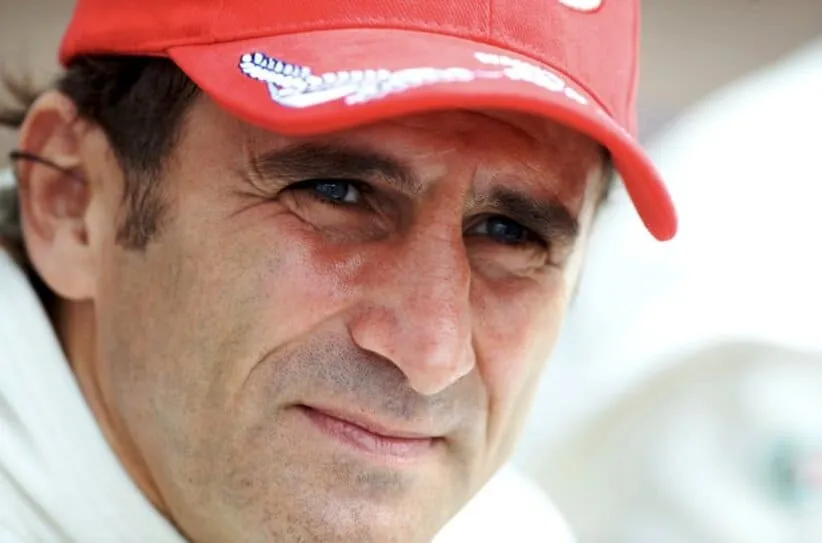
Alex Zanardi’s career doesn’t fit cleanly into any one category of motorsport or even sport in general. It spans Formula One, CART, touring cars, and Paralympic cycling, but the numbers only scratch the surface. Over the course of his career, he recorded 41 Formula One starts, 15 CART victories, 2 CART championships, 4 World Touring Car Championship wins, and 4 Paralympic gold medals.
What matters more than the statistics is the way his life kept restarting in completely different forms, each time at a level most athletes never reach even once. He was not a driver who followed a straight path. He was someone who kept finding new ones.
Formula One Years And Finding His Place
Zanardi entered Formula One in 1991 with Jordan, stepping into a sport already stacked with established names and fierce competition. He would go on to start 41 Grands Prix across Jordan, Minardi, and Lotus, but never scored a championship point.
That detail alone doesn’t explain his time in the sport. He often found himself in uncompetitive or unreliable cars, and at Lotus in 1993, he failed to finish more than half the races he started. Even so, people inside the paddock noticed him.
He was known for being technically sharp and for pushing cars beyond what they looked capable of on paper. When his Formula One opportunities dried up in 1994, it wasn’t the end of his career. It was a reset.
CART Success And Becoming A Champion
Zanardi moved to CART in 1996 with Chip Ganassi Racing, and everything changed almost immediately. He won three races in his first season and finished third in the championship, showing he belonged at the front.
What followed in 1997 and 1998 became the peak of his racing career. He won back-to-back CART championships, taking five victories in 1997 and four more in 1998 while consistently running at the front of the field. Throughout his CART career, he amassed 15 wins and 22 pole positions, establishing himself as one of the most complete drivers of the era.
Zanardi became known for his late-race aggression and his ability to control restarts. His victory celebrations, especially the now-famous donut spins, became part of CART’s identity during that period. At his peak, he wasn’t just winning races. He was shaping how people remembered them.
The Crash That Changed His Life
Everything shifted on September 15, 2001, during a CART race at EuroSpeedway Lausitz in Germany. Zanardi was involved in a violent accident after rejoining the track, and the impact resulted in the loss of both of his legs above the knee.
The injuries were life-altering and immediately ended his current racing career. He spent months in surgeries and rehabilitation, facing a future that no longer included professional motorsport in any traditional sense.
For many drivers, that would have been the final chapter. For Zanardi, it wasn’t. . He treated the setback as a reset point rather than an ending, even when the path forward was unclear. That mindset would go on to define everything that followed in his life.
Returning To Racing After Injury
Just two years later, in 2003, Zanardi returned to professional racing in the European Touring Car Championship. He did it using hand-controlled systems that allowed him to accelerate and brake without foot pedals, making him one of the first high-profile drivers to compete at that level with such equipment.
He didn’t return for appearances or exhibition runs. He returned to race against factory teams and established drivers. In the World Touring Car Championship, he went on to win four races, proving he could still compete at a high level in full-scale competition.
One of his most notable wins came at Oschersleben in 2005, where he held off pressure and controlled the race from the front. It wasn’t a symbolic victory. It was earned against the same kind of competition he had always faced.
A Second Career In Paralympic Cycling
After stepping away from touring cars, Zanardi shifted again, this time into handcycling. It was another complete reinvention, and once again, he approached it with full commitment. The transition demanded patience, but he treated it like any other discipline he had mastered.
Within a short time, he was already measuring himself against the best in the world. At the 2012 London Paralympics, he won two gold medals and one silver. He followed that in 2016 in Rio with another gold and silver, bringing his total Paralympic medal count to six, including four golds.
He also collected multiple world championship titles in para-cycling, dominating endurance events and time trials at the international level. What stood out was not just the success, but the speed of the transition. He moved into a new sport later in life and still reached the top of it.
Another Setback And Ongoing Fight
In 2020, Zanardi was involved in another serious accident while training in Italy on a handbike. He suffered severe head injuries and required long-term medical care. The news prompted messages from across motorsport and Olympic sports, with teams, drivers, and athletes acknowledging what he had meant to multiple generations of competitors.
Even away from competition, his name continued to carry weight because of everything he had already done in two completely different sporting worlds. Teams, athletes, and fans still pointed to his career as a benchmark for resilience and adaptability.
His story stayed present in motorsport conversations long after he left the grid. Younger drivers still referenced his comeback when talking about setbacks. Even in retirement, his influence never really left the paddock.
What His Numbers Don’t Explain
On paper, Zanardi’s career reads like a rare collection of achievements. Forty-one Formula One starts. Fifteen CART wins. Two CART championships. Four touring car wins at the world level. Four Paralympic gold medals. But none of that explains the full picture.
He was a driver who reached the top of American open-wheel racing. He lost both legs in a crash that would have ended most sporting careers permanently. He returned to professional racing anyway. Then he changed sports entirely and became a Paralympic champion.
Very few athletes have competed at an elite championship level in more than one sport. Even fewer have done it after a life-changing injury. Zanardi did both. He reached the top in open-wheel racing before rebuilding himself into a world-class Paralympic athlete.
A Legacy Built On Reinvention
Alex Zanardi’s story is not just about success or recovery. It’s about repetition of reinvention. Formula One driver. CART champion. Touring car winner. Paralympic gold medalist. Each version of his career was real, not symbolic, and each required starting again in a completely different way.
His legacy sits in that pattern. Not that he achieved once, but that he rebuilt and achieved again, more than once, at the highest level each time. In motorsports and beyond, he is remembered not just for what he won, but for never stopping to become something new.
For More Great Content
Stay plugged in with more race analyses, features, and behind‑the‑garage storytelling. Follow Sarah on Facebook, LinkedIn, and X at Sarah Talker, where the conversation keeps rolling long after the checkered flag drops.
