
2026 Cup Series Outlook: Where The Standings Lie And Who’s Chasing The Pace

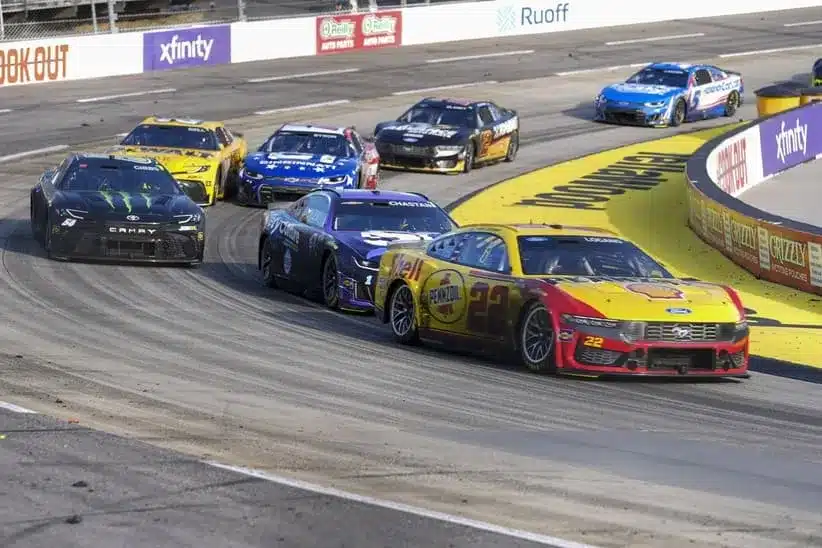
The concrete half‑mile at Bristol didn’t just bruise Cup Series fenders. It exposed who’s built for the grind and who’s barely hanging on. Eight races into the 2026 season, teams have already been pushed through every style of track on the schedule. Daytona demanded nerve, Atlanta punished mistakes, Las Vegas rewarded precision, and Bristol tore apart anyone even slightly off.
With Thunder Valley behind them, the standings show one driver setting the pace while several contenders scramble to keep up. The opening stretch has already produced six winners, four DNFs for playoff‑level teams, and an average margin of victory under 0.7 seconds, a reminder of how ruthless this year has been.
Tyler Reddick’s Historic Start
A Win Rate That Doesn’t Belong In This Era
Tyler Reddick has turned the opening two months into a statement. Driving the No. 45 Toyota Camry for 23XI Racing, he’s already won four of the first eight races, a 50% win rate that hasn’t been seen this deep into a season since the mid‑2000s. He leads the standings with 386 points, sits 62 points clear of Ryan Blaney, and his 58 stage points show he’s controlling entire race weekends, not just the finishes.
He’s led 412 laps, more than twice the total of any other driver, and his 5.8 average finish is the best in the series by a wide margin. His worst result so far is 14th, which says everything about how complete and mistake‑free this run has been.
A Team Operating With Total Confidence
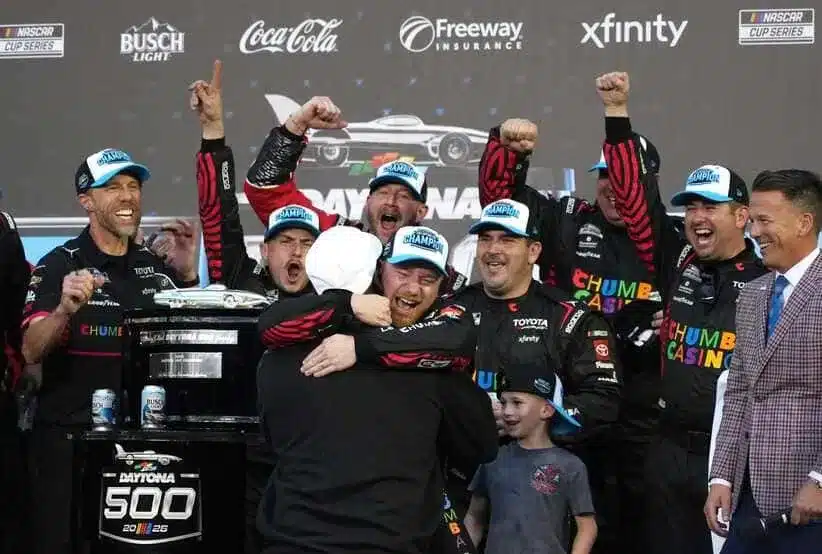
Reddick’s commitment to the outside lane remains his greatest weapon, but now it’s paired with a level of discipline that makes him nearly impossible to rattle. His team has executed zero green‑flag pit‑road penalties, a massive advantage in a year defined by razor‑thin margins.
The No. 45 has posted the fastest lap in five out of eight Cup Series races thus far. This shows that raw speed is never in short supply. Their average four‑tire stop time sits at 10.84 seconds, second‑best in the garage, and their car unloads fast every single weekend. The confidence radiating from the 23XI camp is obvious the moment the hauler doors open.
The Chase Pack Trying To Keep Him In Sight
Ryan Blaney’s Steady Defense Of His Crown
Ryan Blaney sits second with 324 points and one win, keeping Team Penske in the conversation. His average finish of 9.6 shows he’s steady, but he hasn’t shown the raw race‑winning pace Reddick has displayed.
Blaney has led 118 laps, a respectable total, but he needs more top‑five speed if he wants to close the gap. Penske’s pit crew ranks third in average four‑tire stop time at 10.92 seconds, giving Blaney a foundation to build on. His biggest challenge is simple: he needs to start matching Reddick’s stage‑point production.
Denny Hamlin’s Relentless Pursuit
Denny Hamlin sits third with 300 points and a victory of his own. He’s led 142 laps and posted four top‑five finishes, proving he’s still one of the most consistent threats in the field. Hamlin’s average running position of 8.3 ranks second only to Reddick, showing that the No. 11 is rarely out of contention.
His pit crew has been sharp, ranking fourth in average stop time, and his long‑run speed has been among the best in the garage. The only thing missing is a second win to tighten the gap. He’s been in a position to strike more than once, but late cautions have kept him from closing the deal.
Ty Gibbs’ Breakout Is No Longer A Surprise
Ty Gibbs sits fourth, riding momentum from his early‑season win and a top‑10 rate of 62.5%. His average finish of 10.1 is the best of his young career, and he has completed 99.4% of all laps, a sign of maturity and discipline.
Gibbs has also posted the fastest pit‑in to pit‑out time twice this season, showing that the No. 54 team is firing on all cylinders. His qualifying average of 7.8 has kept him out of early trouble, and his aggression has been noticeably more controlled. Gibbs is no longer a prospect. He’s a weekly factor.
Chase Elliott And Kyle Larson Searching For More
Chase Elliott rounds out the top five with 264 points, one win, and a much‑needed return to form after a difficult 2025 campaign. His average finish of 12.4 shows room for improvement, but the No. 9 team is trending upward. Elliott has completed every lap this season, one of only six drivers to do so, and his late‑race speed has been strong.
Kyle Larson sits sixth with 258 points, flashing an elite pace but suffering from two DNFs that have buried him deeper in the standings than his speed suggests. Larson has led 96 laps, but the inconsistency has kept him out of Victory Lane.
Toyota’s Stranglehold On The Manufacturer Battle
A Statistical Beatdown Through Eight Races
The manufacturer standings tell an even clearer story. Toyota leads with 400 points and six wins in eight races, giving the brand a staggering 75% win rate to open the season. Toyota teams have combined to lead 82% of all laps, a level of dominance rarely seen in the parity‑driven Next Gen era.
The Camry camp has clearly unlocked something in this year’s aerodynamic package, especially in corner entry stability and long‑run tire wear. Their average finishing position across all Toyota teams is 11.3, easily the best among the three manufacturers.
Chevrolet And Ford Searching For Answers
Chevrolet sits second with 295 points and one win, while Ford trails with 283 points and a single victory. Chevy and Ford teams have combined to lead just 18% of all laps, a number that has engineers in both camps scrambling.
Ford’s average finish across all teams sits at 17.2, the lowest of the three manufacturers, while Chevrolet’s sits at 15.8, showing that both groups are fighting uphill. Both manufacturers have increased wind‑tunnel hours and simulation cycles to close the gap. The question is whether they can find gains fast enough to matter.
The Middle of the Pack Is a Powder Keg
Drivers On The Bubble Feeling The Heat
The battle around the playoff cutline is already intense. The drivers ranked 12th through 20th in points are separated by just 27 points, making every stage point critical. Christopher Bell, Ross Chastain, and Brad Keselowski have all shown flashes of speed but lack the consistency needed to climb.
Bell’s three finishes outside the top 20 have dragged down his average, while Chastain’s two penalties for improper fueling have cost him valuable track position. Keselowski’s average finish of 18.6 is keeping him afloat, but barely.
Chase Briscoe Fighting To Stay In The Mix
Chase Briscoe sits 17th with 204 points, and his season has been a tug‑of‑war between speed and execution. His average finish of 16.8 shows he’s capable of running inside the top 15, but late‑race fades have cost him better results.
Briscoe has led 28 laps, a modest total, but his short‑track speed has been encouraging. His qualifying average of 14.2 has kept him in clean air early, but the No. 14 team needs to tighten up long‑run balance to climb. Briscoe isn’t out of the fight, but he needs a clean month to stabilize his playoff outlook.
The Struggles At The Back Of The Garage
A Brutal Start For Several Big Names
Alex Bowman sits 36th after a disastrous start that includes three finishes of 30th or worse and a mechanical failure at Richmond. His average finish of 25.8 is the lowest among full‑time Hendrick drivers since 2011. Austin Dillon sits 34th with two DNFs and an average finish of 24.6, continuing a multi‑year slide for the No. 3 team.
Todd Gilliland has been mired deep in the standings, carrying an average finish outside the top 23 that’s put the No. 38 team in a hole early. The group is staring at a simple reality: they need speed immediately, or they’ll be banking on a Hail‑Mary result at Daytona or Talladega to stay relevant.
What This Means For The Rest Of 2026
The playoff picture is already taking shape, and the implications are massive. With four wins banked, Reddick and 23XI Racing can treat the next 18 regular‑season races as a development runway. They can experiment with aggressive setups, chase playoff points, and take strategic risks without worrying about the cutline.
Meanwhile, the teams sitting between 10th and 20th must maximize every stage point to avoid falling into a hole they can’t climb out of. The summer stretch will expose weaknesses in pit crews, simulation accuracy, and driver discipline, and the teams that adapt fastest will control the playoff narrative.
What’s Next
The NASCAR Cup Series is a test of endurance, precision, and mental toughness. Tyler Reddick may be the undisputed king of the spring, but the next five months will push every team to its breaking point. Track temperatures will rise, tempers will flare, and the standings will tighten as winless drivers take bigger swings.
With 28 races still ahead before the championship is settled at Homestead-Miami Speedway, the 2026 season is shaping up to be a relentless fight from the front of the grid to the back of the garage. The numbers tell a clear story now, but the story that matters most will be written in the heat of summer.
For More Great Content
Stay plugged in with more race analyses, features, and behind‑the‑garage storytelling. Follow Sarah on Facebook, LinkedIn, and X at Sarah Talker, where the conversation keeps rolling long after the checkered flag drops.
