The Standard Has Changed: Reflecting on Mike Tomlin’s Legacy after Resigning After 19 Seasons

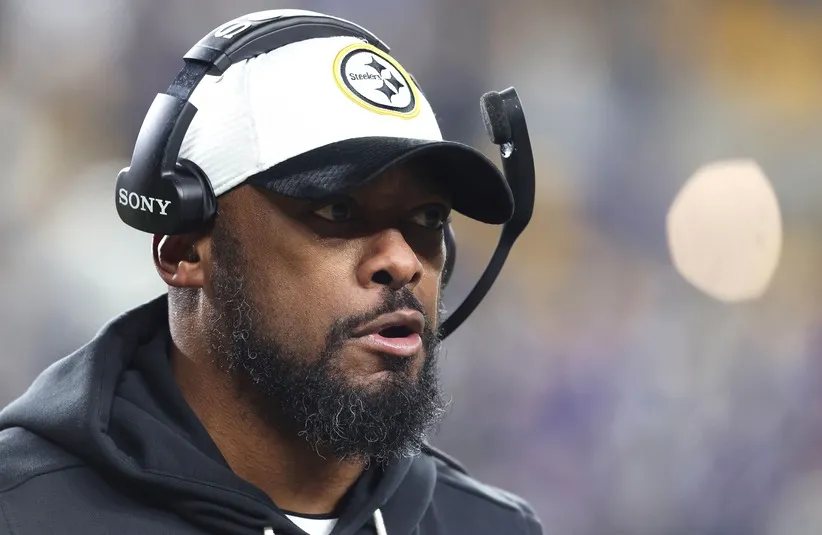
In the National Football League, the acronym “NFL” often jokingly stands for “Not For Long.” Coaches are hired to be fired. Rosters churn with ruthless efficiency. Stability is the rarest commodity in the sport. That is precisely why this week’s news out of Pittsburgh feels less like a headline and more like a seismic shift in the football landscape. Mike Tomlin, the man who has stalked the Steelers’ sidelines in his trademark aviators since 2007, has resigned.
The announcement arrived with jarring speed. Less than 24 hours after a crushing 30–6 wild-card loss ended their season, the organization confirmed that Tomlin informed ownership of his decision to step down. For a franchise that has employed only three head coaches since 1969—Chuck Noll, Bill Cowher, and Tomlin—this isn’t just a personnel change. It is an identity crisis.
Tomlin leaves behind a legacy that is simultaneously ironclad and complicated. He departs as one of the most respected figures in the game, ending a tenure that defined an entire generation of Steelers football. But as the dust settles on the shock, the questions about why it happened—and where Pittsburgh goes from here—are just beginning.
The End of the Streak

If there is one statistic that will be etched on Tomlin’s coaching tombstone, it is “zero.” Across 19 seasons, Mike Tomlin never endured a losing campaign. In a league designed for parity, where salary caps and draft orders are built to drag successful teams back to the middle, Tomlin defied gravity for nearly two decades.
He navigated the twilight years of Ben Roethlisberger, managed the dramatic exits of superstars like Antonio Brown and Le’Veon Bell, and dragged questionable rosters into playoff contention through sheer force of will. He captured a Super Bowl title early in his tenure and kept the team competitive in the brutal AFC North year after year.
However, the timing of his exit speaks volumes. The consistency that was once his shield eventually became a point of contention. The Steelers were always good, but recently, they hadn’t been great. The heavy wild-card defeat that preceded his resignation highlighted a growing frustration: the Steelers could get to the dance, but they had forgotten how to lead.
A League-Wide Shockwave
The reaction to Tomlin’s departure underscores his standing within the football fraternity. While fans and media often focused on clock management or challenge flags, those inside the locker rooms saw a molder of men.
Upon the news, accolades poured in from every corner of the NFL. Current players, former stars, and rival coaches took to social media to praise his preparation and leadership. Tomlin released a statement that was characteristically poised, noting, “While this chapter comes to a close, my respect and love for the Pittsburgh Steelers will never change.”
This wasn’t a firing born of toxicity; it was a separation born of time. The outpouring of respect suggests that while the results on the field had plateaued, Tomlin’s grip on the locker room never slipped.
The Great Debate: Regular Season vs. Postseason
Tomlin’s resignation will inevitably spark a fierce debate regarding his place in history. How do you weigh nearly two decades of regular-season dominance against a decade of postseason stagnation?
Critics will point to the lack of recent playoff success. They will argue that the “no losing seasons” streak became a participation trophy that masked deeper issues with coaching strategy and staff development. Supporters, however, will look at the chaos across the rest of the league, the coaching carousels in Cleveland, Las Vegas, and Carolina, and argue that Pittsburgh fans didn’t know how good they had it.
The truth likely lies somewhere in the middle. Tomlin was an elite floor-raiser; he ensured the Steelers never hit rock bottom. But perhaps the ceiling had lowered, and both he and the organization realized a fresh start was necessary to break through again.
Pittsburgh Into the Unknown
For the first time since George W. Bush was in the White House, the Pittsburgh Steelers are conducting a legitimate head coaching search. This is uncharted territory for the Rooney family and the front office.
The immediate fallout will be significant. The new hire will dictate the future of the quarterback position, the coaching staff, and the defensive scheme. Will they look for a “Tomlin clone”, a leader of men who delegates play-calling? Or will they pivot to the modern trend of hiring a young, offensive-minded guru to revitalize the scoring attack?
As for Tomlin, his future is the biggest wild card of the NFL offseason. Whether he heads to the broadcast booth, takes a sabbatical, or immediately jumps to a quarterback-needy team desperate for credibility, the entire league will be watching.
A New Era in the Steel City
Mike Tomlin’s resignation marks the official end of an era. The sheer longevity of his tenure made him synonymous with the Steelers’ brand: tough, resilient, and unwavering. Replacing him is an unenviable task. The next coach won’t just be asked to win games; they will be asked to uphold a standard that Tomlin maintained for 19 years. The sideline in Pittsburgh is going to look very different next season, and for the first time in a long time, the outcome is completely unpredictable.