
Mike Vrabel Throws Shade At Bill Belichick’s College Debut With Brutal Urban Meyer Comparison

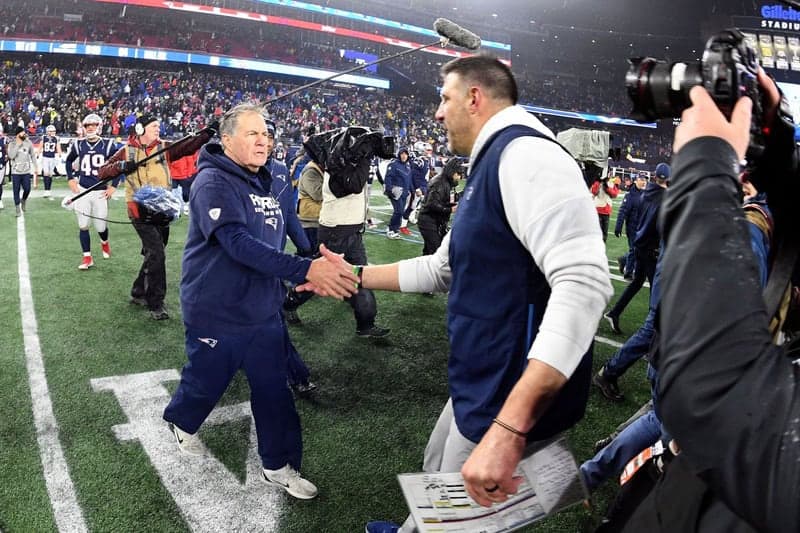
Look, we’ve all seen a coach have a rough debut. But when you’re Bill Belichick and you just allowed 48 points in your first college game, the most you’ve ever given up as a head coach at any level, the hot takes are going to come fast and furious. Enter Mike Vrabel, never one to sugarcoat anything, delivering what might be the coldest burn of the young college football season. What did he have to say?
Vrabel’s Ice-Cold Reality Check
When WEEI’s Greg Hill asked the Patriots coach if Belichick just needed time to build his North Carolina program, Vrabel didn’t exactly offer a warm hug of encouragement. Instead, he delivered this gem: “I don’t know. Urban Meyer won 12 of his first 12 games at Ohio State, so it didn’t take him long. That’s my experience in college football.”
Vrabel would know something about Meyer’s instant success—he was right there on the sidelines as Ohio State’s defensive line coach during that perfect 2012 season. So when he says college programs can hit the ground running, he’s speaking from experience, not just throwing stones.
The Belichick Experiment Goes Sideways
Let’s be real here: Monday night’s 48-14 shellacking by TCU wasn’t just bad—it was historically awful for Belichick. The man who built a dynasty on defensive excellence watched his Tar Heels surrender 284 passing yards, 243 rushing yards, and somehow managed to give up two defensive touchdowns. That is not just getting beaten; that’s getting demolished in ways that make you question everything.
The most telling part? Belichick and his right-hand man, Mike Lombardi, brought in 70 new players. Seventy! That’s not roster construction; that’s roster demolition followed by a desperate rebuild with spare parts.
Why Vrabel’s Comment Cuts So Deep
This isn’t just random trash talk between coaches. There’s serious history here. Belichick and Patriots Owner Robert Kraft have been feuding like an old married couple who can’t agree on what to watch on Netflix. Meanwhile, Vrabel, who played for and coached under Belichick in New England, is now running the show for his former boss’s former team.
The timing makes it even more brutal. Belichick spent months becoming the very thing he would have ruthlessly mocked as a Patriots coach: a constant distraction. Between his media appearances, his commentary gigs, and his very public courtship of various NFL jobs that never materialized, he turned into the kind of circus act he used to eliminate from his locker room.
The Urban Meyer Standard
Here’s what makes Vrabel’s comparison so perfectly cutting: Meyer didn’t just win those 12 games—he won them with style. Ohio State averaged over 35 points per game that season while allowing just 20. They looked like a powerhouse from day one, not a team still figuring out how to tie their cleats.
That’s the standard Vrabel is holding up, and it’s not exactly subtle. When you have coached at the highest levels of both college and professional football, instant competence isn’t just possible—it’s expected.
What This Really Means For Both Coaches
For Belichick, this debut represents something more troubling than just one bad game. It’s a reality check that his NFL methods might not translate as seamlessly as everyone assumed. College football isn’t the NFL, and 19-year-olds aren’t 29-year-old veterans who hang on every word from an eight-time Super Bowl champion.
For Vrabel, it is a masterclass in speaking truth without actually saying much. He didn’t call Belichick washed up or question his abilities. He just pointed to what’s possible when great coaches make the transition and let everyone else connect the dots.
The Path Forward
Nobody’s writing off Belichick after one game—that would be insane. The man has more championship rings than most franchises have playoff wins. But Vrabel’s comments serve as a reminder that reputation only gets you so far when you’re starting over from scratch.
College football is a different beast entirely. It is about recruiting, about connecting with teenagers, about navigating NIL deals and transfer portals. It’s not just about X’s and O’s; it’s about adapting to an entirely different culture. Monday night suggested that adaptation might take longer than anyone expected. The beauty of Vrabel’s response isn’t that it was mean-spirited—it wasn’t. It was honest in the way that only someone who’s been in both worlds can be. Sometimes the truth hurts more than any insult ever could.
