
Lions Hold Firm on Policy as Frank Ragnow Repays Part of Signing Bonus After 2025 Retirement

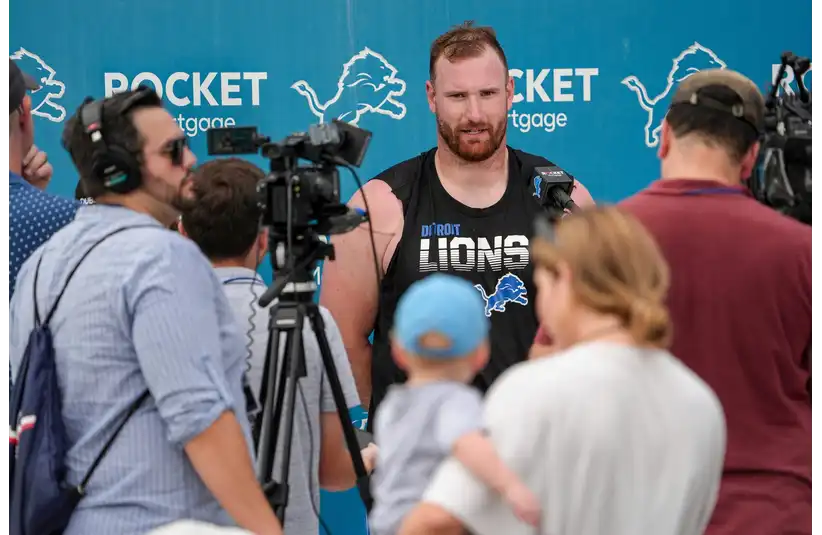
The Detroit Lions have spent the past few years reshaping their identity — tougher on the field, steadier in the front office, and more intentional about how they handle business behind the scenes. But even as the franchise evolves, one organizational stance hasn’t budged: when a player retires early, the team expects a portion of the signing bonus back. Frank Ragnow learned that firsthand after stepping away from football in 2025.
Ragnow, a four‑time Pro Bowler and one of the most respected centers in the league, retired with time left on his contract. And just like they did with Barry Sanders and Calvin Johnson, the Lions asked for part of his signing bonus to be returned. Team president Rod Wood didn’t dance around the reasoning. He explained it plainly — and unapologetically.
“They’re not paying back their money, they’re returning our money,” Wood told the Detroit Free Press. “They were paid in advance for services they hadn’t completed.”
It’s a blunt line, but it reflects how the Lions have operated for decades.
A Policy Rooted in Precedent
Ragnow signed a four‑year extension in 2021 that included a $6 million signing bonus. That money hits the salary cap in prorated chunks, and when he retired before the 2025 season, two years of proration remained — roughly $3 million. Under the CBA, teams can recoup that remaining portion, and the Lions chose to do exactly that.
Wood didn’t specify the exact amount Detroit collected, but he made it clear the decision wasn’t personal. It was precedent — the same precedent that once strained relationships with two of the greatest players in franchise history.
Barry Sanders had to repay more than $7 million after retiring in 1999. Calvin Johnson returned $1.6 million of the $3.2 million Detroit could have pursued after his 2016 retirement. Both situations created tension that took years to mend.
Why the Lions Stand Firm
From the outside, the move can look cold. Ragnow didn’t walk away because he lost interest in football — his body simply couldn’t hold up. But the Lions view the issue through a contractual lens, not an emotional one.
Wood even offered a hypothetical to explain the logic: if the team signed a player to a massive bonus and he retired days later, would Detroit be entitled to recoup the money? In the organization’s view, the answer is yes.
That’s the line the Lions draw. And they draw it consistently.
Fans Split on the Decision
The reaction around Detroit wasn’t quiet. Some fans blasted the organization for sticking to a policy that previously damaged relationships with franchise icons. Others argued the Lions were simply following the rules of the contract — nothing more, nothing less.
One fan called the language “cold corporate,” while another defended the team, saying, “He didn’t finish his contract… so his signing bonus should be given back prorated on the time he’s not going to play.”
That divide reflects a larger debate across the league: should teams prioritize loyalty or business when a player retires early?
Ragnow’s Attempted Comeback
The story didn’t end with his retirement. Ragnow tried to return in November, hoping to rejoin the Lions for a late‑season push. But he failed his physical after being diagnosed with a Grade 3 hamstring strain, ending any chance of a comeback.
It was a reminder of why he stepped away in the first place — and why the Lions felt justified in enforcing their policy.
