Does James Harrison Have a Point About Mike Tomlin In Bold Statement?

In the world of professional football, few franchises value loyalty and silence quite like the Pittsburgh Steelers. It’s an organization known for stability, having employed only three head coaches since 1969. That’s why the recent comments from franchise legend James Harrison hit the NFL news cycle with the force of one of his signature linebacker sacks.
When a former Defensive Player of the Year publicly questions whether his former head coach belongs in the Pro Football Hall of Fame, people listen. Harrison didn’t just critique a play call or a roster move; he went straight for the legacy, casting doubt on Mike Tomlin’s credentials for Canton.
The Unexpected Callout
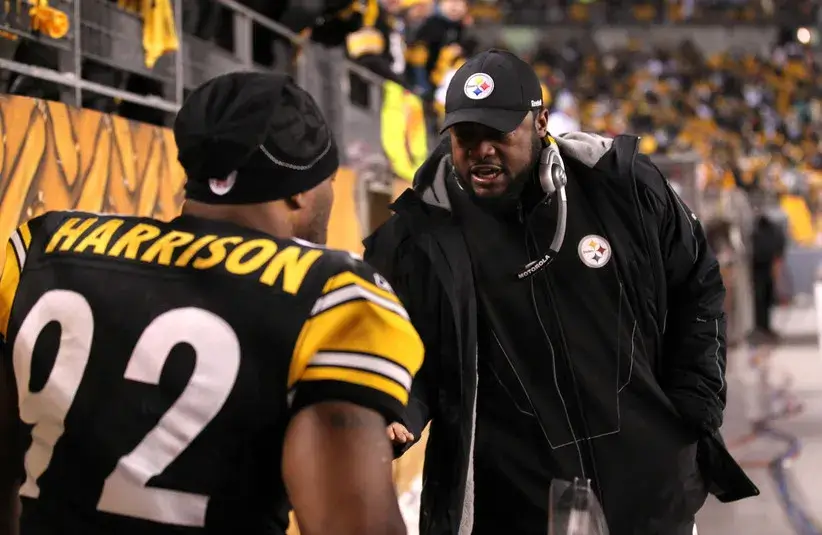
The controversy started when James Harrison a player Tomlin coached, voiced a controversial opinion. Mike Tomlin is “not worthy” of a Gold Jacket.
Harrison argued that Tomlin’s record and coaching approach simply don’t meet the high bar he personally sets for Hall of Fame induction. It wasn’t a slip of the tongue; it was a doubled-down argument. For a player who spent the prime of his career wrecking offenses under Tomlin’s leadership, the criticism felt personal to many fans.
Tomlin, true to his stoic nature, hasn’t engaged in a war of words. But his silence hasn’t stopped the media and the fanbase from picking sides.
The Case For Canton: Analyzing Tomlin’s Résumé
To understand the weight of Harrison’s comments, you have to look at what Tomlin has achieved since taking the reins in 2007.
- Longevity: Tomlin held one of the longest active tenures in the league before recently stepping down
- The Hardware: He led the Steelers to a Super Bowl victory in the 2008 season.
- Consistency: He has maintained a reputation for steady regular-season performance, keeping the Steelers competitive through multiple roster turnovers.
Supporters argue that you can’t tell the story of the NFL in the 2000s, 2010s and 2020s without Mike Tomlin. His ability to keep a team in the playoff hunt, year after year, speaks to a high-level cultural impact that usually results in a Hall of Fame nod.
The “Harrison Standard”
So, where is Harrison coming from? Now we have to keep in mind that Harrison is a bit bias. It’s been known that he does not like Tomlin at all. His critique seems rooted in the perspective of an elite player who values peak dominance over steady consistency.
Harrison played in an era of ferocious Steelers defense. For a player with his intensity, “competitive” might not be enough. The argument against Tomlin usually centers on playoff success relative to regular-season wins. Critics often point out that while Tomlin gets to the dance often, deep runs have been scarcer in recent years.
The Steelers Fan Divide
The reaction in Pittsburgh has been as polarized as you’d expect. On one side, you have the “Standard is the Standard” crowd, who defends Tomlin’s ability to adapt, especially after the 2018 “Days of Our Steelers” season. They look around at the coaching carousels in other cities and are grateful for the stability Tomlin provides. They argue that winning a Super Bowl and keeping the team constantly relevant is the definition of a Hall of Fame career.
On the other side, you have fans echoing Harrison. They believe the standard in Pittsburgh should be championships, not just winning records. They worry that “good enough” has become the enemy of “great,” and they view Harrison’s comments as a necessary reality check for an organization that hasn’t hoisted a Lombardi Trophy in over a decade.
Why This Debate Matters
This isn’t just about one coach and one player. The Tomlin-Harrison dust-up feeds into a much larger conversation about legacy in sports.
How should we weigh a Hall of Fame resume?
- Peak vs. Longevity: Is it better to burn bright for five years and win three rings, or to win one ring and be competitive for 20 years?
- Influence: Does the coach change the game or the culture of the franchise?
- The Player’s Voice: How much weight should we give to the opinions of the legends who played for these coaches?
Harrison’s comments serve as a reminder that a coach’s legacy is never cemented until they retire. As long as Tomlin is on the sideline, he has the chance to prove his detractors wrong—or fuel their arguments further based on his postseason results.
Frequently Asked Questions
What exactly did James Harrison say about Mike Tomlin?
Harrison publicly stated that he does not believe Tomlin is worthy of the Pro Football Hall of Fame.
Has Mike Tomlin responded to the criticism?
No, not directly. Tomlin has historically avoided getting into public disputes with former players or the media. He has not issued a specific rebuttal to Harrison’s comments, sticking to his routine of focusing solely on his current team and upcoming games.
What do voters look at for the Hall of Fame?
While there is no strict checklist, Hall of Fame voters typically consider career win totals, Super Bowl championships, winning percentage, playoff success, and the coach’s overall influence on the game.
The Final Verdict Is Still Unwritten
The Hall of Fame selection process will eventually take its course, independent of what James Harrison tweets or says in interviews. Voters will look at the cold, hard data. However, Harrison has successfully injected a seed of doubt into the narrative. But lets be real, Tomlin is a Hall of Famer. Imagine if Tomlin and Harrison go to Canton in the same class.