
Bad Bunny’s Super Bowl LX Halftime Show Garners Record Ratings

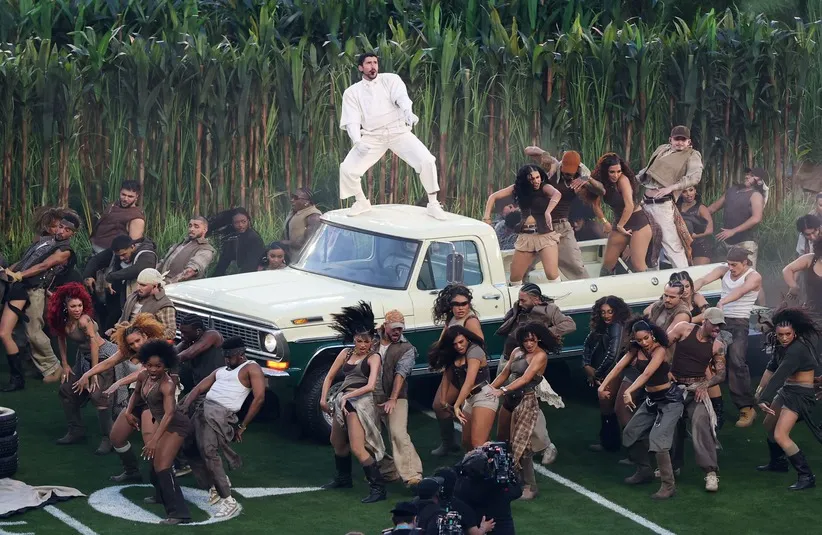
By the time the third quarter rolled around in Santa Clara, the game itself had kind of lost the plot. The Seattle Seahawks were busy putting the New England Patriots in a defensive stranglehold, and unless you were wearing neon green and navy, the on-field drama was lacking. But the halftime show? That was a different ballgame entirely.
When the NFL announced Bad Bunny as the headliner for Super Bowl LX, there were the usual murmurs. Could a primarily Spanish-language artist hold the attention of middle America while they refilled their nacho plates? On Sunday, Feb. 8, 2026, Bad Bunny didn’t just answer that question; he grabbed the question by the collar, dragged it onto the stage, and threw a Puerto Rican block party on top of it.
The Numbers Game: How Bad Bunny Outperformed the Quarterbacks
In the sports world, we live and die by the stats, so let’s look at the tape. According to the suits over at Nielsen, the Seahawks’ demolition job drew an impressive 124.9 million viewers. That’s huge. It’s the second-highest of all time.
But Bad Bunny? He beat the game. The halftime show averaged 128.2 million viewers. That means roughly 3.3 million people were apparently waiting for the whistle to blow just so they could tune in for the halftime show. He now holds the title for the fourth most-watched halftime show in history, sitting right at the big kids’ table with Kendrick Lamar, Michael Jackson, and Usher.
This wasn’t just a concert; it was a retention strategy. The peak viewership for the entire broadcast hit 137.8 million during the second quarter. People weren’t just watching football; they were waiting for Benito.
A Cultural Haymaker In Santa Clara
What made this performance different wasn’t just the sheer volume of eyeballs; it was what those eyeballs saw. We’ve seen high production value before. We’ve seen flying stages and marching bands. But we haven’t seen a tribute to Puerto Rican culture quite this loud on a stage this American.
Bad Bunny made history as the first headliner to perform entirely in Spanish. There was no “Despacito” crossover attempt to placate the English speakers. It was raw, authentic, and unapologetic. He transformed the field at Levi’s Stadium into a vibrant scene straight out of the Caribbean.
It was a visual feast. He brought out Ricky Martin and Lady Gaga, which felt like the fever dream collaboration we didn’t know we needed until it happened. It was a celebration of resilience that transcended the language barrier. For about 15 minutes, the Super Bowl wasn’t about touchdowns or field goals; it was about heritage.
The “Bunny Effect” On the Charts
You know you’ve won the Super Bowl when the game ends and your numbers keep going up. The aftermath of the performance was instantaneous. While the Patriots were licking their wounds, Bad Bunny was seeing a 470% spike in Spotify streams in the U.S. alone.
Globally, his streams jumped 210%. His track “DtMF” vaulted back into the Billboard Hot 100 at number 10. Even Martin caught a stray boost, seeing a 145% jump in streams. That’s the power of the platform. You play the halftime show, and suddenly everyone remembers why they had your album on repeat five years ago.
The Verdict
So, where does this leave us? Super Bowl LX will go down in the record books for a few reasons. It’ll be remembered for the Seahawks’ defensive dominance and Jason Myers kicking field goals like he was playing a video game on rookie mode.
But culturally? This was the Bad Bunny Bowl. He proved that music is the universal language, that authenticity sells, and that you don’t need to sing in English to command the attention of 128 million people. Kendrick Lamar might still hold the viewership crown from 2025, but Bunny proved that the halftime show is no longer just a break from the football—it’s the main event.
