BREAKING: San Francisco 49ers TE George Kittle Out For Rest of Season with Achilles Injury

There are moments in sports that simply suck the air out of a stadium, moments where the score on the board suddenly feels secondary to the human drama unfolding on the turf. For the San Francisco 49ers and their faithful, that moment arrived with just over six minutes remaining in the second quarter of Sunday’s NFL Wildcard clash against the Philadelphia Eagles.
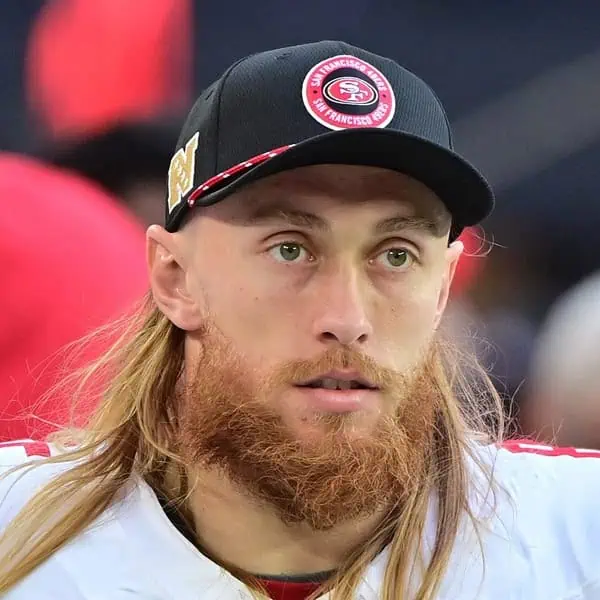
George Kittle, the energetic heartbeat of the San Francisco offense and arguably the best all-around tight end in football, went down. And he didn’t get back up.
The scene in Philadelphia shifted instantly from the frenetic energy of a playoff dogfight to a somber, gut-wrenching pause. After hauling in a six-yard pass from quarterback Brock Purdy, Kittle attempted to make a cut upfield. It’s a move he has made thousands of times in his career. This time, however, his right leg simply gave way before Eagles linebacker Zach Baun completed the tackle.
A Season-Defining Moment for the 49ers
The immediate aftermath told you everything you needed to know. Kittle stayed on the ground, triggering an urgent rush of medical staff from the San Francisco sideline. But it was the reaction of the players that spoke volumes. Teammates and opponents alike formed a circle around the fallen star, a universal sign of respect and concern that usually accompanies significant injuries.
When the cart comes out, optimism usually leaves. Kittle was transported to the locker room, and in a testament to his character, he was seen clapping and encouraging his teammates even as he was driven away from the field. It was a moment of leadership in the face of personal disaster, but it did little to quell the anxiety of the 49ers fanbase.
The diagnosis came with brutal swiftness. With two minutes still remaining in the first half, Kittle was officially ruled out. Reports from the broadcast and insiders suggested the injury bore the hallmarks of an Achilles tear, a devastating blow that would not only end his night but almost certainly his season.
The Physical and Emotional Toll
This injury feels particularly cruel given the road Kittle traveled just to be on the field this Sunday. The 49ers have had to navigate his health carefully all year. He missed five of the season’s first six games dealing with a hamstring issue and was inactive as recently as Week 17 with an ankle problem.
He had returned just last week against the Seattle Seahawks, looking to ramp up for a postseason run. He entered Sunday’s game with no injury designation, ready to be the safety valve and playmaker Brock Purdy relies on so heavily. To have his postseason cut short on his very first catch of the night is a bitter pill to swallow for a competitor of his caliber.
What This Loss Means for San Francisco
From a tactical standpoint, losing Kittle is a nightmare for head coach Kyle Shanahan. The 49ers offense is predicated on versatility, and Kittle is the skeleton key that unlocks it all. He isn’t just an elite pass-catcher; he is a ferocious run blocker who acts like a third offensive tackle. When he is on the field, defenses have to guess. When he is gone, the playbook inevitably shrinks.
The 49ers managed to salvage points on the drive, with Jauan Jennings stepping up for a 45-yard reception that set up a field goal, cutting the Eagles’ lead to 13-10. But the energy had shifted. The 49ers are a resilient bunch—they have proven that time and again—but replacing the production and the palpable enthusiasm of George Kittle is a tall order for any roster.
A Test of Character
As the game progresses, the narrative for San Francisco shifts from game-planning to gut-checking. Injuries are an unfortunate, inevitable part of the NFL, but losing a captain and a tone-setter in a win-or-go-home scenario is the ultimate test of a team’s fabric.
The 49ers have depth, and they have talent, but for the remainder of this playoffs, they will have to find a way to win without their spark plug. For Kittle, the focus now shifts from chasing a Super Bowl ring to the long, grueling road of rehabilitation. If his exit from the field—cheering on his brothers while in pain—is any indication, he’ll attack that rehab with the same ferocity he brings to the gridiron. But for tonight, the red and gold are hurting.