
Kerr faces uncertain future as Warriors confront the end of an era

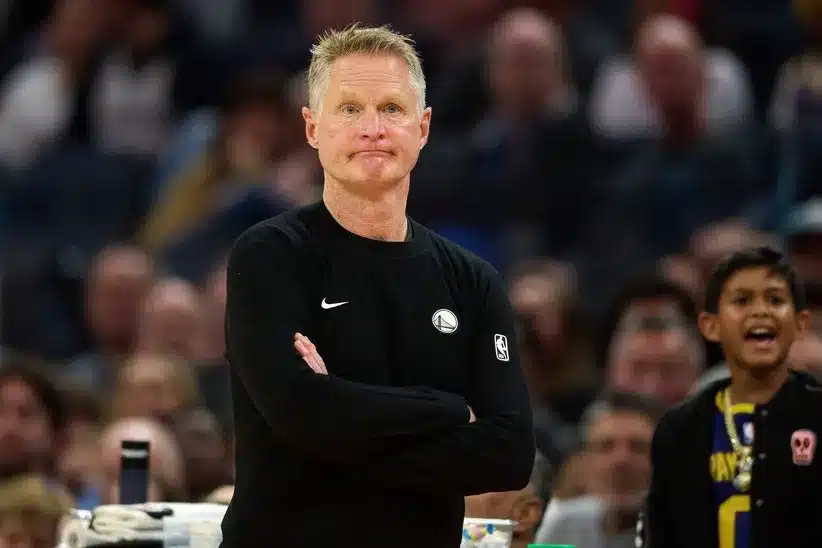
The final buzzer in Phoenix felt heavier than a single loss. It wasn’t just the Warriors’ 111-96 season-ending defeat to the Suns in the play-in tournament. It was Steve Kerr pulling Stephen Curry and Draymond Green aside in the closing seconds, sharing a private moment that sounded a lot like a man acknowledging that change may be on the way.
Kerr did not announce any decision on Friday night. But he didn’t hide from the truth, either. After 12 seasons, four championships, six NBA Finals appearances, and 600 wins, Kerr admitted his future with the Warriors is no longer something he can take for granted. “I don’t know what’s going to happen,” Kerr said after the game. “I still love coaching, but I get it.”
That is not the kind of quote you hear from a coach brushing off a tough night. That is the kind of quote that lands with weight because it comes from someone who understands exactly where this franchise has been and where it may be headed next.
Kerr says he will take time before deciding
Kerr said he plans to step away for a week or two before sitting down with owner Joe Lacob and general manager Mike Dunleavy to discuss what comes next. The tone mattered. This was not framed as a dramatic breakup or a power struggle. Kerr described it as a collaborative process, the kind of conversation built on trust after more than a decade together. Still, the uncertainty is real.
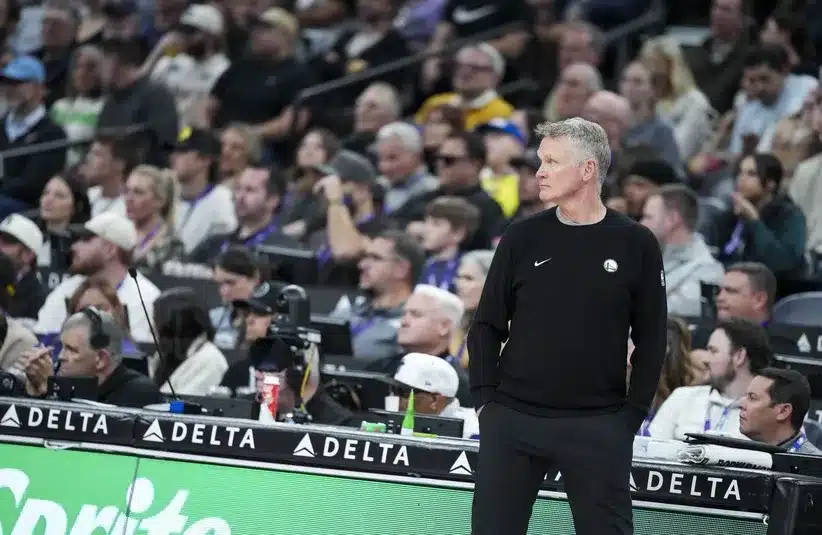
Kerr’s contract expired after the loss, making him, technically, a coaching free agent. However, he also made one thing clear: if he coaches in the NBA next season, it will only be with Golden State. That part matters, especially because Kerr has long tied his future to Curry. Earlier in the broader conversation around his tenure, Kerr made it clear he would never want to walk away from Curry. On Friday night, he again suggested that the bond remains central to his thinking.
Kerr and Curry remain tied together
For years, Kerr and Curry have been inseparable pillars of one of the defining dynasties in modern basketball. Kerr arrived in 2014 and immediately unlocked a new version of the Warriors, empowering Curry’s movement, pace, and shooting genius in a system that changed the sport. Together, they turned Golden State into a standard. The championships followed in 2015, 2017, 2018, and 2022. Now, the backdrop looks different.
Curry has one season left on his contract. Draymond Green has said he does not plan to retire and hopes to return. But Klay Thompson is gone. Bob Myers is gone. Jerry West left years ago. Kevin Durant’s chapter ended long ago. The once-unshakable foundation has thinned out, piece by piece. That is why Kerr’s words hit so hard. He is not simply evaluating a job. He is measuring whether the final version of this era still has enough life in it to justify one more run.
The Warriors’ decline has forced bigger questions
The Warriors are no longer the team the rest of the league fears by default. Since winning the title in 2022, they have drifted from contender status into something much murkier. This season, the slide became impossible to ignore.
Golden State finished 37-45, claimed the No. 10 seed, and failed to survive the play-in. Injuries played a major role. According to ESPN’s report, Jimmy Butler III tore an ACL in January, and Curry missed 27 games with a persistent right knee issue. But injuries alone do not explain the larger truth. The Warriors’ core is older, thinner, and no longer insulated by the depth and edge that once defined it. Kerr sees that. He has said as much. And it takes honesty, maybe even a little pain, to say it out loud when you are one of the men who helped build it.
Kerr’s postgame moment with Draymond Green said plenty
As the game slipped away, Kerr subbed out Curry and Green and brought them in close. According to ESPN, Kerr told them, “I don’t know what’s going to happen next, but I love you guys to death. Thank you.” That doesn’t sound like a coach going through the motions. That sounds like someone who knows the league moves fast, windows close suddenly, and even the greatest partnerships don’t last forever.
Green, for his part, said he wants to remain with the Warriors. “Hopefully I’ve done enough to still be here,” Green said. That quote carries its own tension. For years, Green was a certainty. Now he sounds like someone who knows nothing is guaranteed anymore. That is where the Warriors are as an organization. Not broken, but no longer fixed in place.
What Kerr’s decision means for Golden State
If Kerr returns, the Warriors get continuity, credibility, and a coach who still commands the room. They also get someone who understands Curry better than almost anyone in basketball and knows how to squeeze meaning out of an aging roster.
If Kerr steps away, the franchise instantly enters a new phase. It would not just be a coaching change. It would feel like the official end of the dynasty’s defining chapter. And that is what hangs over everything now. Kerr has earned the right to take a breath and decide on his own terms. Few coaches in league history have left fingerprints on a franchise the way he has in Golden State. But Friday night made one thing unmistakable: this is no longer business as usual.
Curry still wants to compete. Green wants to stay. The front office has decisions to make. And above all of it is Kerr, standing at the center of a moment that feels both deeply personal and massively consequential. For more than a decade, Kerr helped shape the Warriors’ identity. Now he has to decide whether he still wants to guide what comes next or whether the time has finally come to let someone else try. That answer is not here yet. But after Phoenix, it feels closer than ever.
