
Jaren Jackson Jr. Out for Season: What the Jazz’s Shocking Medical Update Means for Utah

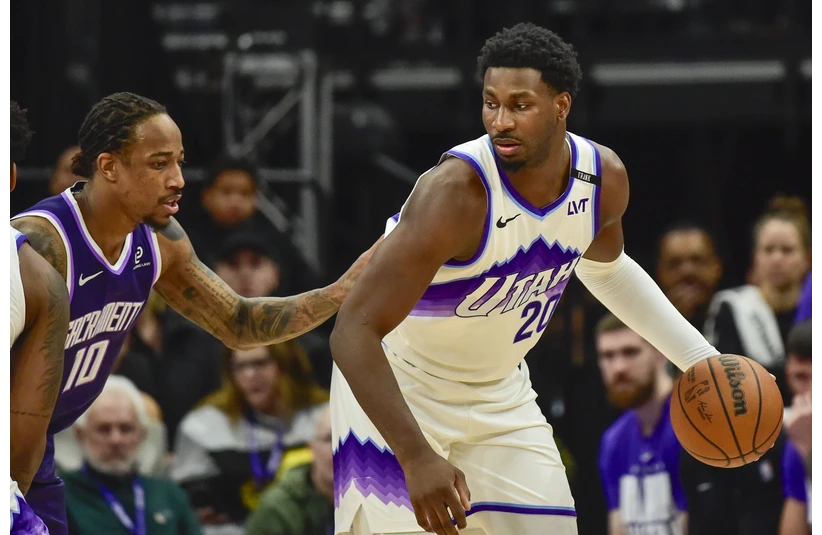
Just days after arriving in Salt Lake City via a blockbuster trade, Jaren Jackson Jr.’s season has come to an abrupt and unexpected end.
The Utah Jazz announced today that the 2023 Defensive Player of the Year will undergo surgery during the upcoming NBA All-Star break to remove a growth in his left knee. The procedure, which addresses a condition known as pigmented villonodular synovitis (PVNS), will sideline the star forward for the remainder of the 2025–26 campaign.
For a franchise that just made a massive investment to acquire Jackson, this is a stunning turn of events. Here is everything we know about the diagnosis, the timeline, and what this means for the Jazz moving forward.
The Diagnosis: Understanding PVNS
The issue was discovered during Jackson Jr.’s post-trade physical—a standard but crucial step in finalizing any NBA deal. While Jackson Jr. had appeared in three games for the Jazz following the February 3 trade with the Memphis Grizzlies, the medical team identified a concern that required a deeper look.
An MRI revealed a localized PVNS growth in his left knee.
For those unfamiliar with medical terminology, PVNS is a rare condition that affects the synovium, the thin layer of tissue that lines the joints and tendons. While the growth is benign (non-cancerous), it can be aggressive locally. If left untreated, it causes swelling, pain, and can eventually damage the joint cartilage and bone.
The decision to operate now is about preservation. By addressing the issue immediately, the Jazz and Jackson Jr. are prioritizing his long-term health over a short-term playoff push. It’s a tough pill to swallow for fans excited to see their new star in action, but medical experts generally regard the surgery as necessary to prevent permanent joint damage.
From Blockbuster Trade to Surgery Ward
The timing of this news makes it particularly difficult for the Jazz faithful to digest. The excitement in Salt Lake City was palpable when the front office pulled the trigger on the eight-player deal with Memphis earlier this month. Jackson Jr. was supposed to be the anchor of Utah’s defense, a rim-protecting unicorn who could stretch the floor on offense.
To lose him after just a handful of appearances feels like a cruel twist of fate.
In his brief stint with Utah, Jackson Jr. showed flashes of why the front office coveted him. His ability to switch onto smaller guards while still patrolling the paint is elite, and his presence was expected to accelerate the Jazz’s competitive timeline. Now, that timeline has been forcibly paused.
The sequence of events unfolded rapidly:
- February 3: The trade between Utah and Memphis is finalized.
- Post-Trade Physical: Medical staff flag a concern with the left knee.
- MRI Confirmation: The PVNS growth is diagnosed.
- The Decision: Surgery is scheduled for the All-Star break, ending his season.
Fan Reaction: Shock, Sympathy, and Confusion
As the news broke across social media, the initial reaction was a mix of disbelief and concern. It’s rare for a physical to reveal something this significant after a player has already suited up for their new team, though not unheard of.
“Health over everything,” has been the dominant sentiment on X (formerly Twitter) and Reddit threads. Most rational fans understand that risking the long-term knee health of a 26-year-old cornerstone isn’t worth salvaging a single season.
However, the inevitable questions about the trade itself have started to surface. “What does this mean for our draft positioning?” is a common refrain among the stat-heads and tank-watchers. Without Jackson Jr.’s defensive impact, Utah’s defense is likely to slide, potentially improving their lottery odds—a silver lining for those focused on the draft, but a disappointment for those hoping for a play-in push.
What Happens Next for the Jazz?
Immediate Roster Adjustments
Head Coach Will Hardy now faces a significant rotation puzzle. The Jazz effectively traded away depth to acquire Jackson Jr., and now that depth won’t be replaced by the star they bought.
Expect the Jazz to rely heavily on their existing frontcourt rotation. We may see smaller lineups or increased minutes for developmental players as the team navigates the final stretch of the season. The front office might also explore the buyout market or 10-day contracts to add bodies for practice and emergency depth. However, it’s unlikely they will make a splashy move to replace Jackson Jr.’s specific production.
The Recovery Timeline
The good news is that the long-term outlook for Jackson Jr. remains positive. League insiders and medical reports suggest that a full recovery is expected. Because the surgery is happening now, rather than in the offseason, he should have ample time to rehabilitate.
The expectation is that he will be cleared for full basketball activities well before training camp opens for the 2026-27 season. This isn’t a career-altering injury like an Achilles tear; it’s a maintenance issue that, once resolved, should allow him to return to his All-Star form.
The Bottom Line
This is a setback, undeniably. Utah pushed its chips to the center of the table to get Jackson Jr., and they won’t see the payoff until next year.
But the Jazz are playing the long game here. They possess a 26-year-old defensive anchor under contract who should be fully healthy post-surgery. The rest of this season might be painful to watch defensively, but ensuring he is 100% for the next several years is the only logical move.
We will continue to update this story as the Jazz release official post-surgery reports and rehabilitation milestones.
