
LeBron James Faces Heat Over Israel Comments During All-Star Weekend


It was supposed to be a weekend celebrating the game’s evolution at the Intuit Dome. The 75th NBA All-Star Game in Inglewood brought the usual glitz, glam, and high-flying theatrics we’ve come to expect. But as the confetti settled, the headlines shifted away from the court and straight into the geopolitical arena.
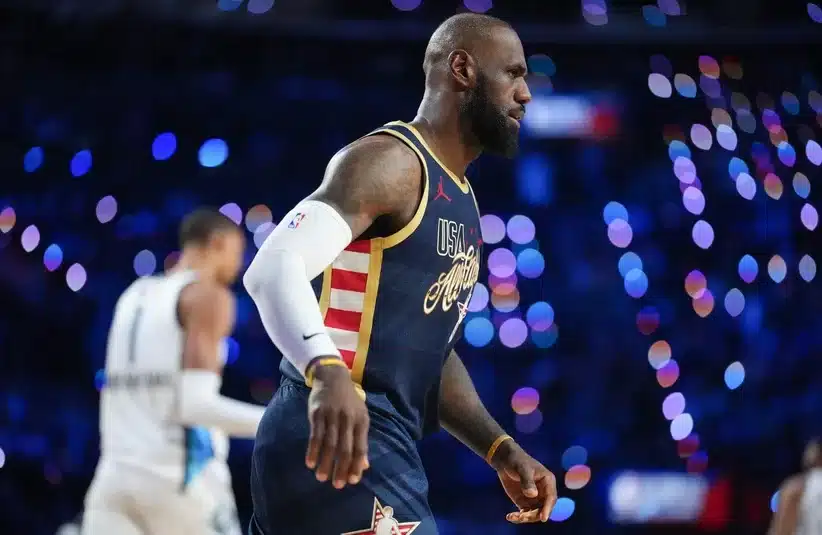
LeBron James, the face of the league and arguably the most socially conscious athlete of his generation, found himself in the middle of a heated firestorm following comments made about Israel.
The backlash didn’t stem from a missed buzzer-beater or a trade rumor. It came from a post-game press conference where James heaped praise on Portland Trail Blazers forward Deni Avdija and expressed a desire to visit Avdija’s home country. In a vacuum, it was a veteran complimenting a young star. In the context of the ongoing crisis in Gaza, however, the remarks struck a nerve that resonated globally.
The Press Conference That Sparked The Outrage
The moment happened innocently enough. Reporters asked James about the historic night for Deni Avdija, who had just become the first Israeli player to suit up for an NBA All-Star Game. James, never one to shy away from lifting up the younger generation of hoopers, gave Avdija his flowers. He reaffirmed that the Blazers’ forward earned his spot among the elite, calling him an exceptional talent.
But then, James pivoted to the fans. He acknowledged the support he’s received from Israel throughout his career and dropped the soundbite that is now circulating across every social media platform. He mentioned that he had “heard nothing but great things” about the country and hoped to visit someday. He capped it off by saying he hoped his game inspired people there “not only to be great in sport but to be better in general, in life.”
For many watching, the timing was jarring. With the conflict in Gaza continuing to dominate international news cycles and death tolls rising, hearing the NBA’s biggest ambassador speak glowingly about the region—without acknowledging the humanitarian crisis—felt tone-deaf to a significant portion of the basketball community.
A Collision of Sports, Politics, and Silence
The criticism leveled at James isn’t just about what he said; it’s about who he is. For over a decade, LeBron has cultivated a brand built on being “More Than An Athlete.” He was a leading voice during the Black Lives Matter movement. He spoke out against police brutality when others stayed quiet. He famously opened the I PROMISE School to uplift his community. He has set the standard for the modern athlete-activist.
That resume is exactly why the backlash is so fierce right now. Critics are pointing to a perceived double standard. The argument bubbling up on Twitter and Instagram is straightforward: How can a man who speaks so eloquently on injustice in America turn a blind eye to the suffering of Palestinians in Gaza? By praising the country without addressing the conflict, many fans feel James effectively sidestepped the very moral responsibility he usually champions.
Avdija’s Historic Night Gets Complicated
Caught in the middle of this is Deni Avdija. February 15, 2026, was meant to be the pinnacle of his career so far. Being selected as an All-Star is a massive achievement, and representing Israel on that stage is a source of pride for his home fans. The validation from James—a player Avdija likely grew up idolizing—should have been the cherry on top.
Instead, the narrative has shifted. The celebration of Avdija’s breakout season is now tangled up in a political debate that is much bigger than basketball. While Avdija hasn’t commented on the controversy surrounding James’ remarks, the situation highlights the impossible tightrope international players have to walk when their home nations are involved in global conflicts.
The Reality of Global Stardom
This incident underscores a harsh reality for the NBA and its superstars: the court is global, and so are the consequences of your words. In the past, an athlete could complement a country, and it would be viewed as simple diplomacy. Today, with a digitally connected fanbase that is hyper-aware of global politics, those same comments are dissected for intent and ignorance.
Media analysts have noted that this is a turning point. James has immense global influence. His words carry weight far beyond the crypto.com Arena or the Intuit Dome. When he speaks, markets move, and opinions shift. The frustration among fans stems from a feeling that he didn’t read the room—or, worse, that he chose to ignore the reality of it entirely.
FAQ SECTION
Q: What did LeBron James say about Israel?
A: He praised Deni Avdija, acknowledged Israeli fans, and said he hoped to visit the country someday.
Q: Why are people upset?
A: Critics argue his comments ignored the ongoing humanitarian crisis in Gaza.
Q: Who is Deni Avdija?
A: The first Israeli player selected for an NBA All‑Star Game.
Q: What happens next?
A: It’s unclear whether James will address the backlash or clarify his remarks.
What Comes Next for James?
As of now, the Lakers star hasn’t issued a follow-up statement. His camp is likely weighing whether to address the backlash directly or let the news cycle churn forward. In the world of 24-hour sports news, silence is often a strategy.
However, for a player who has built a legacy on using his voice, staying silent might not be an option that sits well with his conscience—or his fanbase. The question remains: Was this a simple slip-up in a post-game media scrum, or a revealing look at the limits of athlete activism?
