
Detroit Tigers Starting Pitcher Reese Olson Ruled Out For 2026

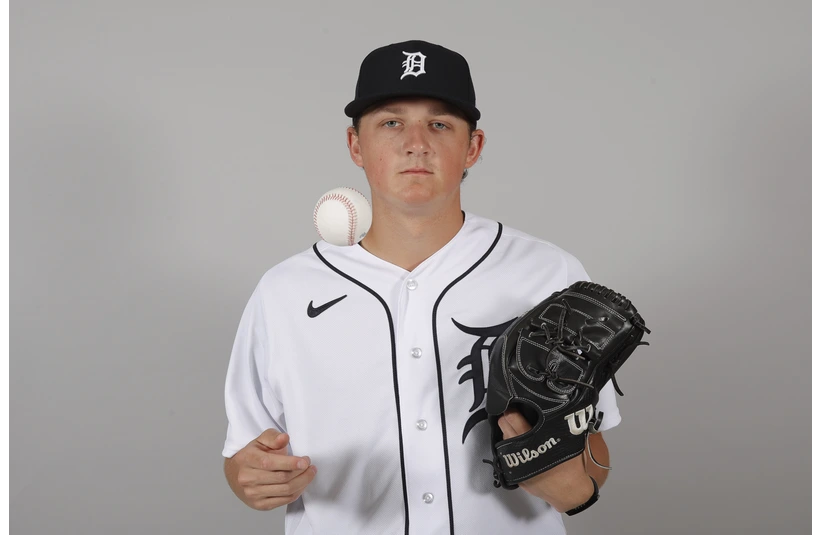
Reese Olson’s season is over before it ever had a chance to begin. The Detroit Tigers confirmed that the right‑hander underwent surgery to repair his labrum, ending any hope of seeing him on a mound in 2026. It’s a gut punch for a club that spent the winter trying to build enough pitching depth to withstand exactly this kind of blow.
Olson’s Season Ends Before It Starts
Olson entered the offseason as one of Detroit’s most important arms, a young starter who had shown flashes of becoming a long‑term rotation fixture. Instead, the Tigers now have to plan for a full year without him. The team had initially believed Olson would be ready for Spring Training after he began a throwing program in December, but a setback forced him to seek another medical opinion.
The loss is significant. Olson was coming off a 2025 campaign in which he posted a 3.15 ERA and a 1.7 bWAR in just 13 starts, numbers that hinted at a breakout before a shoulder strain shut him down in late July. Detroit hoped that rest and rehab would be enough. Instead, the injury lingered, and now Olson won’t throw a competitive pitch until 2027 at the earliest.
Tigers Built Depth Knowing Olson Might Not Be Ready
Detroit’s front office didn’t wait for the bad news to become official. Their late flurry of moves now makes perfect sense. The Tigers added All‑Star left‑hander Framber Valdez, brought back franchise icon Justin Verlander, and continued to stockpile veteran arms. Those decisions weren’t luxury additions—they were insurance policies.
His placement on the 60‑day injured list opened a roster spot, but it also underscored how much the Tigers were bracing for this outcome. Even Jackson Jobe, who underwent Tommy John Surgery last summer, was moved to the 60‑day IL as Detroit reshaped its pitching depth chart.
What Olson’s Absence Means For Detroit’s Rotation
With Olson sidelined, Detroit’s rotation suddenly looks more experienced but less dynamic. Valdez and Verlander join Tarik Skubal, Jack Flaherty, and Casey Mize to form a veteran-heavy group. It’s a rotation built to compete now, but it lacks the youthful upside Olson brought.
Drew Anderson, who impressed in the KBO last season before signing with Detroit, becomes a likely swingman. Troy Melton, who delivered eight innings of one‑run ball in the ALDS against Seattle last year, could either return to the bullpen or open the season in Triple‑A Toledo to stay stretched out.
Olson’s Road Back
Shoulder surgeries are notoriously tricky for pitchers, and labrum repairs carry no guarantees. He already lost half of 2025 to the initial strain, and now he faces a full season of recovery and rehab. Detroit will take the long view, knowing that rushing a young pitcher back from a major shoulder procedure is a recipe for long‑term trouble.
For Olson, the timing is brutal. He was on the verge of establishing himself as a foundational piece of the Tigers’ future. Instead, he’ll spend 2026 rebuilding strength, refining mechanics, and hoping to return as the same pitcher who flashed top‑of‑the‑rotation potential.
The Bottom Line
His injury reshapes Detroit’s season before it starts. The Tigers still believe they can contend, and their offseason moves reflect that confidence. However, losing Olson for the entire year removes a key piece of their long-term puzzle and forces the club to rely heavily on veterans.
The Tigers have enough arms to survive. What they don’t have is another Olson—an emerging talent whose best baseball still seemed ahead of him. And that’s what makes this loss sting the most.
