
Khabib Nurmagomedov Controversially Rejects the Idea Of Women In UFC

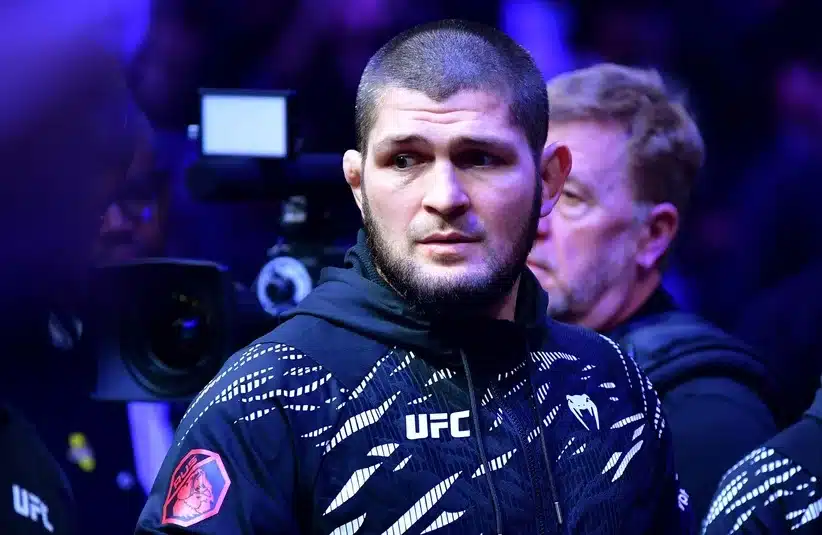
When you retire with an undisputed 29-0 record, people tend to listen to what you have to say. Khabib Nurmagomedov built a legacy out of physically dominating every man who dared to step inside the octagon with him. But recently, the former UFC lightweight kingpin found himself navigating a completely different kind of fight. It was the fierce, unforgiving arena of public opinion.
The internet lit up after Nurmagomedov offered his unvarnished thoughts on women competing in mixed martial arts. The MMA community loves a good debate, and when a living legend weighs in on a highly sensitive topic, the resulting shockwaves are bound to rattle the cage. Here is a look at exactly what was said, the cultural weight behind those words, and why women’s combat sports are bigger than any single headline.
The Undefeated Champ Steps Into a New Debate
During a recent interview, Nurmagomedov was asked about his stance on female fighters. Now, anyone familiar with his background knows he rarely minces words. He stated bluntly that, in his view, men and women are simply built differently, pointing out that “a woman is weaker than a man.” Predictably, the internet took that quote and sprinted with it.
But if we hit the brakes and look at the full tape, Nurmagomedov actually followed up with a critical clarification. He made it crystal clear that he does not oppose women strapping on the four-ounce gloves and going to war. He respects their dedication and believes they should be entirely free to compete if they choose to do so. His comments were an attempt to highlight biological differences, not a campaign to banish women from the sport.
Lost In Translation Or a Clash Of Cultures?
To really understand where Nurmagomedov is coming from, you have to look at his roots. Growing up in the rugged mountains of Dagestan, where wrestling bears as a child is apparently just a Tuesday afternoon, traditional Islamic values shape the culture. It is a deeply conservative part of the world.
For Nurmagomedov, stepping up to a microphone and talking about gender dynamics is always going to be filtered through that specific cultural lens. While his phrasing might sound incredibly blunt to a Western audience accustomed to PR-polished soundbites, analysts who follow the sport closely recognize it as a fairly standard viewpoint in his part of the globe. He isn’t trying to tear down the women’s divisions; he is just calling the fight exactly as he sees it through his own physiological and cultural framework.
The Pioneers Who Put Women’s MMA On the Map
Regardless of the noise, you cannot talk about modern mixed martial arts without talking about the absolute star power of the women’s divisions. When Dana White famously declared that women would never fight in the UFC, nobody could have predicted the sheer hurricane of momentum that Ronda Rousey would bring to the table in 2012.
Since those early days, the evolution has been staggering. We have witnessed Amanda Nunes dismantle legendary challengers to become a simultaneous two-division champion, proving she could draw massive pay-per-view numbers.
We have seen the technical brilliance of Valentina Shevchenko and the heart-stopping knockouts of Rose Namajunas. Women are not just participating in this sport; they are headlining mega-events, cashing massive checks, and putting on fights that routinely steal the show. Nurmagomedov knows this, which is exactly why he ultimately voiced his respect for their courage.
How the Fight World Scored the Comments
As expected, the reaction from fans was a heavily split decision. On one side of the aisle, critics threw heavy combinations, accusing Nurmagomedov of reinforcing tired stereotypes and being overly dismissive of female athletes. They argue that words matter, especially when they come from a guy who has a global army of loyal fans listening to his every word.
On the other side, defenders pointed to his clarification. They argued that acknowledging physiological differences is just basic science, noting that this is exactly why men and women fight in separate divisions to begin with. They appreciated that, despite his deeply traditional background, Nurmagomedov still openly supported a woman’s right to chase greatness in the cage.
FAQ SECTION
Q: What did Khabib Nurmagomedov say about women in MMA?
A: He stated that women are physically weaker than men but clarified that he supports their right to compete in MMA.
Q: Why are his comments important?
A: As one of the most respected fighters in MMA history, his views influence public perception and spark debate about gender equality in combat sports.
Q: How have fans reacted?
A: Reactions were mixed. Some criticized his phrasing, while others defended his clarification that he respects women’s choices.
Q: What’s next for women’s MMA?
A: Continued growth, with more female fighters headlining events and proving their competitive and commercial value.
What Happens Next for the Sport
At the end of the day, women’s MMA isn’t going anywhere but up. Promotions across the globe, from the UFC to ONE Championship, are constantly looking for the next female superstar. Rising talents like Erin Blanchfield and Manon Fiorot are already waiting in the wings to carry the torch.
Nurmagomedov will always be a titan of the sport, and his perspectives will always generate headlines. But this recent saga just proves that while MMA is a universal language of combat, the way we talk about it is still heavily shaped by where we come from. The debate will roll on, the women will keep fighting, and the sport will keep growing.
