
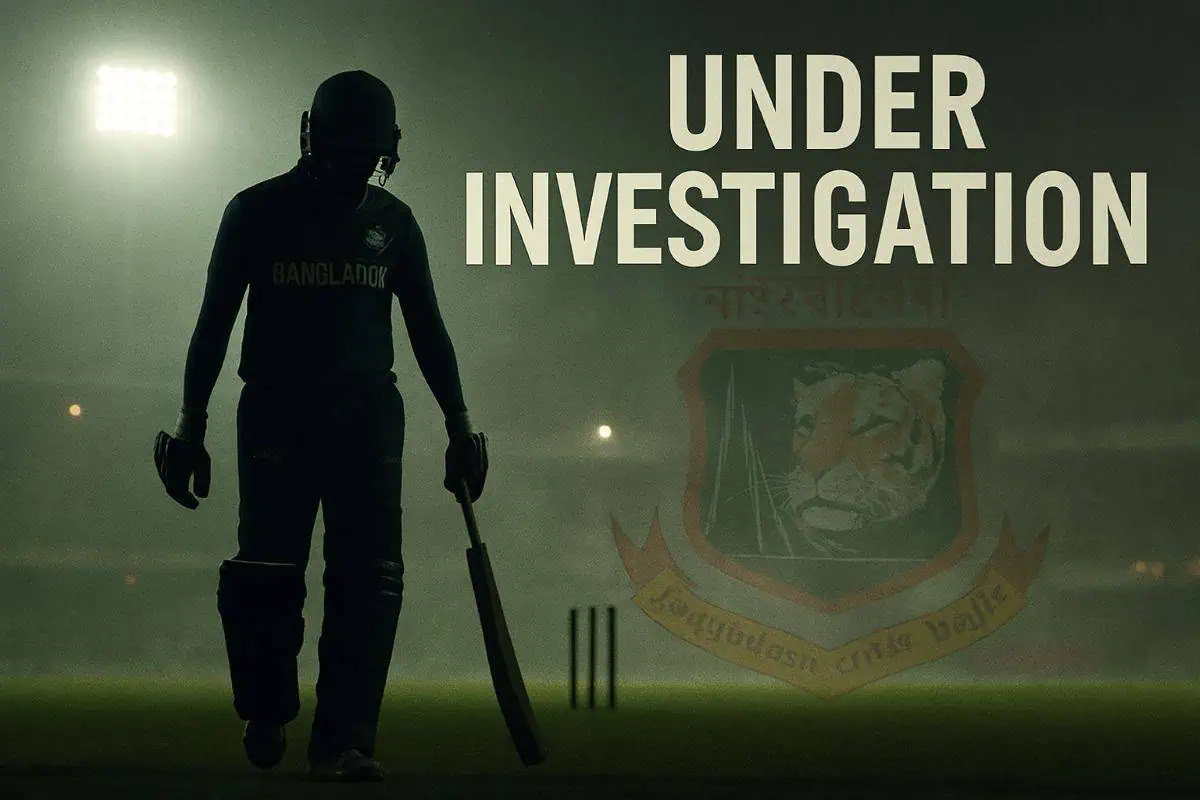
When Cricket Goes Rogue: Sabbir’s Match-Fixing Scandal Rocks Bangladesh Cricket

Let’s be honest here—when you watch cricket and see a batsman literally crouch down and hand over a free stumping to the wicketkeeper, your first thought isn’t “brilliant tactical move.” It’s more like “what the hell just happened?” Well, folks, we now have our answer, and it’s messier than a dropped catch in the final over.
The Cringe-Worthy Dismissals That Started It All
You’re watching the Dhaka Premier League, expecting some decent cricket, and instead you get what can only be described as a masterclass in how NOT to get out. First, opener Rahim Ahmed decides to take a casual stroll down the pitch against left-arm spinner Nihaduzzaman—without even attempting to play the ball or return to his crease. Stumped. Game over for Rahim.
But wait, it gets better (or worse, depending on your perspective). Enter Minhazul Abedin Sabbir, who apparently thought Rahim‘s dismissal wasn’t bizarre enough. After taking guard like any normal batsman would, Sabbir proceeds to crouch inside his crease and lean forward like he’s picking up a dropped contact lens. The wicketkeeper, probably as confused as the rest of us, completes the easiest stumping of his career.
Even the most casual cricket fan would’ve raised an eyebrow at that point. These weren’t heat-of-the-moment mistakes or tactical blunders—they looked like something out of a cricket blooper reel, except nobody was laughing.
BCB’s Anti-Corruption Unit Drops the Hammer
The Bangladesh Cricket Board’s Anti-Corruption Unit wasn’t about to let this slide under the rug. After conducting what must have been one of the most straightforward investigations in recent memory (I mean, the evidence was literally playing out on live television), they’ve come down hard on Sabbir.
The ACU has recommended a minimum five-year ban from all forms of cricket, with the possibility of extending it to eight to ten years or even more. That’s not just a slap on the wrist—that’s career-ending territory for most players.
The Evidence Speaks Louder Than Actions
According to the ACU documents, Sabbir didn’t just have one bad day at the office. The investigation revealed that he had been in regular contact with a foreign phone number believed to be linked to international betting syndicates. Because apparently, when you’re going to throw matches, you might as well go international with it.
The ACU found that Sabbir breached multiple clauses of the BCB’s Anti-Corruption Code, including:
- Engaging with suspected bookmakers
- Failing to report corrupt approaches
- Conduct that brought the game into disrepute (no kidding)
- Drawing Parallels to Past Scandals
The ACU specifically referenced Mohammad Ashraful‘s eight-year suspension as a comparable case, suggesting they’re not messing around when it comes to match-fixing. Ashraful’s case sent shockwaves through Bangladesh cricket back in the day, and it seems like the board is determined not to let history repeat itself without severe consequences.
The report stated: “This reflects the severity of the offence and acts as a deterrent. Comparable cases such as Mohammad Ashraful’s eight-year suspension also support a harsh penalty.”
International Implications and Broader Concerns
Here’s where things get really interesting (and concerning). The investigation suggests that international syndicates might be involved, prompting officials to call for cooperation with the ICC‘s Anti-Corruption Unit and potentially even Interpol. Because nothing says “we’ve got a problem” quite like needing international law enforcement to sort out your cricket corruption.
This isn’t just about one player making poor choices—it’s about the potential infiltration of international betting networks into domestic cricket. That’s the kind of thing that keeps cricket administrators up at night.
The ACU’s Wake-Up Call
Despite the damaging nature of Sabbir’s conduct, the BCB’s Anti-Corruption Unit is trying to spin this into a positive learning experience. Their report concluded: “This case is a wake-up call and will serve as a template for stronger anti-corruption efforts in Bangladesh cricket.”
The ACU has also recommended tightening safeguards in domestic competitions, including:
- Stricter communication rules in dressing rooms
- Deployment of anti-corruption observers at key fixtures
- Real-time monitoring of betting markets to detect unusual activity
What’s Next for Sabbir?
The case has been referred to the BCB’s Anti-Corruption Tribunal for formal proceedings under Article 5 of the Code. If the charges are upheld (and given the evidence, that seems likely), Sabbir will be looking at a lengthy ban from all cricket activities.
But here’s the kicker—if he ever wants to return to cricket, he’ll need to undergo rehabilitation programs. These might include addressing younger players about the dangers of corruption, which honestly feels like asking the fox to guard the henhouse, but hey, stranger things have happened in cricket.
The Bigger Picture
This whole saga serves as a stark reminder that corruption in cricket is far from dead. While we’ve seen major strides in cleaning up the international game, domestic competitions remain vulnerable to manipulation. The ease with which Sabbir allegedly connected with international betting syndicates should be a concerning wake-up call for cricket boards worldwide.
The fact that these dismissals were so blatantly obvious almost makes it worse. It’s one thing to subtly manipulate a match—it’s another to practically advertise your corruption on live television. Either Sabbir thought he was untouchable, or the arrogance of match-fixers has reached new heights.
Final Thoughts
Cricket has always prided itself on being a gentleman’s game, but incidents like this remind us that not everyone playing got the memo about integrity and fair play. The BCB’s swift and decisive action should be commended, even if the situation itself is deeply embarrassing for Bangladesh cricket.
As we wait for the formal proceedings to conclude, one thing is clear: Sabbir’s career is likely over, and rightfully so. Match-fixing doesn’t just cheat the opposition—it cheats every fan who believes in the authenticity of the sport they love.
Let’s hope this serves as a deterrent to other players who might be tempted by easy money and reminds everyone that cricket’s integrity is worth more than any betting syndicate’s payout.