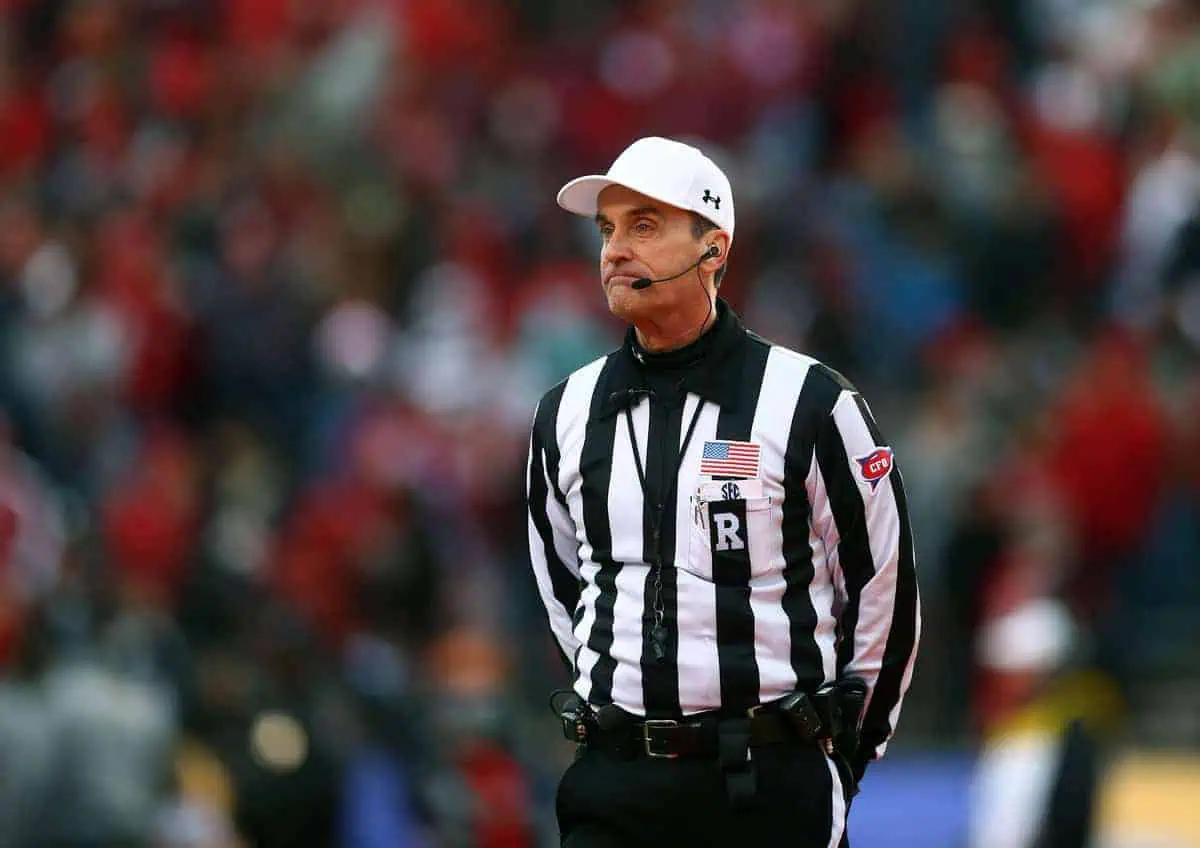
SEC Official Ken Williamson Permanently Suspended After Auburn-Georgia Disaster

Look, we’ve all had bad days at work. Maybe you spilled coffee on your shirt before a big presentation. Perhaps you sent an email to the wrong person. But Ken Williamson? He just had the kind of bad day that ends a 20-year career.
The veteran SEC referee has reportedly been permanently suspended following his crew’s performance during the Auburn-Georgia game two weeks ago—a contest that had more controversial calls than a soap opera has dramatic pauses. According to YellowHammer News, the SEC received 11 formal complaints about Williamson’s officiating that night, and conference officials validated nine of them. Nine. That’s not just a bad game—that’s a catastrophe with stripes.
The Night Everything Went Wrong
REPORT: The SEC has permanently suspended Ken Williamson, who recently officiated the Georgia-Auburn game that contained several controversial calls.
(via Yellowhammer News) pic.twitter.com/yieKCoquhJ
— CFB Kings (@CFBKings) October 22, 2025
Let’s rewind to October 11, when No. 10 Georgia visited Auburn’s Jordan-Hare Stadium. What should have been a straightforward SEC slugfest turned into a three-hour argument about what constitutes a touchdown, a timeout, and apparently, basic physics.
The chaos started late in the first half with Auburn leading 10-0. Tigers Quarterback Jackson Arnold drove his team to the Georgia 1-yard line, then appeared to break the plane for a touchdown before fumbling. Seemed simple enough, right? Wrong. Williamson’s crew ruled that Arnold fumbled before crossing the goal line, but had already blown the play dead. No touchdown for Auburn. No return touchdown for Georgia. Just confusion, frustration, and the distinct feeling that nobody really knew what just happened.
Auburn Coach Hugh Freeze didn’t mince words after the game, admitting the call “definitely shifted the momentum.” That’s coach-speak for “we got robbed,” by the way. Georgia proceeded to score 20 unanswered points and win 20-10, leaving Auburn fans wondering what might have been if Williamson had just made the right call.
When Clapping Becomes a Timeout (Or Does It?)
But wait—there’s more! Later in the game, with Auburn trailing 13-10, Georgia faced a crucial 3rd-and-9 with the play clock winding down. That’s when Bulldogs Head Coach Kirby Smart did something that would make even the most creative interpretations of sports rules seem reasonable: He sprinted down the sideline, making a clear timeout signal with his hands.
The officials granted the timeout. But then Smart, in a move that would make any defense attorney proud, argued he wasn’t actually calling a timeout. No sir. He was just “clapping” to alert officials that Auburn players were clapping to simulate the snap count, which would be a penalty against the Tigers.
Let that sink in for a moment. Smart was either calling a timeout or performing the world’s most emphatic golf clap. Williamson bought it. Instead of charging Georgia a timeout, the officials reset the play. ABC broadcasters Sean McDonough and Greg McElroy could barely contain their disbelief as they tried to explain what was happening to viewers at home.
“I didn’t need a timeout because we were going to get it off before the shot clock,” Smart said afterward, keeping a straight face that would make poker players jealous. “I wanted them to call it because it’s a penalty.”
A Pattern Of Problems
Here’s the thing: This wasn’t Williamson’s first rodeo gone wrong this season. Auburn has been on the wrong end of questionable officiating multiple times in 2025, including a loss to Oklahoma, where the SEC actually issued a public apology—something so rare it’s practically a collector’s item. That game featured the Sooners pulling off an illegal trick play for a touchdown, prompting SEC Commissioner Greg Sankey to personally call Freeze to express his disappointment.
You know it’s bad when the conference commissioner is making apology calls.
The first half of the Auburn-Georgia game alone lasted over two hours, thanks to endless reviews that seemed to come after every Auburn big play. It got so bad that fans on social media started joking about bringing sleeping bags to games. One Auburn supporter tweeted they left Jordan-Hare Stadium “with a sickening feeling,” adding that the integrity of the game was being questioned “week after week.”
The Aftermath and the Debate
Former NFL and NCAA referee Terry McAulay, now a rules analyst for NBC, didn’t hold back when news of Williamson’s suspension broke. McAulay defended the embattled official on social media, arguing that basing a permanent suspension on one game, no matter how disastrous, sets a dangerous precedent.
“If this is solely based on that one game, then shame on everyone involved,” McAulay said. “It’s yet another reason why Conferences should not oversee officiating and will forever be a dark stain on college football.”
McAulay has a point. Officials, like players and coaches, have bad games. The difference is we don’t permanently bench quarterbacks for throwing game-ending interceptions, no matter how painful they are to watch. We give them another chance to redeem themselves.
But here’s the counterargument: When you’re responsible for maintaining the integrity of a multibillion-dollar sport, and you validate nine out of eleven complaints in a single game, maybe it is time to hang up the whistle. Williamson’s crew didn’t just miss a few calls—they fundamentally altered the outcome of a major conference game between ranked opponents.
Auburn Athletic Director John Cohen was reportedly furious, shouting down Williamson as the teams left the field at halftime. Some might say that’s unprofessional. Others would say it’s justified when your team gets hosed on national television.
What This Means For College Football
The SEC hasn’t officially commented on Williamson’s reported suspension, which means this story is still developing faster than a fake injury in the fourth quarter. But if the reports are accurate, this marks a significant moment in college football officiating.
Conferences have long been criticized for protecting their officials, rarely holding them publicly accountable for mistakes. The SEC’s decision would represent a major shift in how officiating crews are evaluated and disciplined. It sends a message that even veteran officials with decades of experience aren’t immune to consequences when they repeatedly blow calls on the biggest stages.
Of course, it also raises questions about consistency. Will other officials face similar scrutiny? What about the crew that missed the Oklahoma trick play? Or the countless other questionable calls that happen every Saturday across college football?
McAulay suggested officials should protest the decision by delaying every SEC game this weekend in solidarity with Williamson. That won’t happen, of course, but it highlights the larger tension between accountability and fairness in officiating. Where’s the line between holding officials responsible and creating a culture where they’re afraid to make any decision for fear of ending their careers?
The Human Element
Lost in all this controversy is the human element. Williamson has been officiating SEC games for over two decades. He’s called countless contests without major incident. Now his career is reportedly over because of one historically bad night. That’s got to sting, regardless of whether you think the punishment fits the crime.
But college football isn’t just any job. It’s a high-stakes, high-pressure environment where millions of dollars, playoff berths, and lifelong dreams hang in the balance. When Auburn loses to Georgia partly because of officiating mistakes, it doesn’t just affect the scoreboard—it affects recruiting, bowl games, coaches’ job security, and players’ NFL prospects.
The SEC generates over $800 million annually in revenue. Schools invest hundreds of millions in facilities, coaching staffs, and recruiting. Players sacrifice their bodies for a chance at glory. Fans invest their emotions, time, and money into supporting their teams. With all that on the line, is it really too much to ask for competent officiating?
Looking Ahead
Auburn has now lost multiple games this season where officiating played a significant role. That’s a pattern that’s hard to ignore, even for the most objective observers. Whether Williamson deserved a permanent suspension or not, something clearly needs to change in how the SEC trains, evaluates, and holds its officials accountable.
The conference could start by being more transparent about how it reviews officials and what standards they’re held to. Public explanations for major mistakes would go a long way toward rebuilding trust. So would implementing full-time officiating crews who train together year-round, rather than the current part-time model where officials have day jobs and whistle games on weekends.
Technology could help too. Expanded replay review, real-time communication with a centralized command center, and AI-assisted officiating are all possibilities worth exploring. If we can use technology to determine whether a tennis ball touched the line by millimeters, surely we can use it to get college football calls right.
As for Williamson, his legacy is now forever tied to one disastrous night in Auburn. Whether that’s fair or not depends on your perspective. What’s undeniable is that his reported suspension marks a turning point for SEC officiating—one that signals the conference is finally willing to take accountability seriously, even if it took a historic meltdown to get there.