
The $18.7 Million Buyout Saga: Why Kansas State Fired Jerome Tang “For Cause”

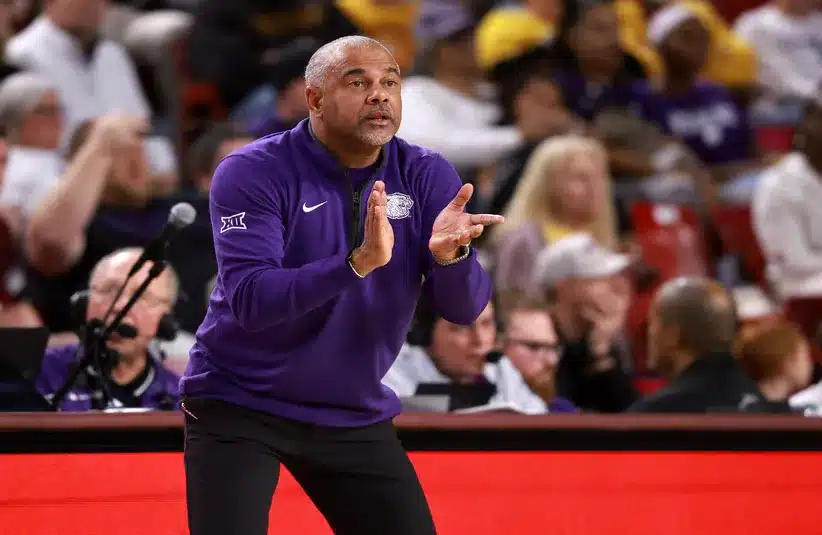
College basketball is a business, and business just got complicated in Manhattan, Kansas. By now, you’ve likely seen the headlines: Kansas State has parted ways with head coach Jerome Tang. While coaching changes are a standard part of the chaotic month of February, this specific move is anything but routine.
The university isn’t just looking for a new leader on the sideline; they are looking to save a fortune. The decision to fire Tang “for cause” has sparked a massive debate across the Big 12 and beyond. At the center of the controversy is a staggering $18.7 million buyout clause—money that Kansas State argues they shouldn’t have to pay.
This situation has quickly turned from a disappointing season into a high-stakes legal standoff. Here is a look at how we got here, what “for cause” actually means in this context, and where the Wildcats go from here.
The Breaking Point: Performance Meets Conduct
According to Athletic Director Gene Taylor, the decision wasn’t made in a vacuum. It follows a string of disappointing results in Big 12 play that left fans frustrated. However, losing games usually results in a standard firing where the coach collects their severance and walks away.
The turning point appears to be a widely shared rant that went viral, drawing negative attention to the program. When you combine public scrutiny regarding conduct with a losing record, you give the university ammunition. Taylor framed the move as necessary for the program’s best interest, signaling that the university believes Tang’s behavior violated the standards set in his contract.
The “For Cause” Loophole
This is where the situation gets technical—and expensive.
Most major college coaching contracts include a buyout clause. This is an insurance policy for the coach. If the school fires them because they want to go in a different direction (usually because of too many losses), the school has to pay out the remaining value of the contract. For Tang, that number sits at roughly $18.7 million.
However, contracts also have a “for cause” termination clause. This allows the university to fire a coach without paying a cent if they can prove specific breaches of contract. These breaches usually include:
- Serious NCAA rule violations.
- Criminal acts or “moral turpitude.”
- Conduct that brings significant embarrassment to the university.
Kansas State is betting that Tang’s recent behavior meets this high threshold. It is a bold financial play. If they win the argument, they save over $18.7 million. If they lose, they could be on the hook for the full amount plus significant legal fees.
What Comes Next?
While the lawyers sharpen their pencils, the actual basketball team is left in limbo. This is the collateral damage of a messy, mid-season divorce. Don’t expect this to be resolved overnight. Jerome Tang and his representatives are unlikely to accept the “for cause” designation without a fight. In scenarios like this, the coach almost always consults legal counsel to file a grievance or a lawsuit to recover the buyout money.
We will likely see one of two outcomes:
- A Settlement: Both sides agree that a long court battle is bad for public relations. They agree on a smaller number—less than $18 million but more than zero—and go their separate ways.
- Litigation: If neither side blinks, this goes to court. A judge or arbitrator would then have to decide if Tang’s sideline behavior and conduct truly constituted a breach of contract serious enough to void his payout.
The Clock Is Ticking For Tang & Kansas State
For Kansas State, the clock is ticking. They need to find a new coach and rebuild the program’s image, all while a nearly $18.7 million cloud hangs over the athletic department’s budget. This is going to be drawn out for many months and it will be interesting to see what happens next.
