
The Painter Paradox: Can Purdue’s Architect Build a Team That Can Withstand the Madness of March?

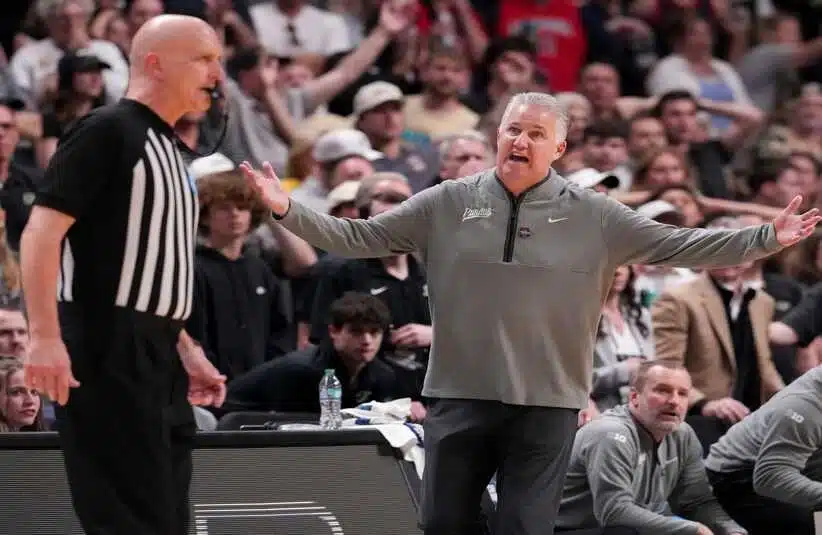
INDIANAPOLIS — In the sterile, fluorescent-lit hallways of the SAP Center on Sunday, the silence following Purdue’s 79-64 Elite Eight loss to Arizona was deafening. Matt Painter sat at the podium, with his three seniors, his eyes reflecting the exhaustion of a man who has spent twenty years perfecting a blueprint that keeps failing the final inspection.
Painter is the ultimate architect of consistency. Since taking over his alma mater in 2005, he has amassed over 500 wins, five Big Ten regular-season titles, and 18 NCAA Tournament appearances. He is, by almost any objective metric, one of the ten best coaches in the country. Yet, as the Boilermakers’ winningest senior class in program history—Braden Smith, Fletcher Loyer, and Trey Kaufman-Renn—walked off the floor for the last time, the same haunting question lingered: Can Matt Painter actually win the “Big One,” or is his philosophy a beautiful house built on a foundation that can’t withstand a March storm?
The Recruiting Glass Ceiling
The criticism of Painter usually begins and ends with his recruiting. Unlike the “one-and-done” factories at Duke or Kentucky, Painter recruits for a very specific, often multi-year fit. He prioritizes skill over raw athleticism, “IQ” over vertical leap, and culture over hype. It’s a strategy that yields incredible regular-season results; Purdue is the only program in America to be ranked No. 1 in three of the last four seasons.
However, the “Elite Eight wall” has become his shadow. Critics argue that while Painter’s developmental model produces All-Americans like Zach Edey and Braden Smith, it often leaves Purdue lacking the explosive, perimeter-closing speed needed to neutralize high-major athletes in the tournament. In the loss to Arizona, the Boilermakers looked a step slow against the Wildcats’ transition game. They weren’t out-coached; they were out-athleted.
Is the process a haunting one? If you define success solely by a trophy, perhaps. But Painter’s process is exactly why Purdue is relevant every single year. The 2026 recruiting class, currently ranked in the Top 15 nationally, features 7-footer Sinan Huan and sharpshooter Jacob Webber—players who fit the “Painter Prototype.” He isn’t changing who he is, which leads to the ultimate sports debate: consistency versus ceiling.
The Human Toll of “Almost”
“You don’t get a chance to sit on your couch and watch highlights,” Painter said after his 500th win earlier this month. There is a quiet, simmering intensity to Painter. He doesn’t throw chairs or manufacture “bulletin board material.” He treats basketball like a math equation, believing that if you execute the fundamentals enough times, the outcome will eventually favor you.
But March isn’t math. It’s a 40-minute heist. Painter has lived through the highest of highs—the 2024 National Championship game—and the lowest of lows—the 16-over-1 upset by Fairleigh Dickinson. Through it all, his players remain fiercely loyal. Braden Smith, the Big Ten’s all-time assist leader, credits Painter not for his tactical mind, but for his “steadiness.”
That steadiness is Painter’s greatest strength and his most debated flaw. He doesn’t panic, which means he rarely abandons his system, even when that system is being picked apart by a more athletic opponent.
The Verdict: Destiny or Despair?
The narrative that Painter “can’t win the big one” ignored the fact that Jay Wright and Tony Bennett faced the same labels until, suddenly, they didn’t. Painter has already proven he can reach the final Monday night. He has built a program that is a permanent fixture in the Top 10.
Will he ever win it all? The math says yes; eventually, a No. 1 or No. 2 seed with elite shooting will catch fire at the right time. But until he does, his recruiting process—that stubborn, beautiful commitment to “Purdue guys”—will continue to be the stick his detractors use to measure him.
Painter isn’t haunted by his process; he’s fueled by it. He knows that in the cruel, binary world of March, you can be the best architect in the world and still have the roof cave in. The question is whether he can build a team that can handle what is the Madness of March?
