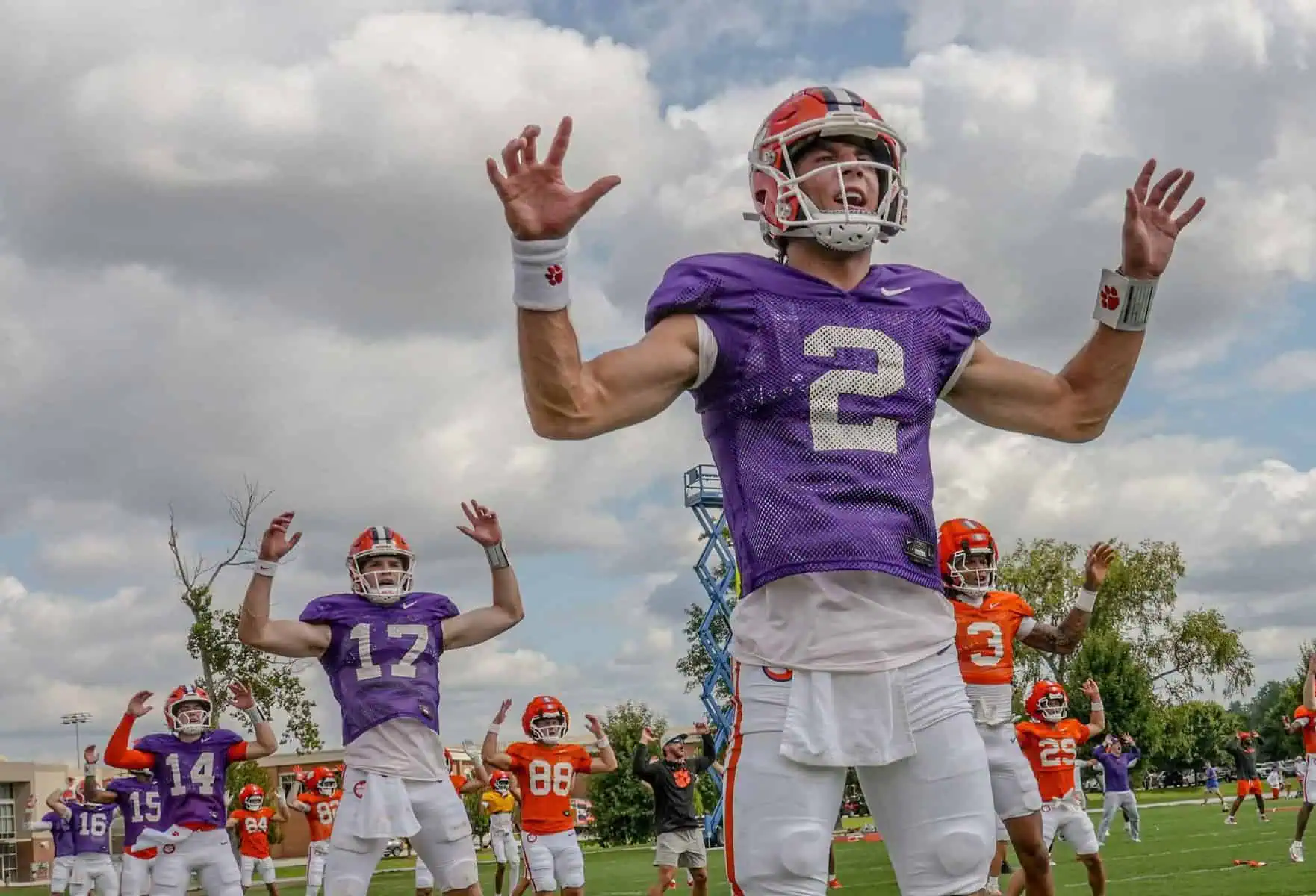
When Fake News Hits Too Close to Home: The Cade Klubnik Car Crash Hoax

Sometimes the internet can be a real piece of work, and Sunday night proved that point better than a perfectly executed onside kick. A bogus rumor about Clemson Quarterback Cade Klubnik being seriously injured in a car crash spread faster than a Nick Saban retirement rumor, leaving fans, family, and anyone with half a brain wondering how we got here. How did this Klubnik rumor start?
The Mother Of All Debunks
The whole mess started when someone posted on TigerNet claiming that Klubnik had been T-boned near campus and couldn’t move his arm or shoulder. The post was picked up by the satirical account “Message Board Geniuses,” and suddenly everyone’s group chats were buzzing with concern.
Thank goodness for Kim Klubnik, Cade’s mom, who shut this nonsense down faster than you can say “fake news.” When CBS Sports writer Chris Hummer reached out to her, she delivered the kind of reality check that would make even the most delusional message board poster reconsider their life choices. “Thankfully, it is fake news,” she told Hummer via text. “Cade is fine!”
But here’s the kicker: while her son was perfectly healthy, Kim’s heart was racing like she had just watched a fourth-quarter comeback. “My heart has not stopped racing since someone shared the story with me,” she said. “How can someone be so cruel?”
The Real Cost Of Digital Deception
This is not just another case of internet trolls being internet trolls. When you’re talking about a preseason All-American who’s leading college football’s fourth-ranked team into a monster showdown against LSU, false injury reports have real consequences.
The Klubnik hoax follows a similar pattern we saw earlier in fall camp when LSU Quarterback Garrett Nussmeier’s minor knee issue somehow transformed into a torn ACL in the social media rumor mill. It is like a twisted game of telephone where someone’s career hangs in the balance.
The Anonymous Villain Behind the Curtain
The original post came from a user named “JacobyMoore” on TigerNet, who apparently thought spinning a yarn about a star quarterback’s fake injuries would be good for some laughs. Clemson fans, showing the kind of detective work that would make Sherlock Holmes proud, quickly identified the poster as likely being a South Carolina fan trolling their board.
The response? Clemson fans started their own tongue-in-cheek retaliation posts about rival Gamecocks Head Coach Shane Beamer being in a car accident. Because nothing says “mature fan base” like fighting fire with fire, right?
When the Internet Gets Real
What makes this whole situation even more maddening is how easily it could have been avoided. In a world where AI-generated photos and deepfakes are becoming the norm, you would think people would be a little more skeptical about anonymous message board posts claiming breaking news.
We live in an age where a random internet user can craft a convincing enough story to send a mother’s heart racing and have thousands of fans genuinely worried about their team’s championship hopes. Kim Klubnik asked the right questions that we should all be asking: “How can it be OK to spread rumors like this?” It’s a question that cuts to the heart of our digital age dilemma.
The Bigger Picture
This incident serves as a perfect reminder that behind every athlete we follow, cheer for, or criticize, there is a real human being with real family members who feel real emotions. When someone decides to play fast and loose with the truth for clicks or chaos, they are not just messing with statistics or game plans. They are messing with people’s lives.
As we gear up for what promises to be an incredible college football season, maybe we can all take a page from Kim Klubnik’s playbook and ask ourselves whether that shocking story we’re about to share has been fact-checked or if we’re just adding fuel to the misinformation fire.