
Judge Denies Alabama Crimson Tide Center Charles Bediako Bid In Eligibility Case

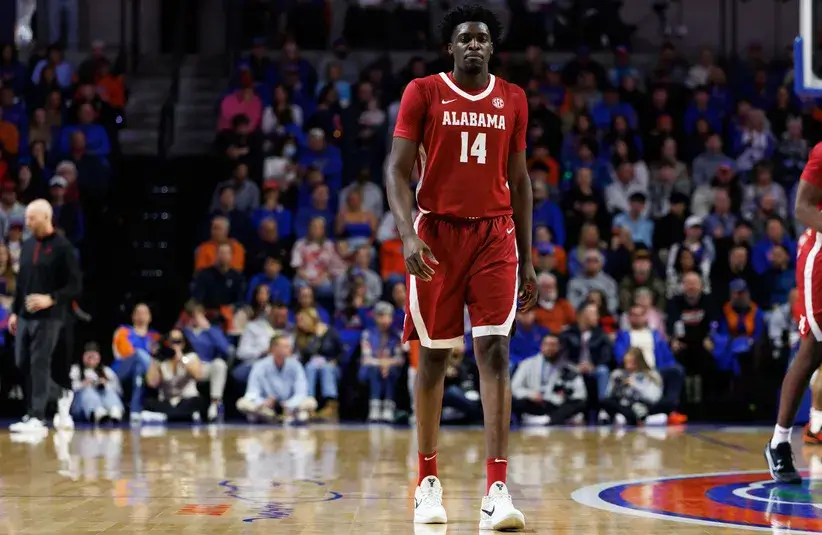
After nearly a three-week battle in court surrounding whether or not ex-pro Charles Bediako could return to Alabama to continue his collegiate basketball career, an Alabama judge has denied Bediako’s motion seeking a preliminary injunction surrounding Bediako’s eligibility. This ruling effectively ended Bediako’s season just a month after returning to suit up for the Crimson Tide.
Bediako’s Eligibility Case Timeline
This decision comes just a few weeks after Bediako filed a lawsuit against the NCAA on Jan. 20, seeking to return to the collegiate ranks after spending the past few years playing in the NBA’s G League. Tuscaloosa County Judge James Roberts granted the 7-footer a 10-day restraining order, which allowed Bediako to play for Alabama for short period of time before his injunction hearing.
The injunction hearing was originally scheduled for Jan. 27 but was rescheduled for today due to the winter storm that affected much of the southern United States two weeks ago. The impact of the storm prevented attorneys for the NCAA from traveling to Tuscaloosa for the case, which granted Bediako another 10 days of eligibility.
Of course, Bediako’s eligibility case also had some conflict of interest surrounding it during that time period, as Judge Roberts is a six-figure donor to the University of Alabama. This forced Roberts to recuse himself from the case on January 28, with Tuscaloosa County Judge Daniel Pruett replacing him. Pruett would be the judge who denied Bediako’s motion today.
Bediako’s Case Highlights a Growing Problem in College Basketball
While Bediako’s case is the most noteworthy story of a former professional basketball player who returned to play college basketball this season, he isn’t the first to return to the NCAA ranks this season. Back in December, the Baylor Bears signed former NBA draft pick James Nnaji, which drew heavy criticism from other programs across college basketball.
Nnaji was the first former draft pick to appear in a college game this season, with other ex-pros like Thierry Darlan and London Johnson set to play at Santa Clara and Louisville, respectively, next season.
In the week leading up to Bediako’s hearing, SEC Commissioner Greg Sankey filed an affidavit arguing for the judge to rule against granting Bediako eligibility, stating that doing so would harm the integrity of college sports. “I respectfully ask the court to uphold the NCAA eligibility rules challenged in this case, which are essential to the integrity of college sports, to the educational mission they serve, and to the opportunities they provide for current and future student-athletes,” Sankey said in his four-page affidavit.
Following the ruling today, NCAA President Charlie Baker also weighed in on the court’s ruling and urged lawmakers in D.C. to step in and help fix this ongoing eligibility problem. “While we’re glad the court upheld the rules our members actually want, one win doesn’t fix the national mess of state laws. It’s time for Congress to stop watching from the sidelines and help us provide some stability on this issue,” Baker said in a statement released to the press.
The Impact On Alabama Following Bediako’s Ineligibility
After going just 3-2 with Bediako in the lineup over the past two weeks, his loss will surely impact the Crimson Tide’s depth within the front court going forward. Alabama currently holds a 16-7 record and is tied for 5th-place in the SEC standings with teams like Tennessee and Vanderbilt, who all possess a 6-4 record in conference play.
Bediako averaged 10 points, 4.6 rebounds, and 1.4 blocks per contest in his five games played with the Crimson Tide this season. It is not yet known if Bediako will pursue any further legal action to try to regain eligibility.
