The Olympic Dilemma: When World Cup Glory Meets February Dreams in Sölden

The crisp Austrian air in Sölden carried more than just the promise of winter this past weekend. It took the weight of dreams, the pressure of expectations, and a question that haunts every elite skier: Do you chase World Cup victories now, or save everything for the Olympics?
Paula Moltzan stood at the finish line, breathing hard after her career-best giant slalom performance. The American had just secured second place behind Austria’s Julia Scheib, a result that should have filled her with pure joy. Instead, doubt crept in like frost on a windshield. Was she peaking too early?
The Eternal Question of Timing
With the 2026 Milan-Cortina Olympics still more than three months away, Moltzan’s concern isn’t just athlete paranoia. It’s the reality every World Cup competitor faces. The Alpine skiing World Cup season stretches across five grueling months, demanding peak performance week after week.
Yet for many skiers, Olympic glory represents the pinnacle of their careers, a moment that comes around only once every four years.”No, I don’t think so,” Moltzan said, pushing back against her own fears. “I’m just hoping that I’m building a really wide base to build off.”This isn’t just about physical conditioning.
It’s about psychological warfare within yourself. Moltzan’s coaches track everything: recovery rates, training loads, the number of turns she’s taken, even her position in what they call the “peaking cycle.” This data-driven approach aims to have her “lining up just OK for the Olympics,” as she puts it with characteristic understatement.
Two Paths: One Mountain
The sport’s biggest star, Mikaela Shiffrin, takes a different approach entirely. The two-time Olympic champion dismisses the idea of engineered peaks as “not really possible” in ski racing. Her philosophy? Get to a high level and stay there.
“I have a big priority on the World Cup races as well, so it’s more to get to a high level of racing and then to just try to keep the energy on a daily basis,” Shiffrin explained. At 29, she’s learned that consistency trumps manufactured moments of brilliance.
Shiffrin’s approach reflects hard-won wisdom. She became the youngest Olympic slalom champion at 18 in 2014, then added giant slalom gold four years later. She understands that Olympic magic often comes from sustained excellence rather than perfectly timed peaks.
The Classics Complicate Everything
For some athletes, the question answers itself through the racing calendar. Austrian speed specialist Vincent Kriechmayr faces the legendary downhill races in Wengen and Kitzbühel in mid-January, so prestigious they’re called “classics” with reverent capital letters.
“We have the most important classics just before, so you have to time it in a way that you are in good shape even before the Olympics,” Kriechmayr said. These January races carry generational weight in Austrian skiing culture. Missing them to save energy for the Olympics isn’t just strategically questionable, it’s culturally unthinkable.
When Coaches Can’t Predict the Unpredictable
Roland Assinger, head coach of the Austrian women’s team, offers a coach’s perspective shaped by decades in the sport. A former World Cup downhiller himself who never made it to the Olympics, he’s seen enough surprises to know that planning only goes so far.
“At Olympics and world championships, it always depends on the shape of the day,” Assinger said. “We have seen so many times that in a whole season, it doesn’t go well, but at Olympics or worlds, suddenly the highlight is there, and you get surprise winners.”
This uncertainty is both the beauty and the curse of skiing. Weather, course conditions, equipment, and a thousand other variables can render a season’s worth of preparation irrelevant in a single run.
The Wisdom of Champions
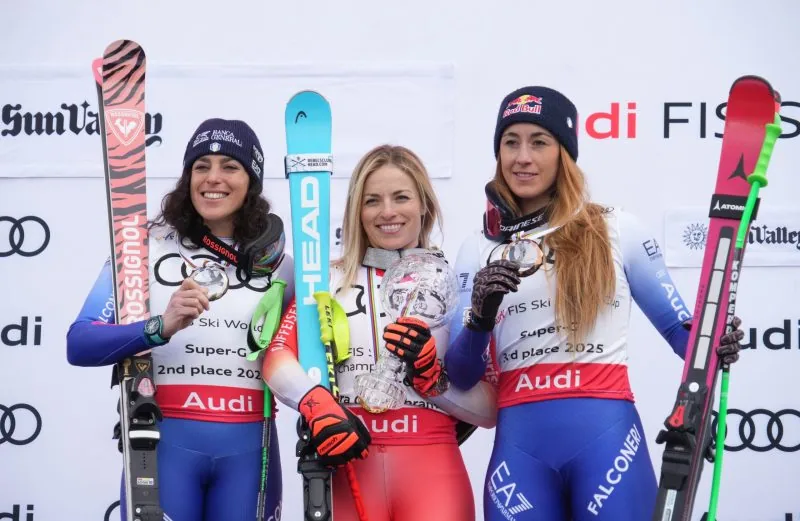
Italy’s Sofia Goggia, the 2018 Olympic downhill champion, approaches her home Olympics with characteristic pragmatism. Despite the added pressure of competing on Italian soil, she’s treating this season like any other.
“Skiing is an outdoor sport, we have so many variables during the season and day by day,” Goggia said. “So, you better ski the most you can and give the 100% of what you have to give every day on skis.”
Swiss star Lara Gut-Behrami, the 2022 Olympic super-G champion who announced this will be her final season, echoes this sentiment. “I always build my season one race after the other,” she said. “The most important is to focus on each race. To be top fit in February, you have to be in form during the entire season.”
The Single-Discipline Strategy
France’s Alexis Pinturault offers a different perspective shaped by recent struggles and strategic refocus. After two seasons marred by knee injuries, the former overall World Cup champion has narrowed his focus to giant slalom. The discipline in which he won Olympic bronze in both 2014 and 2018.
“I think it’s possible,” Pinturault said about timing a peak for the Olympics. “But it also depends on what the goal for the World Cup season is. When your goal is to make the globes, then it makes the Olympics more complicated.”
His insight cuts to the heart of the dilemma. Chasing the crystal globe awarded to World Cup discipline winners requires sustained excellence across the entire season. Saving energy for the Olympics becomes nearly impossible when you’re battling for season-long supremacy.
The Norwegian Simplicity
Sometimes the best advice comes in the simplest package. Henrik Kristoffersen, Norway’s technical specialist with Olympic silver and bronze medals, offers wisdom that’s both profound and practical.”The best way to be best prepared for the Olympics is to win all the races,” the Norwegian said. “If you come in the rhythm, you get into the flow.”
It sounds almost too simple, but Kristoffersen’s approach reflects a more profound truth about confidence and momentum in elite sports. Success breeds success, and rhythm in skiing is everything.
The Reality Check
The debate over peaking reveals something fundamental about World Cup skiing: there are no easy answers. Each athlete must navigate their own path through the competing demands of immediate success and ultimate dreams. For some, like Moltzan, the solution lies in building a “wide base” of fitness and form that can support both World Cup ambitions and Olympic dreams.
For others, like Shiffrin, it’s about maintaining consistently high performance without artificial peaks and valleys. The truth is that Olympic champions come from all approaches. Some arrive in February riding waves of World Cup success. Others emerge from relative obscurity, finding their moment when it matters most.
Final Thoughts
The sport’s history is filled with both scenarios, which only adds to the complexity of the decision each skier faces. As the 2025-26 World Cup season unfolds, these questions will follow every competitor down every mountain.
The athletes who find the right balance between ambition and patience, between current success and future dreams, will be the ones standing atop Olympic podiums in Milan and Cortina d’Ampezzo.The mountain doesn’t care about your strategy. It only responds to your skiing when the moment arrives.