90 Days Until The Winter Olympics: U.S. Curlers Fight For Spot On Team

Curling is the rare sport that you watch from your couch and say to yourself, “Yeah, I could do that in the Olympics.” Just grab a broom, sweep in front of the stone, and wait for Mike Tirico to interview you after you win the gold.
Then you wake up from your nap.
Although Curling looks easy, it’s best to leave it up to the real Olympic athletes. The real athletes who represent the United States Curling team continue their path to the 2026 Milan Cortina Winter Olympics with qualifying events next week.
Qualifying Event Starts November 11 in South Dakota
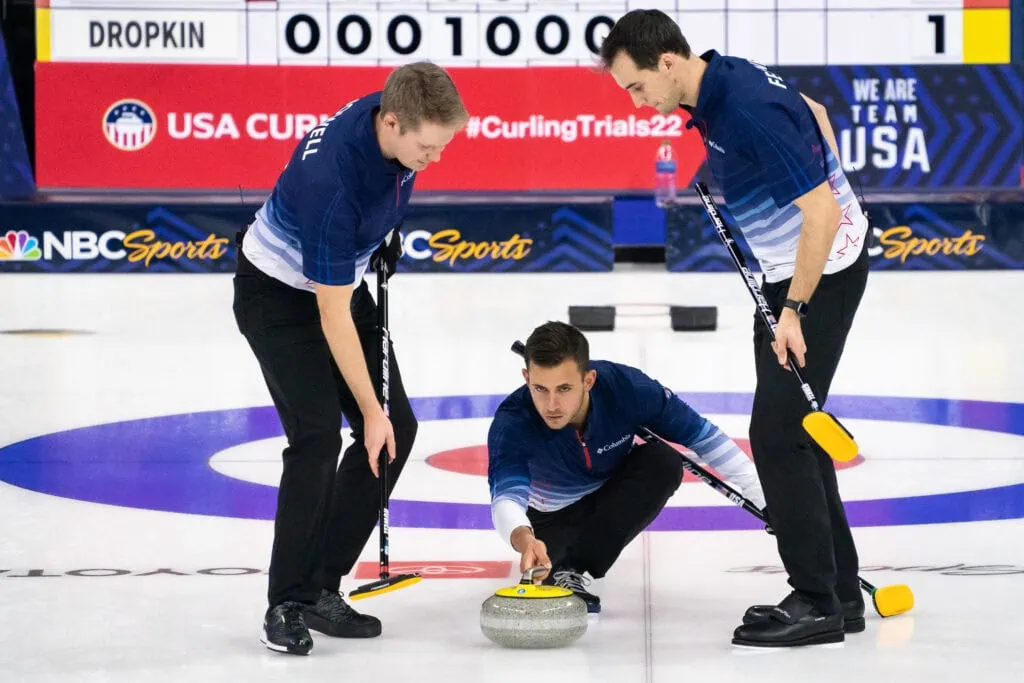
To earn a spot at the Olympics, qualifiers must survive a grueling domestic battle for the right to compete. All eyes will turn to Sioux Falls, South Dakota, from November 11-16 for the U.S. Olympic Team Trials. The final two Olympic spots in each discipline will be decided at the tense, high-stakes Olympic Qualification Event (OQE) this December in Kelowna, Canada.
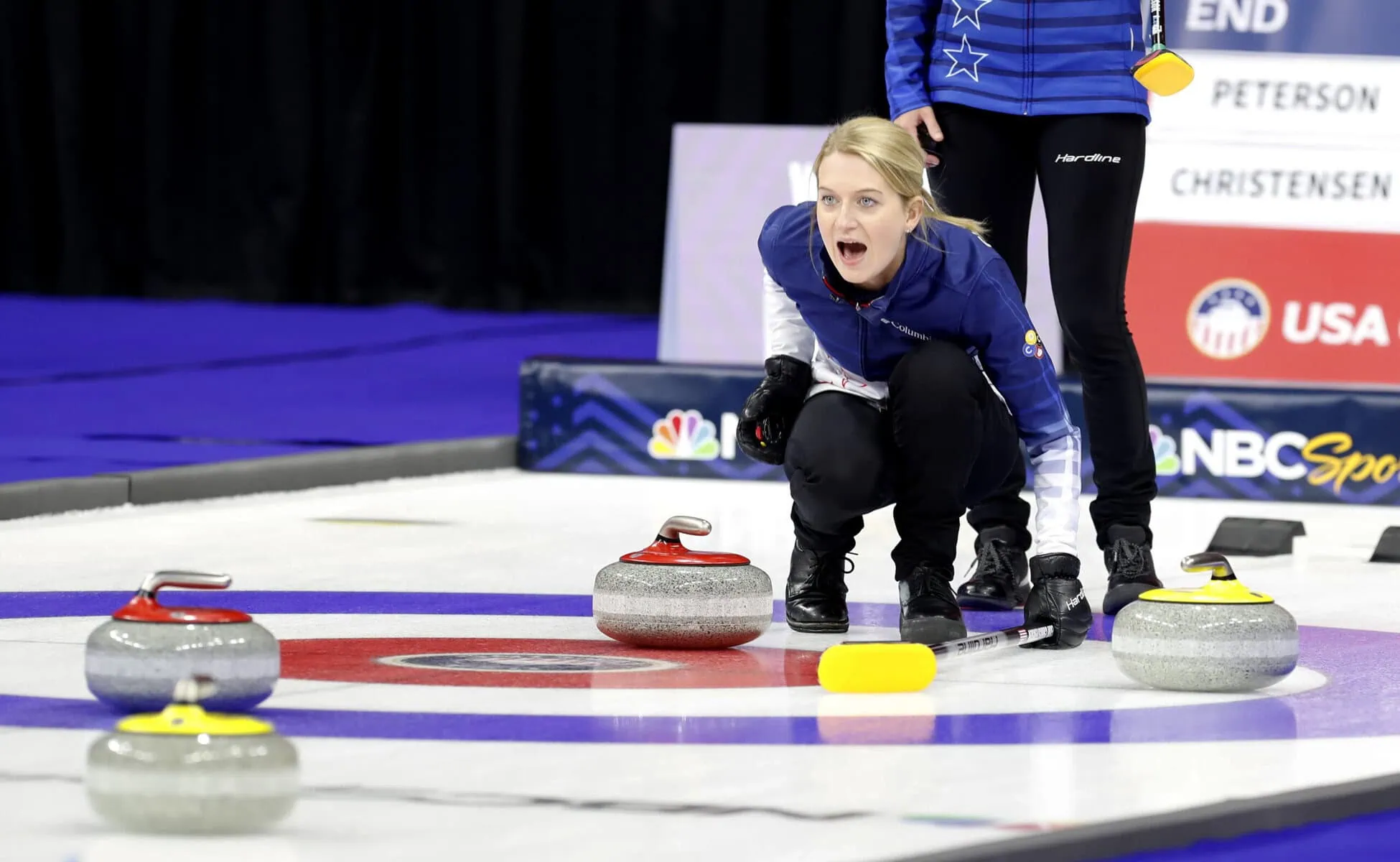
On the men’s side, powerhouse squads like Team Shuster, Team Dropkin, Team Casper, and Team Hebert will face off. For the women, it will be a fierce competition between Team Peterson, Team Johnson, Team Strouse, and Team Cousins.
While many are still battling for a spot on the world’s biggest stage, the U.S. mixed doubles duo of Cory Thiesse and Korey Dropkin have officially punched their ticket to the Olympics.
Affectionately known as “Cory and Korey,” they qualified after winning the 2025 U.S. Olympic Mixed Doubles Curling Trials back in February, and a strong fifth-place finish at the 2025 World Mixed Doubles Curling Championship. Their early qualification allows them to focus solely on preparing for Milan, a luxury their peers are still fighting for.
Understanding the Intricate Strategy of Curling
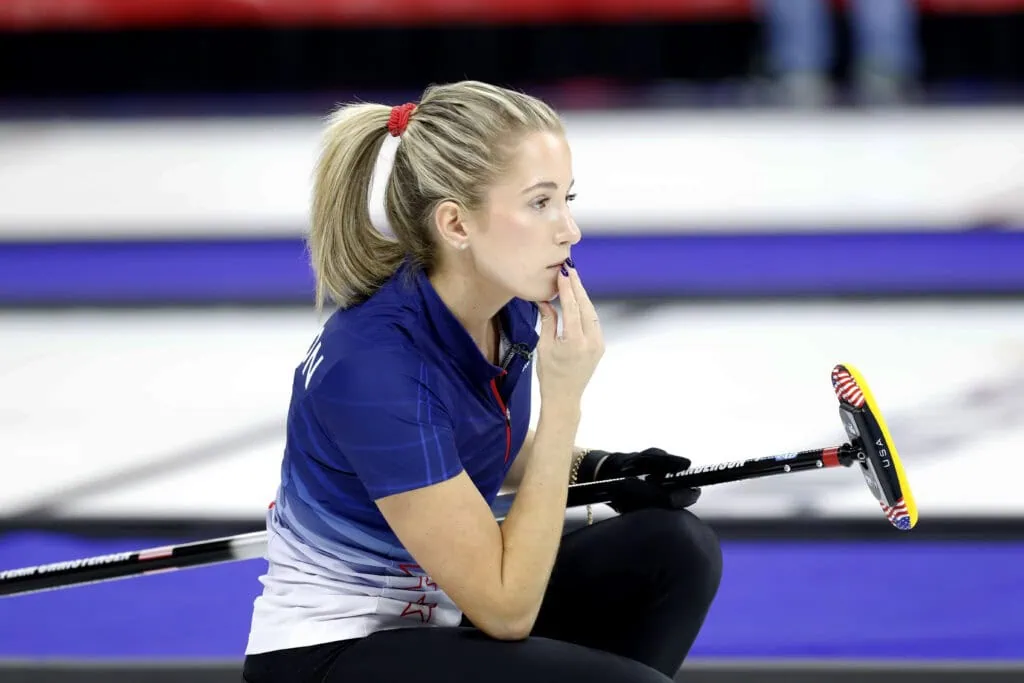
Curling, often affectionately called “chess on ice,” is a sport where physical skill collides with profound mental strategy. The objective seems simple: slide a 42-pound granite stone down a sheet of ice to get it closer to the center of a target, the “house,” than your opponent.
Each team of four take turns delivering eight stones per “end,” or inning, creating a dynamic puzzle on the ice. A “draw” aims for a gentle stop within the house, a pure scoring attempt. A “takeout” is an aggressive strike to remove an opponent’s stone. Then there’s the nuanced artistry of “guards,” stones placed in front of the house to protect a scoring rock, and the delicate “hit-and-roll,” where a stone removes an opponent’s and then spins to a more advantageous position.
The frantic, desperate sweeping is a vital and physically grueling element of curling strategy. As two sweepers glide alongside the moving stone, the friction from their brooms creates a micro-thin layer of water, reducing the stone’s drag and allowing it to travel farther down the sheet.
U.S. Olympic Curling History
The path to Olympic glory was anything but smooth. After a brief appearance as a demonstration sport in the early 20th century, curling vanished from the Olympic stage for decades. When it finally returned as an official medal sport in 1998, the American teams struggled to find their footing against international powerhouses like Canada and Sweden.
For years, U.S. curlers competed with passion but were often overshadowed, fighting for relevance both on the world stage. Yet, with each Olympic cycle, the seeds of a future victory were sown through quiet dedication in curling clubs across the country, from Minnesota to Massachusetts.
The breakthrough moment was at the 2018 Pyeong Chang Games. John Shuster’s men’s team, a group of unlikely heroes affectionately known as “The Rejects,” delivered a performance for the ages. Their stunning victory over Sweden in the gold medal match was more than just an upset; it was the culmination of a century of effort. This emotional win did not just earn them a gold medal, it ignited a nationwide fascination with the sport.
Key Milestones
- 1932: The sport makes a demonstration appearance at the Lake Placid Olympics, with four U.S. teams competing against Canadian teams.
- 1998: Curling officially becomes a medal sport at the Nagano Winter Olympics. Both the U.S. men’s and women’s teams compete.
- 2006: At the Turin Winter Olympics, Pete Fenson’s men’s team captures the first-ever official U.S. Olympic curling medal, a bronze.
- 2018: John Shuster leads the U.S. men’s team to a historic, first-ever Olympic gold medal in curling at the PyeongChang Games.