The Secret Life of Olympic Curling Stones: Why They All Come From One Tiny Scottish Island

Let’s be honest with each other. Every four years at the Olympic Games, we collectively enter a fugue state, becoming deeply, passionately invested in a sport that involves shouting at ice. We watch intense athletes with brooms frantically scrubbing a frozen surface to guide a 44-pound rock toward a target. It’s hypnotic. It’s strategic. It is, frankly, a little bit weird.
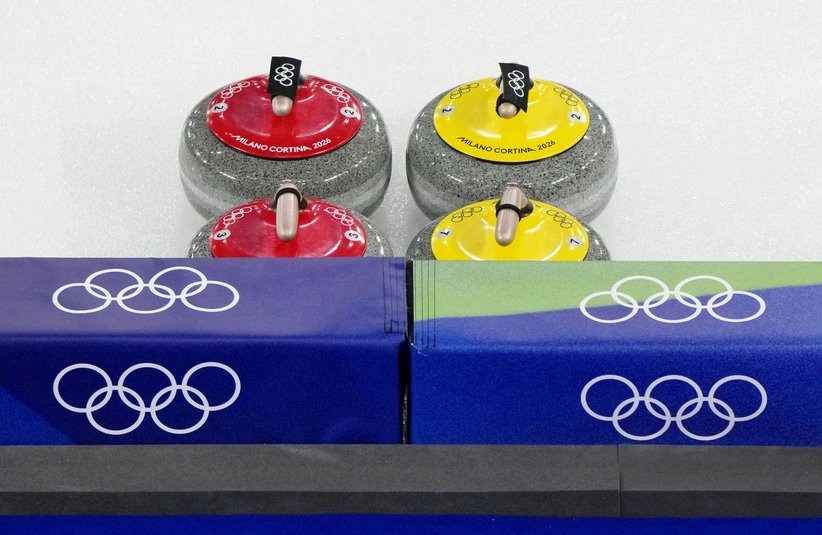
But while we are busy critiquing the Olympic sweepers’ form from our couches, we rarely stop to look at the star of the show: the rock itself. You might assume these stones are just mass-produced lumps of heavy material churned out of a factory in an industrial park. You would be wrong. Every single curling stone thrown at the Winter Olympics shares a birth certificate.
They all come from a single, lonely, uninhabited volcanic plug jutting out of the sea off the coast of Scotland. It sounds like the plot of a fantasy novel, but it’s just the strict reality of elite sports. If you want Olympic gold, you have to go through Ailsa Craig.
The Alcatraz of the Granite World
Ailsa Craig isn’t exactly a tourist hotspot. It’s a rugged, imposing chunk of rock located about ten miles off the Ayrshire coast. It looks less like a quarry and more like a villain’s lair. Yet this geological oddity is the only place on Earth where you can find the specific type of granite required to withstand the rigors of Olympic competition.
Why are we so picky about rocks? Because curling is a game of microscopic margins. If a stone pits, cracks, or absorbs water, the game is ruined. Granite from Ailsa Craig is dense. We are talking about molecular-level toughness. This isn’t the granite on your kitchen counter that stains if you leave a lemon on it.
This stuff is forged from volcanic magma and cooled in a way that makes it incredibly resistant to water absorption.If water gets into a curling stone, it freezes. When water freezes, it expands. When it expands, the rock cracks. In a high-stakes match where a stone is colliding with another stone at significant speed, a crack isn’t just a bummer. It’s a disaster.
The Science of the Slide
To understand why this island is so crucial, you have to look at the two types of granite mined there. It’s not just one big rock; it’s a cocktail of geological perfection.First, you have the Blue Hone. This is the elite stuff. It’s incredibly fine-grained and dense, which makes it perfect for the “running band,” the bottom part of the stone that actually touches the ice. It’s waterproof and slides like a dream.
Then, you have the Common Green. This makes up the body of the stone. It’s slightly different in composition but acts as a shock absorber. When you see a “takeout” shot where one stone smashes into another to knock it out of the house, that distinctive clack sound is the Common Green doing its job. It absorbs the kinetic energy without shattering.
Three-time Olympic Medalist Erika Brown put it best when she told Scientific American back in 2014: “No other stone curls like an Ailsa Craig stone.” When you are playing for national pride, you don’t want a generic rock. You want the Ferrari of granites.
From Frozen Ponds to Global Glory
The connection between Scotland and curling isn’t just about geology. It’s about history. The sport was born here. We have evidence of curling dating back to the 16th century. It started as a pastime for locals sliding stones across frozen ponds and lochs during the harsh winters.
It wasn’t the regulated, high-tech sport we see in Milan or Beijing. It was a community event, a way to kill time when the farming fields were frozen solid. By the 18th century, it gained traction, and by 1924, it made its debut at the very first Winter Olympic Games.
But even as the sport modernized, adding stopwatches, perfectly manicured ice sheets, and spandex, the reliance on Ailsa Craig remained. There is something deeply charming about this. In an era where sports equipment is usually designed in a lab using carbon fiber and aerodynamics, curling relies on a chunk of the earth hewn from a foggy island in the Firth of Clyde.
A Legacy Set in Stone
The monopoly Ailsa Craig holds on the sport creates a fascinating Olympic bottleneck. The island isn’t being mined constantly. Quarrying happens rarely and in batches. A harvest of granite can last for years, with the raw material stockpiled and slowly turned into the polished stones we see on TV.
So, the next time you find yourself at 2:00 AM, glued to the screen, watching a mixed doubles team from Sweden or Canada agonizing over the trajectory of their final throw in the Winter Olympic Games, remember the rock.
It didn’t just come from a factory. It came from a volcano. It survived the Atlantic winds. And it traveled from a tiny Scottish island just to slide down a sheet of ice and ruin someone’s day. And that, sports fans, is poetry.