99 Days Until The Winter Olympics: Events in Lake Placid? Plan B Seems To Be Off The Table As Italy Luge Center Passes Critical Tests

Try this at your Halloween Party social: “Did you know the 2026 Winter Olympics were almost moved to Lake Placid?”
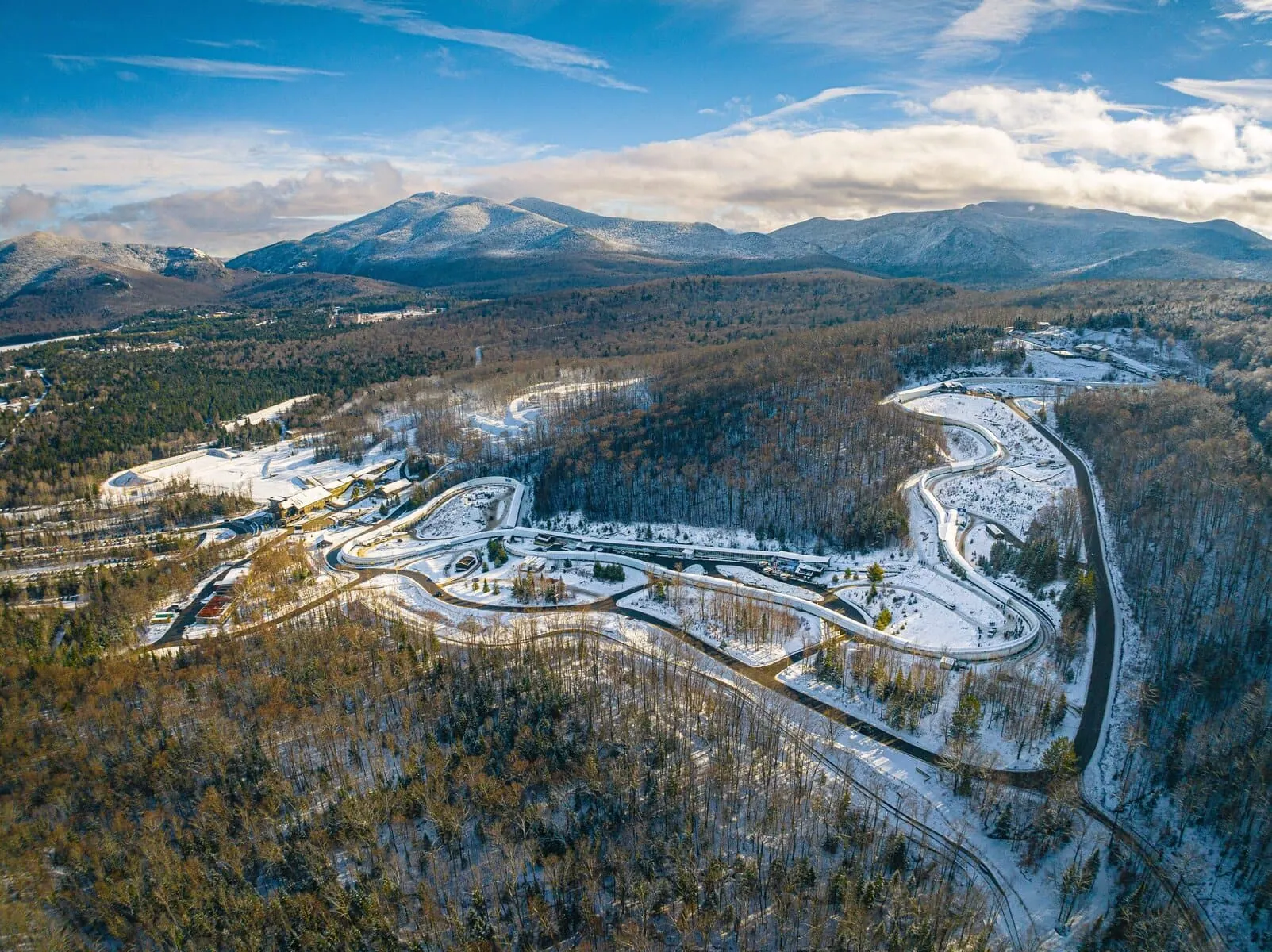
Well, just like any cocktail fodder, a lot is missing from that conversation. Yes, it is true that a small number of high-profile events could have been moved to Lake Placid, New York. However, back in March, the Luge Center in Cortina d’Ampezzo cleared a major hurdle when international officials declared testing of the track for the Milano-Cortina Olympics 2026 a resounding success.
This came after months of uncertainty and construction delays, and now the ambitious project appears poised to host bobsled, skeleton, and luge competitions on Italian soil. Completion of the track is expected within the month, which will throw the Lake Placid contingency out the door and squash your cocktail conversation for good.
A Key Milestone Was Passed in March Ending The Lake Placid Option
This past March, 60 international athletes from 12 nations put the 1,730-meter track through its paces during what officials call pre-homologation testing. The results exceeded expectations, with both the International Bobsleigh and Skeleton Federation (IBSF) and the International Luge Federation (FIL) expressing satisfaction with the facility’s readiness and safety standards.
“On behalf of the FIL, we are pleased to report that the Pre-Homologation for the reconstructed track in Cortina was successfully completed. This is an important milestone regarding the safety aspects of the track,” FIL President Einars Fogelis said after the test.
Athletes Express Enthusiasm for New Venue
The feedback from competitors during the test was overwhelmingly positive, a crucial factor given the sport’s emphasis on safety following the tragic death of Georgian luger Nodar Kumaritashvili during training at the 2010 Vancouver Games.
World Champion Max Langenhan couldn’t hide his amazement at what Italian officials had accomplished. “It’s incredible what the Italians have achieved here in such a short space of time, at a level that is second to none,” Langenhan said. “I would never have thought that. I arrived with rather low expectations because there was so much going on around it.”
What impressed Langenhan most was the immediate quality of the track. “Usually there are problems at the beginning. When a track is inaugurated for the first time, it’s usually really bumpy, but here everyone went down without even touching the boards,” he explained.
Austria’s Lisa Schulte, the 2024 World Champion, provided detailed insights into the track’s characteristics. “The women’s start is long and straight, has a 25-degree incline and reminds me a little of Igls,” she noted. “All in all, it is a very cool track that is difficult to compare with other ice channels. The start will be quite important, but in terms of luge, everything is very good to implement.”
Romanian doubles athlete Raluca Stramaturaru and her partner Carmen Manolescu praised both the technical aspects and the overall experience. “We are very happy to be here in Cortina. The track is really nice, the ice conditions were really good,” Stramaturaru said, while Manolescu added that “the track is interesting but not dangerous and the scenery in the Italian Alps with the sun was amazing.”
Racing Against Time and Skepticism
The success represents a remarkable achievement for the Italian government, which faced considerable skepticism when it committed to rebuilding the century-old track. Construction began in February 2024, giving officials just over a year to complete enough of the facility for testing, and two years before the Milan-Cortina 2026 Winter Olympics. The $128 million project required extraordinary effort from workers who labored around the clock to prepare the ice and maintain optimal conditions throughout the testing period. That is why the Lake Placid backup plan was circulated.
When Italian skeleton competitor Mattia Gaspari became the first athlete to test the track, he did so under a temporary roof constructed from wooden beams and white plastic sheeting. The sliding center remains under construction, with the track structure being the only truly finished component. Despite these ongoing works, the facility’s core functionality proved sound.
Infrastructure and Transport Minister Matteo Salvini, who also serves as deputy premier, acknowledged the journey had been challenging. “It’s really been quite an adventure,” Salvini said. “I want to thank the construction firm, which was the first one to believe in this, and the journalists who motivated us,” he added, referencing articles that claimed the project would never reach completion.
Path Forward to Olympic Competition
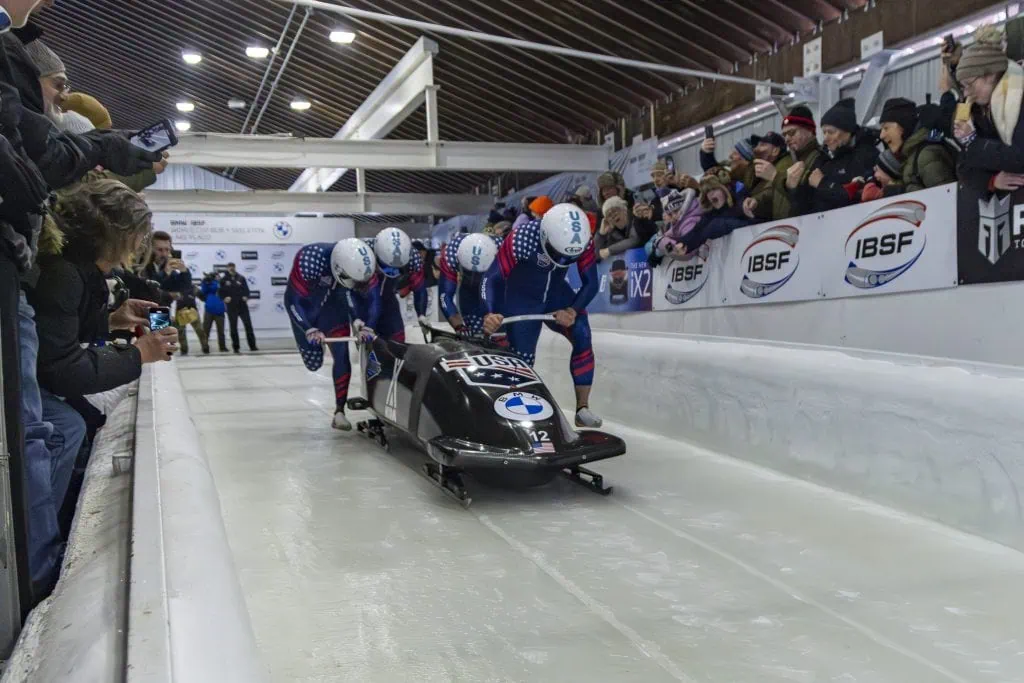
While the March preliminary approval represented significant progress, work continues at the site. Minor adaptations still need completion, and construction crews must finalize the roofing and support facilities. The plan was for the venue to be handed over to Milano-Cortina organizers next month. There have been no reports of delays to this plan. In addition, more athlete testing will be completed soon.
All this positive news effectively eliminated the International Olympic Committee’s backup plan of relocating all three sports to Lake Placid if the Italian facility failed to meet standards. This is good news, since Lake Placid officials stated at the beginning of the year they would need to know by now if they were needed to host the events.