
The Need For Speed: A Complete Guide To Bobsleigh At The 2026 Winter Olympics

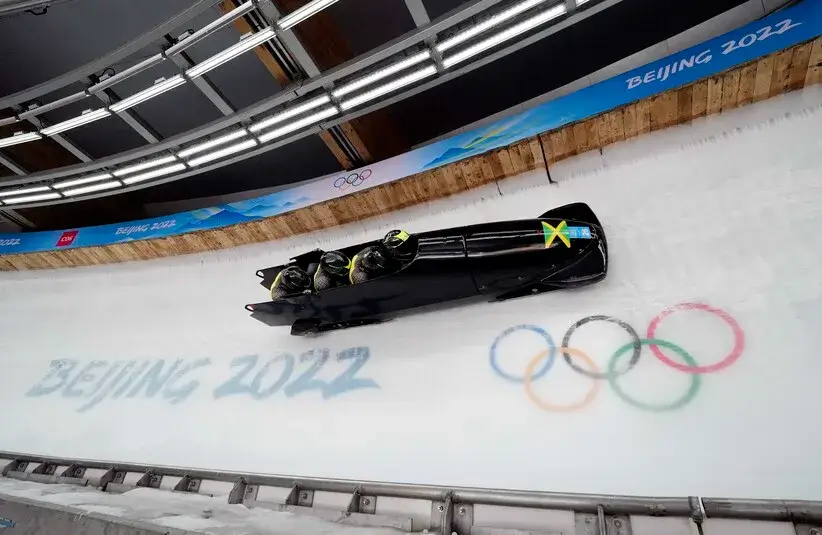
Out of all the events in the 2026 Winter Olympics, Bobsleigh is one of the more visceral events. This sport combines raw power, teamwork, and Formula 1 level engineering. This game is super fast as the speeds can go up to 90mph. With the Olympics around the corner its best to understand the mechanics, strategy, and bravery involved. Here is a deep dive into the high-speed world of bobsleigh.
What is Bobsleigh?
Bobsleigh (or bobsled) is a winter sliding sport where teams race a gravity-powered sled down a narrow, iced track. This sport differs from luge or skeleton as bobsleigh is a more team effort sport (excluding monobob, we’ll get to that). It requiring synchronized movement from each person and you must immense strength to even have a chance.
The competition format is brutal in its fairness as there are no engines, only gravity and legs. Races typically consist of multiple runs—usually four in major championships like the Olympics. The times from all runs are added together, and the team with the lowest aggregate time gets higher ranking.
The Disciplines
While the goal is always the same for Bobsleigh in the Olympics—get to the bottom fastest—the makeup of the teams varies:
- Two-man and Two-woman: These events rely heavily on the pilot’s precision and the brakeman’s explosive start.
- Four-man: The heavyweight division. With more mass and momentum, these sleds reach the highest speeds. The coordination required for four massive athletes to jump into a moving sled simultaneously is a feat of athleticism in itself.
- Monobob: This is a more newer addition as it features a single female pilot. This event tests individual driving skill and uses a more standardizing sled.
The Anatomy of a Race
A bobsleigh run is a choreographed sequence of three critical phases.
1. The Push Start
This is where the race is often won. Before gravity takes over, human horsepower rules. Athletes must sprint on ice while pushing a heavy sled, accelerating it to the maximum possible speed within about 50 meters.
You will often hear commentators obsessed with “start times.” This is because physics dictates that a lead established at the top of the hill multiplies by the bottom. A tenth of a second gained at the start can translate to three-tenths at the finish line. This is why many bobsledders are recruited from power sports like sprinting, American football, or rugby.
2. The Load
Once the sprint is done, the team must hop into the sled while it is moving. In the four-man event, this is a moment of high tension. If an athlete slips or mistimes their jump, it ruins the aerodynamics and creates drag, instantly killing the team’s medal chances.
3. The Drive
Once everyone is tucked in, the pilot takes over. Using D-shaped rings connected to the front runners, the pilot steers through high-G banked curves. The goal isn’t just to stay on the track; it’s to find the “fast line.” Steer too hard, and the runners scrub speed against the ice (skidding). Steer too little, and the sled drifts up the wall, traveling a longer distance. It is a game of finesse played at highway speeds and its cool to witness at the Olympics.
Origins and Evolution
Bobsleigh wasn’t always a high-tech pursuit. It originated in the late 19th century in Switzerland, when thrill-seeking tourists attached steering mechanisms to wooden sleds to careen down icy roads. The name actually comes from the technique adopted by early competitors who would “bob” back and forth in the sled to increase momentum on the straights.
Over the decades, the sport professionalized. Wooden frames were replaced by steel and fiberglass composites. Wind tunnels became just as important as the weight room. Today, governing bodies strictly regulate sled dimensions and weight to ensure safety, but nations still pour resources into runner polish and suspension tweaks to find legal marginal gains.
Bobsleigh FAQ
Q: How are the winners decided?
A: Victory goes to the team with the lowest combined time across all runs (usually four). Consistency is key; one bad run usually knocks you out of contention, especially at the Olympics.
Q: What does the brakeman do?
A: During the run, the brakeman’s job is to stay low and aerodynamic. They only pull the brakes after the sled crosses the finish line to bring it to a safe stop.
Q: How fast do they go?
A: On the fastest tracks in the world, sleds can reach speeds between 80 mph and 95 mph (130-150 km/h).
Why Everyone Should Watch Bobsleigh During Olympics
The appeal of bobsleigh lies in the danger and the precision. Every track is different, featuring unique “personalities” like steep drops (the “Kreisel” loop) or long gliding straights.
For the viewer, the on-screen graphics showing speed and G-force tell only half the story. The real drama for the sport and Olympics is in the split times. Seeing a team lose a gold medal because they were 0.02 seconds slower—literally less than the blink of an eye—is the kind of heartbreak and triumph that defines the Winter Games.
Whether it’s the synchronized thunder of the four-man start or the solitary focus of the monobob pilot, bobsleigh remains the king of the sliding track. This sport is always a fun one to watch for the Olympics.
