
More Than Just a Run: Heraskevych Chooses Memory Over Medals in Cortina

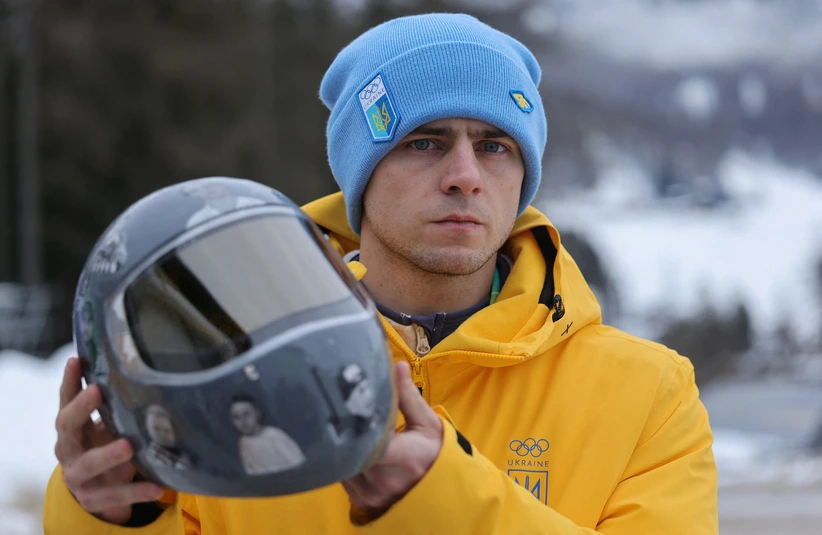
It’s often said that the Olympics are where dreams are made. But on a freezing Thursday morning in Cortina d’Ampezzo, we watched a dream get shelved—not by a slow time or a crash in turn four, but by a principle.
Vladyslav Heraskevych, Ukraine’s top skeleton racer and a legitimate medal threat at the 2026 Milan Cortina Games, never made it to the starting block. The reason? A helmet. But to call it just a helmet is like calling the Mona Lisa a doodle. This piece of gear was emblazoned with the faces of more than 20 Ukrainian athletes and coaches—friends, teammates, compatriots—who have been killed in the ongoing war with Russia.
IOC Draws The Line For Ukraine’s Vladyslav Heraskevych
The International Olympic Committee (IOC) drew a hard line in the ice. They pointed to Rule 50.2 of the Olympic Charter, the one that bans political, religious, or racial propaganda. They argued that while the sentiment was powerful, the field of play wasn’t the place for it.
The irony here is thicker than the ice on the track. We’re talking about an event that preaches peace and unity, yet disqualified an athlete for honoring the victims of war.
The Morning the Music Stopped
The drama unfolded about 45 minutes before the first heat. Imagine the scene: You’re dialed in. You’ve done the visualization. You’ve checked your runners. You’re ready to hurl yourself headfirst down a frozen chute at 75 mph. And then, you get the tap on the shoulder. Change the helmet, or you’re out.
For Heraskevych, this wasn’t a spur-of-the-moment rebellion. It was a three-day standoff. He’d worn the “helmet of remembrance” in training without issue. But when the bright lights of competition turned on, the IOC wanted a clean feed. They offered compromises—wear a black armband, show the helmet after the run—but for Vladyslav, that wasn’t the point.
“I believe I am right in this case,” he told reporters, the sting of the moment clearly fresh. “For me to back down is betraying [the people pictured on the helmet].”
That’s a heavy burden to carry on a skeleton sled.
Tears on the Track
This wasn’t just a cold administrative decision delivered via email. Kirsty Coventry, the IOC rep and a swimming legend in her own right, met with Heraskevych at the top of the track. By all accounts, it was emotional. Coventry was in tears speaking to the press afterward, insisting she wanted him to race, that she agreed with the message but couldn’t get past the rules of the venue.
“No one is disagreeing with the messaging,” Coventry said, visibly shaken. “It’s a message of remembrance.”
But rules are rules, they say. Even if those rules sometimes feel like they were written in a different century. The IOC’s stance is that opening the door for one cause opens the floodgates for chaos. “Sport without rules cannot function,” said IOC spokesman Mark Adams. And sure, we don’t want the Olympics turning into a political billboard free-for-all. But is mourning your dead teammates really “propaganda”?
Heraskevych didn’t think so. He pointed out the inconsistencies that drive athletes crazy. American figure skaters holding photos of deceased parents? Fine. Other athletes with subtle tributes on their gear? No problem. But a Ukrainian athlete mourning the specific toll of an invasion? That’s a bridge too far for the blazers in Lausanne.
A Victory of a Different Kind
The reaction back in Kyiv was swift. President Zelenskyy called it a “moment of shame” for the IOC, stating that “having courage is worth more than any medal.” And honestly, looking at the father-coach duo of Vladyslav and Mykhailo Heraskevych standing by the track while the other sleds went down, it’s hard to argue with that.
“The International Olympic Committee destroyed our dreams,” Mykhailo said. “It’s not fair.”
Sports are usually black and white. You cross the line first, you win. The ball goes in the hoop, points are added. But this? This is the grayest of gray areas.
Heraskevych might have missed his shot at the podium in Cortina. He won’t have a medal hanging around his neck this week. But in a world where athletes are often told to “shut up and dribble” (or in this case, shut up and slide), sticking to your guns when the biggest prize of your life is on the line takes a different kind of strength.
He called it a “memory helmet,” not a conflict helmet. And while the record books will show a “DNS” (Did Not Start) next to his name, the statement he made by not sliding might echo louder than any run he could have put down on the ice. Sometimes, the biggest wins don’t happen on the scoreboard. They happen when you decide that some things—like memory, honor, and truth—are worth losing for.
