
Men’s Figure Skating Finals: Ilia Malinin Fails On World’s Biggest Stage

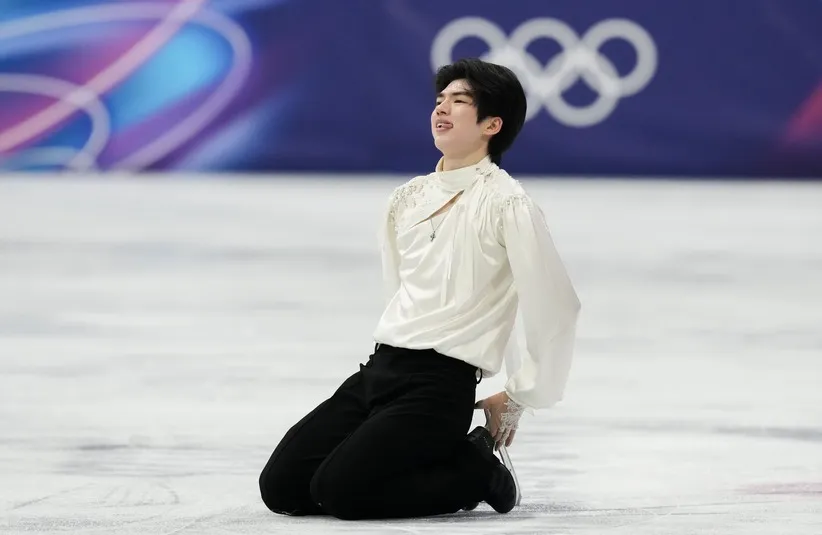
The script was already written. The ink was supposed to be dry. Ilia Malinin, the 21-year-old American phenomenon who treats gravity like a suggestion rather than a law, was supposed to skate onto the ice in Milan, throw down a few physics-defying quads, and collect his gold medal.
But sports have a funny way of shredding the script. Especially figure skating, where the difference between immortality and disaster is a quarter-inch of steel on a slippery surface. On Friday night at the Milano Cortina Olympics, the unthinkable happened. Malinin didn’t just miss the gold; he missed the podium entirely, plummeting to an eighth-place finish that left the crowd in stunned silence.
A Nightmare On Ice For the Heavy Favorite
Entering the free skate, Malinin held a comfortable five-point lead. He had the arsenal to win. He had the “Quad God” moniker. He had the swagger, even playfully teasing a backflip as he took the ice for warmups. But the moment the music started, the confidence seemed to evaporate.
It wasn’t just one mistake. It was a cascade. He popped his signature quad axel, turning a historic weapon into a costly error. He stumbled. He fell. And then he fell again.
Watching Malinin struggle was like watching a Ferrari stall out in the final lap of the Indy 500. It was jarring. This is a skater who hasn’t lost a competition since Nov. 2023. He was on a 14-event win streak. To see him not just beaten, but broken, was a stark reminder of how brutal this sport can be.
“I blew it,” Malinin told NBC cameras immediately after, his face buried in his hands. It wasn’t media-trained PR spin; it was raw, unfiltered agony. “There’s no way that just happened. I was preparing the whole season and was so confident… I have no words really.”
Shaidorov Seizes the Moment In Skating Upset
While the American superstar was fighting his demons, someone else was seizing history. Kazakhstan’s Mikhail Shaidorov, sitting in fifth place after the short program, delivered the performance of his life.
Shaidorov didn’t care about the narrative surrounding Malinin. He went out and executed, putting together a free skate that vaulted him to the top of the leaderboard. It was a massive moment for Kazakhstan, securing the country’s first-ever Olympic gold in figure skating.
It’s worth noting that it wasn’t a clean night for anyone. The ice in Milan seemed particularly cursed on Friday, with many top contenders struggling to find their footing. Japan’s Yuma Kagiyama fought through his own falls to salvage a silver medal, while his teammate Shun Sato grabbed the bronze. But the night belonged to Shaidorov, the only man who seemingly kept his cool while the favorites melted down.
The Mental Weight of Olympic Expectations
We often forget that underneath the sequins and the superhuman athletics, these are just people under crushing pressure. Malinin admitted earlier in the week that he was battling “Olympic nerves.” He looked tight during the team event, despite helping the U.S. secure gold.
He seemed to have exorcised those ghosts during a dominant short program earlier in the week. But when the lights were brightest on Friday, the pressure returned with a vengeance. “I think it was definitely mental,” Malinin said. “That Olympic atmosphere is crazy. It’s not like any other competition.”
It is a tale as old as sports itself. You can have the best mechanics in the world, the highest vertical, or the fastest rotation speed, but if the mind isn’t in lockstep with the body, the ice is unforgiving.
What’s Next For American Skating?
So, where does Malinin go from here? First, he takes a breath. A deep one. An eighth-place finish is a disaster by his standards, but let’s look at the resume: he’s still a World Champion, a Grand Prix Final winner, and an Olympic team gold medalist. He is 21 years old. He has fundamentally changed the geometry of figure skating. One bad night doesn’t erase the revolution he started.
However, this loss will leave a scar. It will be the fuel for the next four years. The “Quad God” is no longer invincible, and perhaps that’s a good thing. Invincibility is boring. A comeback story? That’s something we can all get behind.
For now, the gold goes to Kazakhstan, the heartbreak belongs to America, and the world is reminded that in figure skating, you’re never safe until the music stops.
