
Heart Rate Up, Aim Steady: Your Complete Guide To Olympic Biathlon

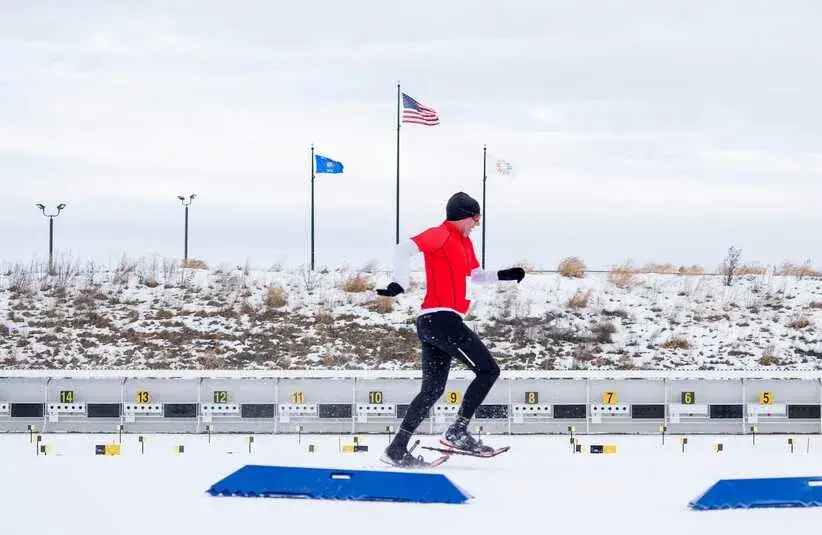
Imagine an athlete pushing there body to its absolute physical limit, cross-country skiing up a steep incline mountain. Now, imagine having to stop instantly, calm your breathing & heart rate in order to fire a rifle at a target the size of a golf ball from 50 meters away.
This is biathlon. It is widely considered one of the most physically demanding and mentally taxing sports in the Winter Games.
As we approach the Milano-Cortina 2026 Olympics, interest in this unique sport is skyrocketing. It offers a level of unpredictability that few other events can match; a lead of 30 seconds can evaporate in a single bout of poor shooting. Whether you are a seasoned winter sports fan or a newcomer curious about why athletes are carrying rifles on skis, here is everything you need to know about the tactical, dramatic world of biathlon.
What Exactly is Biathlon?
At its core, biathlon is a marriage of two contradictory disciplines: cross-country skiing and precision rifle shooting.
The skiing component requires immense aerobic capacity, endurance, and power. Athletes race over groomed trails, battling friction and gravity. The shooting component, however, requires stillness, breath control, and intense focus. Athletes must switch rapidly from high-intensity exertion to absolute calm. If their pulse is too high, the rifle barrel shakes. If they take too long to calm down, they lose precious seconds on the clock.
The fastest skier doesn’t always win; the gold medal often goes to the athlete who can best manage their physiological stress on the shooting range.
The Rules of the Range
Competitors ski a set distance that is broken up by stops at the shooting range. Depending on the specific race format, they will stop two or four times to shoot.
At each stop, the biathlete fires five rounds at five mechanical targets located 50 meters away. There two shooting positions in the sport of Biathlon prone and standing.
Prone Position
In the prone position, the athlete lies on their stomach. The prone position provides more stability for the person shooting. The target size is only 45 millimeters (about 1.8 inches) in diameter, which is super difficult in general to shoot.
Standing Position
In the standing position, the athlete has no support other than their own body. While the target size increases to 115 millimeters (about 4.5 inches), the lack of stability makes this incredibly difficult, especially with wind and fatigue in play. This is often where races are won or lost.
The Price of a Miss: Understanding Penalties
What happens when a shot goes wide? Well, there two penalties that the athlete gets.
- The Penalty Loop: In most events (Sprint, Pursuit, Mass Start, Relay), a missed target sends the athlete to the penalty loop. This is a 150-meter oval track located just off the shooting range. Skiing this loop takes roughly 20 to 30 seconds. If an athlete misses three shots, they must ski the loop three times, draining energy and losing time.
- Time Penalty: In the “Individual” race format, there is no penalty loop. Instead, a fixed one-minute penalty is added directly to the skier’s total time for every missed shot. This places a massive premium on accuracy over skiing speed.
Major Race Formats to Watch
Biathlon isn’t just one race; it’s a collection of formats that test different strengths.
- Sprint: The shortest format (10km for men, 7.5km for women). It is a much more fast and aggressive race format, with only two shooting bouts.
- Pursuit: This race is unique due to how the start times are determined through the results of the Sprint. If you finished 10 seconds behind the winner in the Sprint, you start 10 seconds behind them in the Pursuit. It is a literal chase to the finish line.
- Mass Start: The top 30 biathletes start simultaneously. It is chaotic, tactical, and incredibly exciting, with four shooting stages.
- Relay & Mixed Relay: Teams of four athletes compete, tagging off to teammates. The Mixed Relay, featuring two men and two women.
A Sport Rooted in History
Biathlon originates back to Scandinavian survival skills. It evolved from both military patrols and hunting traditions in Norway, where skiing with a rifle was a necessity. It was not a game, it was a matter of life or death in order to survive. It became an organized competition in the early 20th century. It officially joined the Olympic program for men in 1960, with women’s events added in 1992.
Today, it is a dominant spectator sport in northern and central Europe. The countries that stand out in the popularity is in Germany, Norway, and France, where top biathletes enjoy celebrity status. The event for Biathlon for the Olympics will take place in the Antholz-Anterselva arena, a legendary venue in the biathlon world.
Frequently Asked Questions
Q: What happens when a biathlete misses a target?
A: In most events, they must ski a 150-meter penalty loop for every miss. In the Individual format, a fixed one-minute penalty is added to their time for each miss.
Q: Do they carry the rifle the whole time?
A: Yes, the athletes ski with the rifle harnessed to their backs for the entire race. The rifle weighs a minimum of 3.5 kg (7.7 lbs).
Q: Which events are on the Olympic program?
A: A total of 7 including Individual, Sprint, Pursuit, Mass Start, Men’s Relay, Women’s Relay, and Mixed Relay.
Why You Should Tune In For Biathlon During 2026 Olympics
Biathlon captures the Olympic spirit perfectly as it combines the raw athleticism and psychological drama. As we look toward Milano-Cortina, the storylines are already forming. Will the Norwegian team continue their dominance? Will the difficult Italian course favor the strongest skiers or the sharpest shooters?
Understanding the nuance of the penalty loop and the difference between prone and standing shooting transforms the viewing experience. The cool thing about this sport is you aren’t just watching people ski; you’re watching a masterclass in heart-rate control and mental fortitude.
