A Freak Accident: The Truth Behind Giovanni Mpetshi Perricard’s Mid-Match Exit in Montpellier

It’s one of those moments that makes the entire stadium go silent. You’re watching a match, the rhythm of the ball going back and forth is hypnotic, and then suddenly, everything stops. That is exactly what happened this past Monday at the Open Occitanie in Montpellier. Giovanni Mpetshi Perricard, one of France’s most exciting young talents, suffered a freak injury that forced him to retire mid-match, leaving fans and his opponent in shock.
This wasn’t a twisted ankle or a pulled hamstring—the usual suspects in tennis. This was something far stranger and scarier. A ball ricocheted off his own racket frame and struck him directly in the eye.
If you’ve ever played tennis, you know how fast the ball moves at the pro level. We aren’t talking about a gentle lob; we are talking about high-velocity impact. The incident has sparked a lot of conversation, not just about the match, but about Perricard himself, his recent struggles, and just how unpredictable sports can be.
The Moment Everything Changed for Perricard
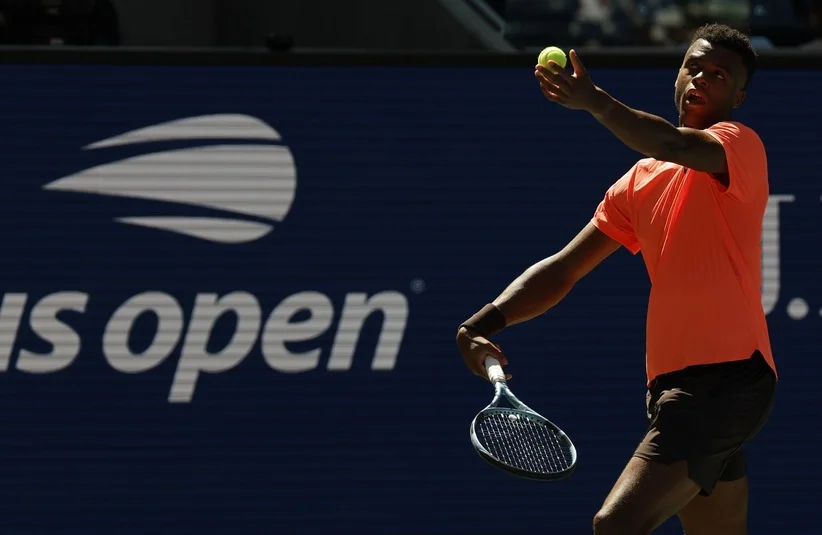
Let’s set the scene. It was Monday, February 2, 2026. Perricard was on his home turf at the Sud de France Arena, facing off against another Frenchman, Arthur Gea. The stakes were decent, but it was supposed to be a standard opening round.
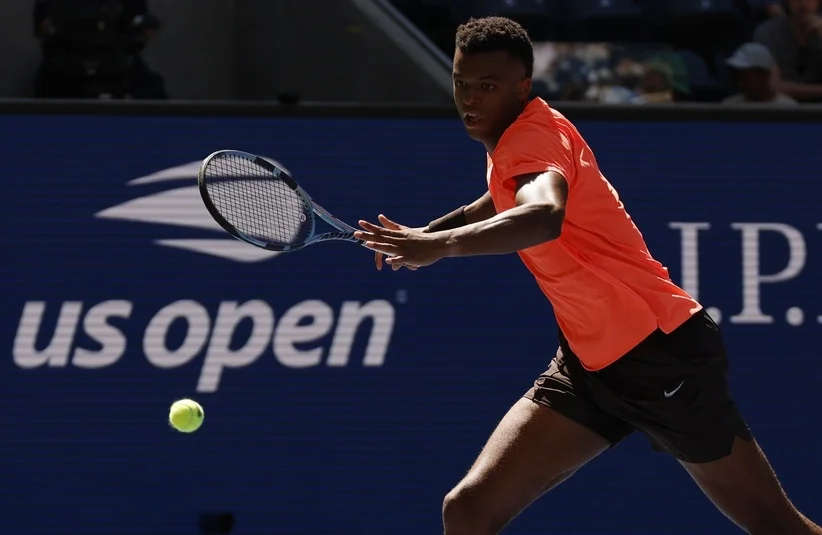
Perricard, currently ranked World No. 57, was trailing 5-3 in the first set. He was digging in, trying to find a way back into the set. He went to return a sharp shot down the line—a routine movement he has probably done a million times in his life. But this time, the geometry went wrong. The ball clipped the frame of his racket at an odd angle and shot backward, slamming into his eye.
The reaction was immediate. Perricard dropped his racket, clutched his face, and collapsed to the court. The crowd, which had been buzzing with the usual tournament energy, went dead silent.
Medical staff rushed out immediately. You could see them checking his vision, trying to assess the damage. To his credit, Perricard actually tried to keep playing. He stood up, eye visibly bloodshot, and attempted to continue. But after playing just one more point, he knew it was over. He lost the first set 6-3 and walked to the net to shake hands, retiring from the match.
Arthur Gea, who advanced because of the injury, looked more concerned than happy about the win. He later said, “It’s never easy to see a friend injured. It’s never easy to see this.” It was a sentiment shared by pretty much everyone watching.
Why This Setback Stings More Than Usual
Context matters here. If Perricard were on a massive winning streak, this would just be a weird blip on the radar. But things have been tough lately for the 22-year-old.
Back in 2024, Perricard broke into the ATP Top 30. He looked like the next big thing for French tennis—big serve, big game, big potential. But consistency has been his enemy. He entered the Open Occitanie trying to shake off a disappointing run. He had just exited the Australian Open in the first round against Sebastian Baez. Before that, he had a nice win at the Brisbane International, which gave everyone hope that he was finding his groove again.
Then this happened. This injury is particularly cruel because it kills momentum. Tennis is a mental game as much as a physical one. When you are trying to rebuild your confidence after a string of early exits, the last thing you need is a freak accident that keeps you off the court. It raises immediate questions about his fitness for the next few weeks, but also broader questions about his ability to catch a break and get back to that Top 30 form.
What This Means for the Tournament and Fans
The immediate fallout was messy for the tournament organizers. Perricard wasn’t just playing singles; he was scheduled to play doubles alongside Stan Wawrinka—a partnership a lot of fans were excited to see. That match was obviously canceled. The slot went to Hendrik Jebens and Ray Ho, who faced Clement Chidekh and Arthur Raymond instead.
For the French fans in Montpellier, it was a huge letdown. Losing a homegrown star in the first round is never fun, but losing him like this? It just feels unlucky.
Social media lit up immediately. People were sharing clips of the incident (with trigger warnings, usually), and expressing disbelief. It’s rare to see an injury like this. We see players slip, we see them cramp up in the heat, but self-inflicted eye injuries are a rarity. It served as a grim reminder of the physical risks involved in high-speed sports. Even when you do everything right, chaos can intervene.
FAQ SECTION
Q: What happened in Giovanni Mpetshi Perricard’s match?
A: He accidentally hit himself in the eye with a ball that ricocheted off his racket, forcing him to retire.
Q: Who was involved?
A: Perricard was playing against Arthur Gea in Montpellier.
Q: Why is this news important?
A: It highlights both the unpredictability of sports injuries and the impact on a promising player’s career trajectory.
Q: What are the next steps?
A: Medical assessments will determine his recovery and whether he can compete in upcoming tournaments.
The Road to Recovery for Perricard
So, what is next? Right now, it’s a waiting game. The medical evaluations will determine how severe the damage to his eye actually is. The eye is a delicate organ, and impact injuries can range from a simple bruise that heals in a few days to retinal issues that take much longer.
His recovery timeline is totally up in the air. If he’s lucky, he takes a week off, the swelling goes down, and he’s back practicing. If it’s serious, he could miss significant time on the tour, which would see his ranking drop further.
Fans and analysts are watching this closely. Perricard is at a bit of a crossroads. He has the talent—we saw that in 2024. But he needs a stretch of good health and good luck to put the pieces back together. Everyone is hoping this isn’t another turning point in the wrong direction, but rather just a bizarre story he can tell later when he’s holding a trophy again.
For now, we just have to wait for the updates and hope the damage isn’t permanent. Get well soon, Perricard.