Ferrari Unveils Radical Tech at Fiorano SF26 Shakedown

Fiorano finally gave us a clear look at where open‑wheel racing is headed. Ferrari isn’t making small adjustments for 2026. They’re rewriting how a racecar moves through the air. During the SF26’s shakedown, the team became the first to openly show the active aerodynamics system that will define the next regulation cycle.
For years, teams have hidden their innovations behind garage doors and privacy screens. Ferrari went the opposite direction. They released footage that doesn’t hint or obscure. It shows the aero surfaces moving in real time, exactly as they will on track.
Ferrari Brings Active Aero to Life
Rumors and renderings are one thing. Seeing the system work at speed is something else entirely. The 2026 rules demand a car that can change its aerodynamic profile on command. Both the front and rear wings flatten on the straights, then return to high‑downforce trim for the corners.
It’s easy to compare it to the Drag Reduction System Formula 1 has used for years, but this goes far beyond that. DRS was a workaround to help cars follow each other. What Ferrari demonstrated is a full‑lap performance tool and a system designed to manage drag, downforce, and energy flow as a single package.
The footage shows the wings moving together, not as isolated parts. On the straights, the car sheds drag and cuts through the air. Under braking, the wings snap back into a high‑load configuration to stabilize the chassis. It’s a coordinated system, not a simple flap opening.
The Engineering Behind the Speed
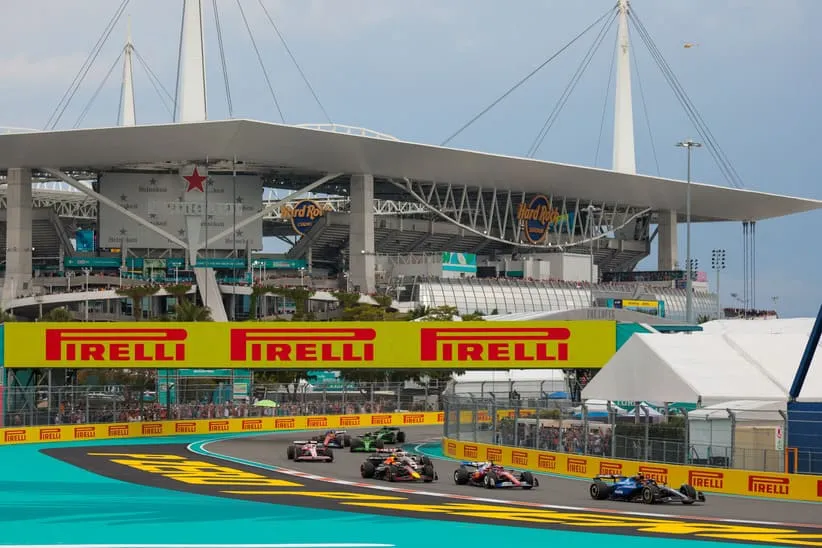
Ferrari’s active aero system isn’t just a set of moving flaps. It’s a complete rethink of how the car manages airflow, load, and drag throughout a lap. Under the carbon fiber, the SF26 is built around two distinct aerodynamic states: Corner Mode and Straight Mode, each designed to serve a specific purpose in the car’s performance profile.
The Baseline Configuration: Corner Mode
Corner Mode is the baseline configuration. In this state, the front and rear wing elements sit at their full‑load angles, generating maximum downforce. The car is essentially in its high‑grip form. This is what the driver relies on when turning into medium‑ and low‑speed corners, where mechanical grip alone isn’t enough to keep the car stable.
The wings are positioned to capture as much air as possible, pressing the chassis into the track surface and giving the driver confidence to brake late, rotate the car, and return to the throttle without the rear stepping out. It’s the same principle as traditional aero, but with a far more aggressive load profile because the car no longer has to compromise for straight‑line efficiency.
The System’s Real Purpose: Straight Mode
Straight Mode is where the system shows its real purpose. When the driver enters an FIA‑approved activation zone, they can trigger the aero switch. The flaps flatten, the angles decrease, and the car reduces drag significantly.
The SF26 effectively changes shape, not visually dramatic, but aerodynamically significant. The airflow no longer piles onto the wings. Instead, it slips over the surfaces with minimal resistance. This lets the power unit push the car to a much higher top speed than a fixed‑aero design would allow.
It’s not a passive system. The driver must commit to it, knowing that the moment they apply the brakes, the wings will snap back into Corner Mode and the car will need the airflow to reattach instantly.
Assessing The SF26’s Complexities
The complexity lies in the transition between these two states. When the car switches to Straight Mode, airflow becomes turbulent because the wings are no longer shaping it to generate downforce. The wake behind the car changes, the pressure zones shift, and the entire aerodynamic map resets.
The moment the driver lifts off the throttle and applies the brakes, the system must return to Corner Mode, and the airflow must reattach to the wings immediately. If it doesn’t, the car has no downforce. At high speed, that’s not a minor inconvenience. It’s a loss of stability that can cause the rear of the car to slide before the driver has time to react.
Ferrari’s engineers have spent years modeling this transition. It’s not just about hinge points and actuators. It’s about controlling how the air behaves when the car changes its aerodynamic state. The team must ensure that airflow reattaches cleanly, consistently, and predictably, even when the car is loaded under braking or slightly turning into a corner.
The Leclerc and Hamilton Factor
That’s why seeing Charles Leclerc and Lewis Hamilton running laps at Fiorano matters. Those two don’t tolerate uncertainty in the car’s behavior. If Ferrari is allowing them to push the system at speed, it suggests the team believes the transition is stable enough for real‑world conditions.
This is the core of the SF26’s engineering philosophy: a car that can be two machines at once, a high‑downforce cornering tool and a low‑drag straight‑line weapon without losing control in the split second between them.
The Danger of Aerodynamic Balance
The risk isn’t in the system working. It’s in the system and works every time. If the airflow doesn’t reattach the moment the wings return to Corner Mode, the car becomes unstable. At 200 mph, that’s not a theoretical concern. That’s the kind of instability that ends test days early.
Ferrari’s willingness to run both Leclerc and Hamilton at speed suggests they believe they’ve solved the reattachment problem. The car looked settled, predictable, and responsive, exactly what a driver needs when trusting a system that changes the car’s entire aerodynamic profile in a fraction of a second.
What This Means
Ferrari’s reveal says a lot about where the grid stands heading into 2026. First, Ferrari is confident. Teams don’t show technology this early unless they believe they’re ahead. Releasing footage publicly is a statement they’re not hiding. Next, the legacy DRS logic is being phased out.
The new Overtake Mode won’t depend on being within a one‑second window. Drivers will control when to deploy their aero advantage, making racecraft more about timing and energy management than waiting for a detection line.
Last, cockpit workload is increasing. Drivers will have to manage aero states while fighting for position, braking, defending, and planning exits. The system will reward precision and punish hesitation.
What’s Next
Watching the SF26 run at Fiorano wasn’t just a shakedown. It was a clear message. Ferrari’s active aero system is aggressive, complex, and fast. They’ve taken the first public step into the 2026 era, and they look comfortable doing it.
As we wait to see how this system behaves in race conditions, one thing is clear: the next regulation cycle will test both engineering departments and drivers. Ferrari appears ready for that challenge.